
This crockpot vegetable soup is my go-to for those hectic weeknights when dinner feels like too much effort. There’s something about tossing everything in and walking away that makes me feel like I’ve already won at dinner. It’s honest comfort, no stress, just the smell of simmering vegetables filling the house and a bowl waiting at the end of it all.
What I love most is how this soup turns humble, everyday vegetables into a rich, warming meal. It’s like a little bit of magic that happens while you’re busy doing other things—kids, work, chaos—whatever fills your evening. And the best part? It tastes like it’s spent hours on the stove, but it’s actually minimal effort, making it perfect for busy nights or lazy weekends.
Plus, it’s endlessly adaptable. Whatever vegetables you have on hand—frozen, fresh, leftovers—you can throw them in. It’s a reminder that simple ingredients, cooked slowly and quietly, can become something truly satisfying without fuss or fancy techniques.
Focusing on how this slow cooker soup becomes a weeknight sanctuary, transforming simple vegetables into a comforting, effortless meal after a busy day.
The story behind this recipe
- This recipe started from a sense of nostalgia—my grandmother’s quiet Sunday afternoons spent simmering pots of vegetable goodness. I wanted something that captures that slow, unhurried magic but fits into my busy life. The crockpot does all the work, but it’s the memories that fill the house—the smells and the simple joy of a warm bowl at the end of the day—that keep me coming back.
- There’s a little chaos in every batch—forgotten vegetables, last-minute tweaks, and the occasional overzealous seasoning—that’s all part of the charm. It’s honest cooking, not polished, just real. I love how it turns humble ingredients into a meal that tastes like it’s been bubbling away forever, even if it’s just a few hours.
- Every time I make this soup, I’m reminded that good food doesn’t have to be complicated. It’s about patience, a little improvisation, and the magic of slow heat turning leftovers into something nourishing. It’s become my little ritual, a cozy anchor during busy weeks or lazy weekends.
Ingredient breakdown: key components
- Carrots: I love the natural sweetness they bring, especially when they soften to a tender, melt-in-your-mouth texture. Swap for parsnips if you want a milder, earthier flavor.
- Celery: Adds that subtle crunch and aroma that wakes up the broth. Use fennel instead for a slightly licorice note that brightens the whole pot.
- Onions: They form the savory base, releasing a sweet aroma as they cook down. Shallots work beautifully if you prefer a milder, sweeter undertone.
- Tomatoes: I prefer chopped fresh or canned with their juices, giving the soup a vibrant, tangy brightness. Roasted red peppers can be a smoky substitute for depth.
- Vegetable broth: It’s the soul of this soup — I use homemade if I have time, but store-bought works just fine. Boost flavor with a splash of soy sauce or a dash of smoked paprika.
- Seasonings: Garlic, thyme, bay leaves. I keep it simple, but a pinch of cumin or smoked paprika can add a subtle warmth and complexity that lingers.
- Frozen peas: I toss them in near the end for a pop of sweetness and color. Fresh green beans can be a crunchy alternative, if you prefer more bite.
Spotlight on key ingredients
Carrots & Celery:
- Carrots: I love the natural sweetness they bring, especially when they soften to a tender, melt-in-your-mouth texture. Swap for parsnips if you want a milder, earthier flavor.
- Celery: Adds that subtle crunch and aroma that wakes up the broth. Use fennel instead for a slightly licorice note that brightens the whole pot.
Notes for ingredient swaps
- Broth: Use water with a vegetable bouillon cube if you’re out of stock—less rich, but still satisfying.
- Carrots: Swap for parsnips for a sweeter, earthier flavor that softens beautifully.
- Celery: Fennel bulb can add a subtle licorice note, stepping up the aroma and complexity.
- Onions: Shallots bring a milder, sweeter depth—skip if you prefer a sharper onion punch.
- Tomatoes: Roasted red peppers can replace fresh or canned for smoky richness without acidity.
- Frozen peas: Green beans or chopped zucchini near the end add crunch and freshness if peas aren’t available.
- Herbs & spices: Fresh thyme can be swapped for dried, but add a little more since dried is concentrated.
Equipment & Tools
- Large slow cooker: Main cooking vessel for slow, even heat.
- Sharp knife: For chopping vegetables cleanly and efficiently.
- Cutting board: Surface for prepping vegetables.
- Wooden spoon: For stirring ingredients during cooking.
Step-by-step guide to veggie soup
- Gather all equipment: a large slow cooker (about 6-8 quarts), a sharp knife, a cutting board, and a wooden spoon for stirring.
- Prep vegetables: peel and dice carrots and potatoes into 1-inch chunks, roughly the size of a quarter. Chop celery and onions into similar-sized pieces.
- Sauté aromatics (optional): In a skillet over medium heat, add a splash of oil. Cook onions and garlic until fragrant and translucent, about 5 minutes. Transfer to the slow cooker.
- Layer ingredients: add the chopped vegetables to the slow cooker. Pour in 4 cups of vegetable broth, enough to cover the ingredients by about an inch.
- Season generously: add a teaspoon of thyme, a bay leaf, salt, and pepper. Stir to combine everything evenly.
- Cook low and slow: cover and cook on low for 6-8 hours or on high for 3-4 hours. The vegetables should be tender and the flavors melded.
- Check the soup: after about 6 hours, test a carrot or potato with a fork. It should be soft and easily pierced.
- Add greens: near the end (about 30 minutes before serving), stir in frozen peas or chopped spinach for freshness and color.
- Adjust seasoning: taste and add salt or pepper if needed. Remove the bay leaf and discard.
- Finish and serve: ladle the hot soup into bowls. Garnish with fresh herbs if desired. Let it sit for 5 minutes before digging in to let flavors settle.
Once cooked, let the soup sit for 5 minutes to settle. Remove the bay leaf, taste for seasoning, and serve hot with crusty bread or fresh herbs.
How to Know It’s Done
- Vegetables are tender and easily pierced with a fork.
- Soup has a rich aroma with herbs and simmered vegetables.
- Broth is slightly thickened and vibrant in color.
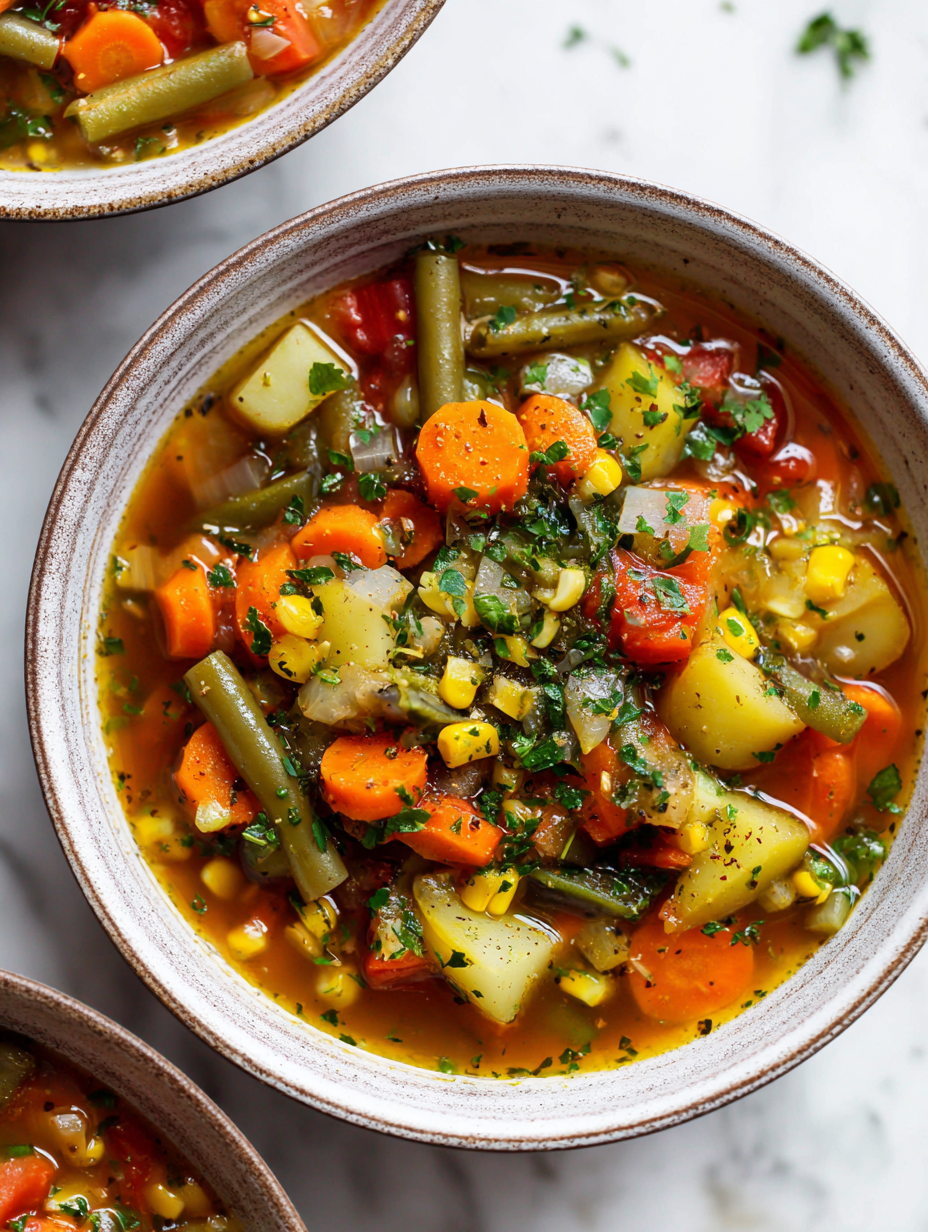
Crockpot Vegetable Soup
Ingredients
Equipment
Method
- Gather all your equipment: a large slow cooker, a sharp knife, a cutting board, and a wooden spoon.
- Peel and dice the carrots into roughly 1-inch pieces, then chop the celery and onion into similar-sized chunks. This ensures even cooking and a nice texture.3 large carrots
- If you like, sauté the onion and garlic in a bit of oil over medium heat until fragrant and translucent—this builds a richer flavor base. This step is optional but recommended for depth.3 large carrots
- Transfer the sautéed onion and garlic to the slow cooker, or add raw if skipping sautéing.3 large carrots
- Add the diced carrots, chopped celery, and canned chopped tomatoes with their juices into the slow cooker.3 large carrots
- Pour in vegetable broth until the ingredients are covered by about an inch. Adjust as needed for your desired soup consistency.3 large carrots
- Sprinkle in the dried thyme and add the bay leaves. Season with salt and pepper to taste, then stir everything gently to combine.3 large carrots
- Cover the slow cooker and cook on low for 6 to 8 hours, or on high for 3 to 4 hours, until the vegetables are tender and flavors melded.
- About 30 minutes before serving, stir in the frozen peas for a burst of sweetness and color, and let them cook in the hot broth.3 large carrots
- Taste the soup and adjust the seasoning with more salt and pepper if needed. Remove the bay leaves for serving.3 large carrots
- Ladle the warm, vibrant vegetable soup into bowls. Serve with crusty bread or fresh herbs if desired, and enjoy the comforting aroma and tender vegetables.
Tips & Tricks for Perfect Soup
- BOLD VEGETABLES: Cut vegetables uniformly to ensure even cooking and tender textures.
- LAYER FLAVORS: Layer seasonings at different stages for a depth of flavor that develops over time.
- SMELL CHECK: When the soup smells rich and fragrant, your flavors are melding perfectly.
- AVOID OVERCOOKING: Check vegetables early; overcooking turns them mushy and dulls the broth’s brightness.
- TASTE BEFORE SERVING: Always taste and adjust salt or acidity after cooking—flavor intensifies as it cools slightly.
- USE FROZEN VEGGIES: Toss in frozen greens near the end for freshness and vibrant color without extra prep.
- LID ON: Keep the lid on during cooking to trap steam and flavors, but remove for the last 30 minutes to prevent over-thickening.
Common mistakes and how to fix them
- FORGOT to taste and adjust seasoning before serving—always taste for salt and acidity.
- DUMPED all vegetables at once—add in stages for even cooking and better texture.
- OVER-TORCHED the soup on high—use low setting for gentle simmering to avoid mushiness.
- MISSED removing the bay leaf—discard before serving to prevent an overpowering herbal note.
Quick fixes and pantry swaps
- If/When soup is too thick, splash in hot water and stir to loosen.
- Patch dull flavors with a splash of lemon juice or vinegar for brightness.
- Shield overcooked vegetables with a quick stir and a splash of broth.
- Rescue a burnt bottom by transferring soup to a new pot, leaving the charred bits behind.
- Swap canned beans or lentils for frozen peas if you’re out of fresh or frozen greens.
Prep, store, and reheat tips
- Chop all vegetables the night before; keep in airtight containers in the fridge for up to 24 hours, preserving freshness and crunch.
- Assemble ingredients in the morning—combine chopped vegetables, broth, and seasonings—ready to dump into the slow cooker when needed.
- Cooked soup can be stored in the fridge for 3-4 days; reheating on the stove or microwave until steaming hot, with a slight simmer to revive flavors.
- For longer storage, freeze in airtight containers or freezer bags for up to 3 months; expect a slightly softer texture upon thawing.
- Reheat gently over low heat, stirring occasionally, until the soup is hot and aromas reawaken, about 5-10 minutes. Adjust seasoning if needed.
Top questions about crockpot veggie soup
1. Can I use frozen vegetables instead of fresh?
Use fresh or frozen vegetables; frozen peas work especially well near the end for a burst of sweetness and color.
2. Do I need to sauté the vegetables first?
Yes, you can skip sautéing; just add raw aromatics and vegetables directly into the slow cooker. The flavor might be slightly milder.
3. How long should I cook the soup?
Cook on low for 6-8 hours or high for 3-4 hours. Check tenderness with a fork; vegetables should be soft and fragrant.
4. When should I add leafy greens?
Add greens like spinach or peas near the end to keep their bright color and fresh texture. Overcooking greens can make them slimy.
5. How can I fix bland soup?
If the soup is too bland, stir in a splash of soy sauce, a squeeze of lemon, or a pinch of smoked paprika to boost flavor.
6. How do I store leftovers?
Store leftovers in an airtight container in the fridge for up to 4 days, or freeze for up to 3 months for longer storage.
7. How do I reheat the soup?
Reheat on the stove over medium-low heat, stirring occasionally, until steaming hot. Check the seasoning and adjust if needed.
8. Can I use different broths?
You can swap vegetable broth for chicken or beef broth for added richness, but it will change the vegetarian aspect.
9. What if my soup is too thick?
If your soup turns out too thick, splash in hot water or broth and stir until you reach your desired consistency.
10. How do I balance acidity?
A pinch of sugar can balance acidity from tomatoes or peppers, making the flavor rounder and less sharp.
This soup isn’t just about filling bellies; it’s about those quiet moments when the house smells of simmered vegetables and warm spices. It’s a reminder that some of the simplest ingredients can come together into something comforting and honest, especially after a busy day.
In the end, it’s the little things—like that first spoonful, the aroma filling the kitchen—that make this dish worth returning to. It’s humble, straightforward, and a little bit nostalgic, perfect for grounding yourself in good, real food.