
Eggplant Parmesan is one of those dishes that welcomes the messy, the imperfect, and the spontaneous. It’s less about perfect layering and more about feeling your way through the process—tasting, adjusting, and forgiving as you go. I love how a bit of extra cheese or a slightly crispy topping can turn a simple casserole into something memorably satisfying, no matter how it looks on the plate.
This dish has a forgiving nature that’s perfect for cooks who shy away from strict timing or precise techniques. Instead, it’s a tactile experience—slicing the eggplant just thick enough, layering it with sauce and cheese, and letting the oven do its magic. It’s about embracing the small imperfections, knowing that each pan turns out a little different, a little more personal, and always delicious.
Focusing on how eggplant Parmesan can be a forgiving dish, perfect for cooks who dislike precise timing but love the tactile process of layering and adjusting flavors as you go. It’s about embracing the imperfect — a slightly burnt breadcrumb topping or a bit more cheese here and there — making each pan a little different, a little personal.
Embracing Imperfection in the Kitchen
- Cooking this dish always reminds me of lazy Sundays with my family, the kitchen filled with rich tomato and roasted eggplant scents.
- I used to be afraid of overcooking eggplant, but now I love how it becomes tender and almost creamy after baking.
- There’s a strange joy in layering cheese and sauce—each time, I feel like creating a little edible artwork, imperfect but heartfelt.
- Every time I make eggplant Parmesan, I remember my first attempt — it was a disaster, but I learned that forgiving myself makes the best food.
- Sharing this dish with friends always sparks nostalgic conversations about childhood dinners and simple comforts.
The story behind this recipe
Eggplant Parmesan has always been a dish I turn to when I want comfort with a bit of a challenge. My first attempt was a total mess—eggplant soggy, cheese burnt—yet I felt an odd pride in that failure. Over time, I realized it’s less about perfection and more about embracing the quirks—extra sauce here, a slightly crispy edge there—and making it my own. It’s a dish that’s forgiving, resilient, kind of like the kitchen itself, where small mistakes often turn into the best bites.
Eggplant Parmesan Trivia & Origins
- Eggplant Parmesan as we know it today has roots in Southern Italy, where eggplants are a staple and often cooked with rich tomato sauces.
- The dish likely evolved from Italian eggplant recipes, adapting over time into a baked casserole that became popular in American Italian-American cuisine.
- In the early 20th century, American cooks began layering eggplant, cheese, and sauce, making it more of a comfort food than a traditional Italian dish.
- Eggplant’s journey from bitter, spongy vegetable to tender, flavorful component is a story of culinary transformation and appreciation.
- Quirky trivia: In some regions, the dish is known as ‘Melanzane alla Parmigiana,’ emphasizing its Italian origins, but recipes vary widely across households.
Ingredient breakdown
- Eggplant: I prefer slicing it about 1/2 inch thick; it becomes tender without falling apart. Try skipping salting if you’re in a hurry, but salting draws out excess moisture and bitterness.
- Breadcrumbs: I use a mixture of panko and Italian herbs for crunch and flavor—panko gives that satisfying crisp. Feel free to add some Parmesan to the mix for extra savory punch.
- Marinara Sauce: I love a robust, slightly chunky sauce—think garlic, basil, and a splash of olive oil. If your sauce is too thin, simmer it down for a richer, thicker coating.
- Mozzarella Cheese: Fresh mozzarella melts into gooey goodness, but shredded works just as well. For a stretchier top, layer extra cheese on the final bake—you’ll get that tempting, bubbly crust.
- Parmesan: I always grate it fresh—its sharp, nutty flavor elevates the dish. If you’re out, Pecorino adds a similar salty punch but with a slightly different aroma.
- Olive Oil: Drizzle a little before baking for golden edges and flavor infusion. Use good-quality oil; it makes a noticeable difference in aroma and richness.
- Herbs: Fresh basil and oregano brighten the dish—add at the end for a fresh burst. Dried herbs work fine if you’re short on time, just sprinkle generously before baking.
Spotlight on key ingredients
Eggplant:
- I prefer slicing it about 1/2 inch thick; it becomes tender without falling apart. Try skipping salting if you’re in a hurry, but salting draws out excess moisture and bitterness.
- Eggplant’s spongy texture absorbs flavors beautifully, turning silky and rich after baking, with a slight smoky undertone when roasted.
Breadcrumbs:
- I use a mixture of panko and Italian herbs for crunch and flavor—panko gives that satisfying crisp. Feel free to add some Parmesan to the mix for extra savory punch.
- Breadcrumbs crisp up into a golden crust that contrasts beautifully with the tender eggplant—when toasted just right, they crackle with each bite.
Notes for ingredient swaps
- Oil-Free: Use an egg wash or water instead of oil for breading; the texture will be less crispy but still flavorful.
- Vegan Cheese: Swap in plant-based mozzarella and Parmesan; expect a slightly different melt and milder flavor.
- Gluten-Free: Replace panko with gluten-free breadcrumbs or crushed gluten-free crackers for a crunchy crust.
- Low-Sodium: Use unsalted or low-sodium marinara and cheese; be mindful of the salt in your breading and seasoning.
- Dairy-Free: Omit cheese or substitute with cashew or coconut-based cheese; may alter the creamy, cheesy vibe.
- Sweet Tomato Sauce: Use a sweeter marinara for a milder, fruitier flavor; balance with a splash of balsamic if desired.
- Herb Variations: Swap basil and oregano with fresh thyme or rosemary for a different aromatic profile.
Equipment & Tools
- Baking dish: To layer and bake the assembled eggplant Parmesan.
- Shallow bowls: For breading station: eggs and seasoned breadcrumbs.
- Baking sheet with parchment: To bake eggplant slices evenly and prevent sticking.
- Knife: To slice eggplant evenly.
- Paper towels: To pat dry eggplant slices after washing.
Step-by-step guide to eggplant Parmesan
- Prepare your equipment: a baking dish, shallow bowls for breading, a knife, and a baking sheet lined with parchment. Preheat your oven to 190°C (375°F).
- Slice the eggplant into 1/2 inch thick rounds. Salt the slices generously and lay them on a paper towel for 15 minutes to draw out moisture and bitterness.
- While salting, prepare your breading station: one bowl with beaten eggs, another with seasoned panko breadcrumbs mixed with Italian herbs and grated Parmesan.
- Rinse the eggplant slices under cold water to remove excess salt, then pat dry thoroughly with a clean towel. Dip each slice into the egg, then coat evenly with breadcrumb mixture.
- Arrange the breaded eggplant slices on the prepared baking sheet. Drizzle or spray lightly with olive oil. Bake for 20-25 minutes until golden and crispy, flipping halfway.
- Meanwhile, warm your marinara sauce in a saucepan over low heat. Once the eggplant is crispy, spread a thin layer of sauce in your baking dish.
- Layer the baked eggplant slices over the sauce, then spoon more sauce over each layer. Sprinkle shredded mozzarella and grated Parmesan evenly between layers.
- Finish with a final layer of eggplant, sauce, and a generous topping of cheese. Bake uncovered for another 20 minutes, until bubbly and golden on top.
- Remove from oven and let sit for 10 minutes to set. Resting helps the layers settle and makes serving neater.
- Garnish with fresh basil before slicing and serving. The cheese should be gooey, the top slightly crispy, and the eggplant tender.
Let the assembled dish rest for 10 minutes out of the oven. Garnish with fresh basil, then slice and serve with a slotted spatula to keep layers intact.
How to Know It’s Done
- Golden-brown and crispy breadcrumbs on eggplant edges.
- Cheese melted and bubbly, with a lightly browned top.
- Eggplant is tender when pierced with a knife, no resistance.
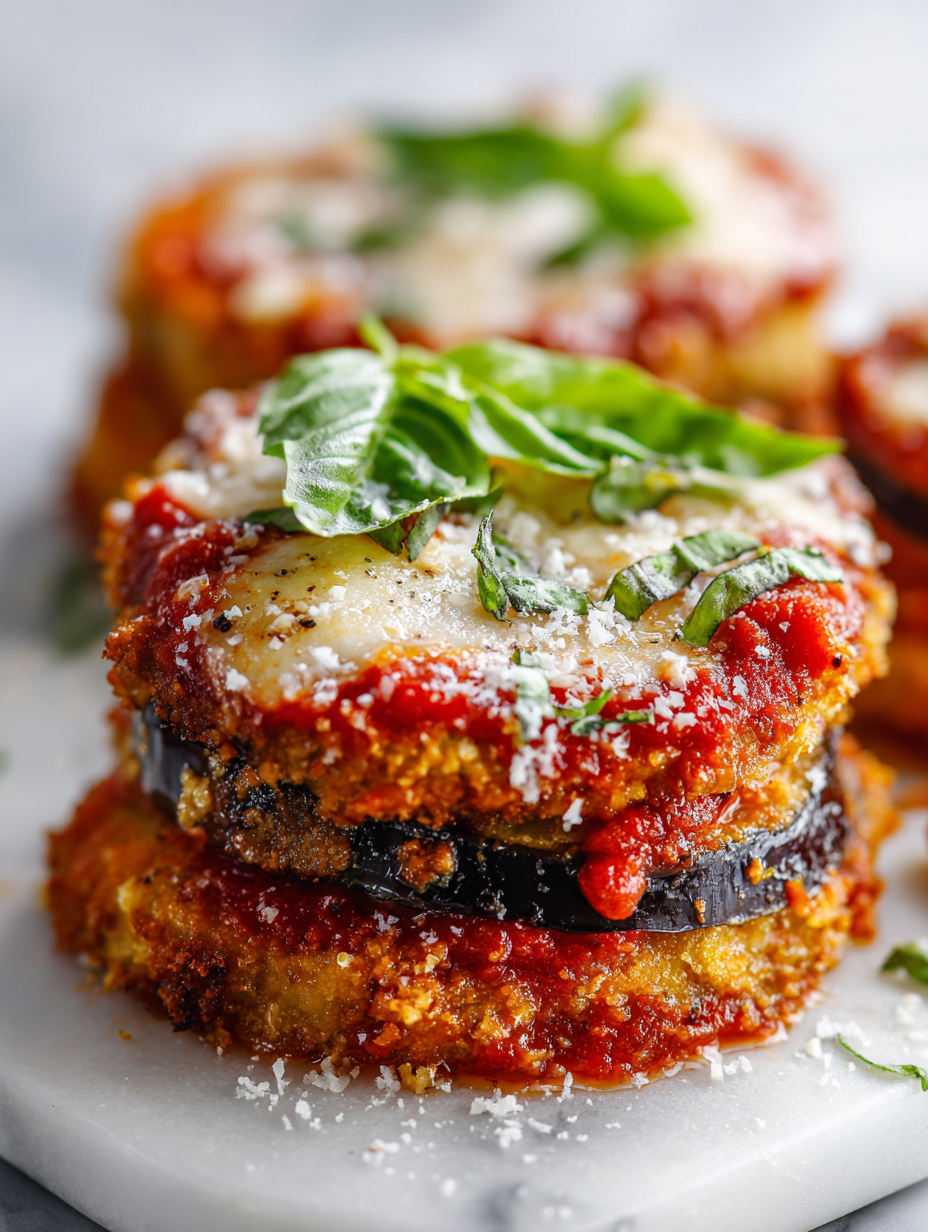
Eggplant Parmesan
Ingredients
Equipment
Method
- Slice the eggplant into 1/2-inch thick rounds and sprinkle generously with salt. Let sit on paper towels for 15 minutes to draw out excess moisture and bitterness, then rinse and pat dry thoroughly.
- Preheat your oven to 375°F (190°C) and line a baking sheet with parchment paper.
- Set up your breading station: in one shallow bowl, beat the eggs; in another, combine panko breadcrumbs with grated Parmesan and Italian herbs.
- Dip each eggplant slice into the beaten eggs, ensuring it's fully coated, then press into the breadcrumb mixture, turning to coat evenly.
- Arrange the breaded eggplant slices on the prepared baking sheet in a single layer. Lightly drizzle or spray with olive oil for crispiness.
- Bake the eggplant slices for 20-25 minutes, flipping halfway, until golden brown and crispy around the edges, and the house smells fragrant with toasted breadcrumbs.
- Warm the marinara sauce in a saucepan over low heat until bubbling and fragrant, about 5 minutes.
- Spread a thin layer of marinara sauce in your baking dish, then layer the baked eggplant slices on top.
- Spoon more sauce over the eggplant, then sprinkle evenly with shredded mozzarella and additional Parmesan if desired.
- Repeat layering until all ingredients are used, finishing with a generous topping of cheese. Bake uncovered for 20 minutes, until bubbly and golden on top.
- Remove from the oven and let rest for 10 minutes to settle the layers. Garnish with fresh basil leaves before serving slices hot and bubbly.
Notes
Tips for Eggplant Parmesan
- Bolded mini-head: Use panko for extra crunch—its airy texture crisps beautifully in the oven.
- Bolded mini-head: Dip eggplant slices thoroughly—coating evenly ensures a crispy, golden crust.
- Bolded mini-head: Drizzle oil lightly—just enough to crisp without sogginess, especially on the breadcrumb topping.
- Bolded mini-head: Watch the cheese—remove from oven when bubbly and lightly browned, not burnt, for perfect texture.
- Bolded mini-head: Rest before slicing—let the baked casserole sit 10 minutes for cleaner, neater servings.
- Bolded mini-head: Layer sauce generously—this keeps the eggplant moist and flavorful through baking.
- Bolded mini-head: Salting the slices—draws out moisture and bitterness, making the eggplant tender and less spongy.
Common mistakes and how to fix them
- FORGOT to salt eggplant slices → do it early to prevent bitterness.
- DUMPED breading mixture → ensure eggplant is evenly coated for crispiness.
- OVER-TORCHED cheese → cover with foil if cheese browns too quickly.
- MISSED the resting step → let the dish set for neater slices and better flavor.
Quick fixes and pantry swaps
- When eggplant slices are soggy, sprinkle more salt and let them drain longer.
- Splash a bit of lemon juice on breadcrumbs for extra brightness and binding.
- Patch burnt cheese with fresh grated Parmesan to save flavor.
- Shield crispy edges with foil if they brown too fast during baking.
- DUMPED the sauce—try simmering it longer to deepen flavor and thicken.
Prep, store, and reheat tips
- Prepare the breaded eggplant slices up to a day in advance; store in an airtight container in the fridge to keep them crispy and ready for assembly.
- Assemble the layered eggplant Parmesan a day ahead, cover tightly with foil, and refrigerate. The flavors meld overnight, making baking quicker and easier.
- Refrigerated assembled dish lasts 24-48 hours; the cheese may firm up slightly, but the dish still tastes rich and comforting when reheated.
- Reheat in the oven at 175°C (350°F) for about 20-25 minutes until bubbly and heated through. The top should be golden, and the eggplant tender.
- For best sensory results, let the dish sit out for 10 minutes after reheating to allow flavors to settle and cheese to soften again.
Top questions about Eggplant Parmesan
1. Should I salt the eggplant before cooking?
Yes, salting eggplant slices draws out excess moisture and bitterness, making them tender and less spongy. Let the slices sit for about 15 minutes, then rinse and pat dry before breading.
2. Can I fry the eggplant instead of baking?
You can bake or fry the breaded eggplant slices. Baking yields a lighter, crispier crust with less oil, while frying gives a richer, more indulgent texture. Both methods work well depending on your preference.
3. What kind of sauce should I use?
Use a thick, hearty marinara sauce for the best flavor. If your sauce is watery, simmer it down for 10-15 minutes until it thickens slightly and deepens in flavor.
4. Can I use different cheese types?
Fresh mozzarella melts into gooey, stringy goodness, creating a creamy texture. Shredded mozzarella melts quickly and evenly, offering a stretchier top. Use whichever you prefer for your final layer.
5. How do I know when it’s done baking?
Bake the assembled dish uncovered until bubbling and golden on top, about 20 minutes at 375°F (190°C). The cheese should be bubbly and slightly browned, and the eggplant tender when pierced with a knife.
6. How should I reheat Eggplant Parmesan?
Reheat leftovers in the oven at 350°F (175°C) for 15-20 minutes. Cover loosely with foil to prevent cheese from over-browning. The dish is ready when it’s hot and bubbly again.
7. Can I make this vegan?
To make it vegan, substitute dairy cheese with plant-based versions and ensure your sauce is vegan-friendly. Expect slightly different melt and flavor, but it still remains hearty and flavorful.
8. What are good substitutions for breadcrumbs?
Use a mixture of panko breadcrumbs and herbs for extra crunch. For a gluten-free version, swap in gluten-free breadcrumbs or crushed nuts. The texture may be a little different but still satisfying.
9. What makes eggplant suitable for this dish?
Eggplant: Its spongy surface absorbs flavors and becomes tender, with a slightly smoky aroma after roasting. It’s forgiving and works well with various seasonings and coatings.
10. What should I look for in breadcrumbs?
Breadcrumbs: They crisp up into a golden, crunchy coating. When toasted properly, they crackle with each bite and add a satisfying texture contrast to the tender eggplant.
Eggplant Parmesan might seem like a simple dish, but its forgiving nature makes it a favorite for casual cooks. The way the melty cheese and tender eggplant come together creates a rich, comforting bite each time.
In a busy kitchen or a lazy weekend, this recipe invites you to loosen up and enjoy the tactile process of layering and adjusting flavors. It’s a dish that celebrates imperfection and personal touch, often tasting better when you’re less concerned about perfection.

I’m Emily Richardson, the heart and soul behind Playing with Flavors. Cooking isn’t just a hobby for me – it’s a passion that I’ve cultivated for years, and it’s become the driving force of my life.
From the kitchen of my cozy café to the pages of this blog, every dish I create is a reflection of my love for food and the joy it brings to people.


