
This recipe is a nostalgic nod to childhood, when the simplest treats brought the biggest smiles—no oven, just quick hands and a spoonful of sweet rebellion.
There’s something satisfying about mixing chocolate, oats, and butter into a gooey mess that you can scoop onto parchment and forget about until they’re firm enough to bite into.
It’s the kind of no-fuss treat that feels almost rebellious in its simplicity, perfect for when you need a quick pick-me-up or a sweet snack that doesn’t require any baking. Plus, it’s a great way to use up those leftover oats hiding in the back of your pantry.
This recipe is a nostalgic nod to childhood, when the simplest treats brought the biggest smiles—no oven, just quick hands and a spoonful of sweet rebellion.
A Childhood Treat Revisited
- Making these cookies takes me back to my grandmother’s kitchen, where the smell of melting chocolate filled the air and everything felt simpler.
- I love how quick and forgiving this recipe is—no oven, no fuss, just a spoon and a bowl, perfect for lazy weekends.
- Every time I make these, I get a little nostalgic, remembering how my kids used to fight over the last cookie, sticky fingers and all.
- There’s a quiet joy in stirring the warm chocolate mixture and watching it turn glossy, knowing I’ll soon have a sweet, no-bake treat.
- These cookies remind me that sometimes, the best things in life are the easiest and most honest.
A Childhood Treat Revisited
This recipe came about on a rainy afternoon when I was desperately trying to find a quick, satisfying treat that didn’t require turning on the oven. I remembered my mom making something similar when I was a kid, just melting chocolate and stirring in oats. It’s a no-fuss, honest kind of dessert that feels like a warm hug, even on the busiest days. Every batch I make reminds me that sometimes, simplicity is the best kind of magic.
Historical & Cultural Tidbits
- These cookies gained popularity during the Great Depression when baking ingredients were scarce, making them a thrifty treat.
- Originally called ‘Fudge Cookies,’ their no-bake method made them accessible for kitchens without ovens or with limited heat sources.
- In the 1950s, packaged versions appeared in pantry aisles, but homemade recipes like this kept the charm alive in many homes.
- The combination of chocolate and oats has roots in traditional European desserts, adapted into this simple, American comfort food.
Ingredient breakdown: key components
- Old-fashioned rolled oats: I love their chewy texture and nutty flavor, but steel-cut oats work too if you prefer a denser bite—just adjust the mixing time.
- Dark chocolate: I use a good quality bar for depth, but chocolate chips are fine if you want a smoother, sweeter finish—watch for added sugars.
- Butter: It gives that rich, silky feel, but coconut oil can be a dairy-free alternative that adds a subtle coconut aroma—just expect a slightly different melt.
- Brown sugar: I prefer it for its molasses undertone, but maple syrup or honey can add a sticky, sweet gloss—reduce a bit to avoid overly moist cookies.
- Vanilla extract: A splash wakes up the chocolate and oats, but almond or coconut extracts bring a different, fragrant twist—use sparingly.
- Optional add-ins: Nuts, dried fruits, or coconut flakes—feel free to toss in what makes you smile, but keep proportions balanced so cookies stay firm.
- Parchment paper: I always line my tray, because these cookies are sticky and fragile before they set—skip it, and cleanup gets messy fast.
Spotlight on key ingredients
Key ingredients:
- Old-fashioned rolled oats: I love their chewy texture and nutty flavor, but steel-cut oats work too if you prefer a denser bite—just adjust the mixing time.
- Dark chocolate: I use a good quality bar for depth, but chocolate chips are fine if you want a smoother, sweeter finish—watch for added sugars.
- Butter: It gives that rich, silky feel, but coconut oil can be a dairy-free alternative that adds a subtle coconut aroma—just expect a slightly different melt.
Notes for ingredient swaps
- Dairy-Free: Swap butter for coconut oil or vegan margarine. Expect a slightly different melt and richness, but still creamy.
- Sweetener Alternatives: Use maple syrup or honey instead of brown sugar. Be aware they might make the mixture a tad stickier and alter the flavor subtly.
- Chocolate Variations: Dark chocolate is classic, but milk chocolate chips work for a sweeter, creamier taste—watch the sugar levels.
- Oats: Steel-cut oats can replace rolled oats for a denser texture, but they’ll need more mixing and a bit longer to set.
- Milk: Almond or soy milk can replace regular milk, adding a nutty or neutral flavor—just keep the mixture thick enough to hold shape.
- Add-ins: Nuts, dried fruits, or coconut flakes—feel free to customize, but keep proportions moderate so cookies stay firm and manageable.
- Parchment Paper: Silpat or a lightly greased tray can work if you don’t have parchment, but expect more sticking and cleanup.
Equipment & Tools
- Medium saucepan: For melting chocolate, butter, sugar, and milk evenly.
- Mixing spoon: To stir the mixture smoothly and prevent burning.
- Baking sheet: To hold the cookies as they set.
- Parchment paper: Prevents sticking and makes cleanup easier.
Step-by-step guide to no-bake cookies
- Gather your equipment: a medium saucepan, a mixing spoon, a baking sheet, and parchment paper. The saucepan is for melting, the spoon for stirring, and the sheet for setting.
- Chop the chocolate: break or chop 1 cup of good dark chocolate into small pieces. Smaller pieces melt faster and more evenly.
- Heat the mixture: in the saucepan over medium heat (about 160°C / 320°F), melt 1/2 cup of butter with 2 cups of sugar and 1/2 cup of milk. Stir constantly until the mixture is smooth and just starts to boil, about 3-4 minutes.
- Add cocoa: stir in 1/4 cup of unsweetened cocoa powder until fully incorporated. The mixture will darken and smell rich—keep stirring to prevent it from sticking.
- Mix in oats: remove from heat and stir in 3 cups of rolled oats. Keep stirring until the oats are fully coated and the mixture thickens, about 2-3 minutes.
- Drop cookies: spoon dollops (about a tablespoon each) onto a parchment-lined baking sheet. Use the back of the spoon to flatten slightly if desired.
- Let set: allow the cookies to cool at room temperature for at least 30 minutes, or until firm and glossy. If in a hurry, refrigerate for 15-20 minutes.
- Check for doneness: the cookies should be firm to the touch, with a slight crackle on top, and hold their shape without oozing.
Let the cookies rest at room temperature until fully firm, about 30 minutes. Transfer to a plate or container, and enjoy once set. Store in an airtight container for up to a week, or freeze for longer storage.
How to Know It’s Done
- Cookie firmness: cookies hold shape and feel firm when gently pressed.
- Appearance: glossy, with a crackled surface indicating proper setting.
- Texture: no sticky or gooey centers, cookies should be chewy but firm.
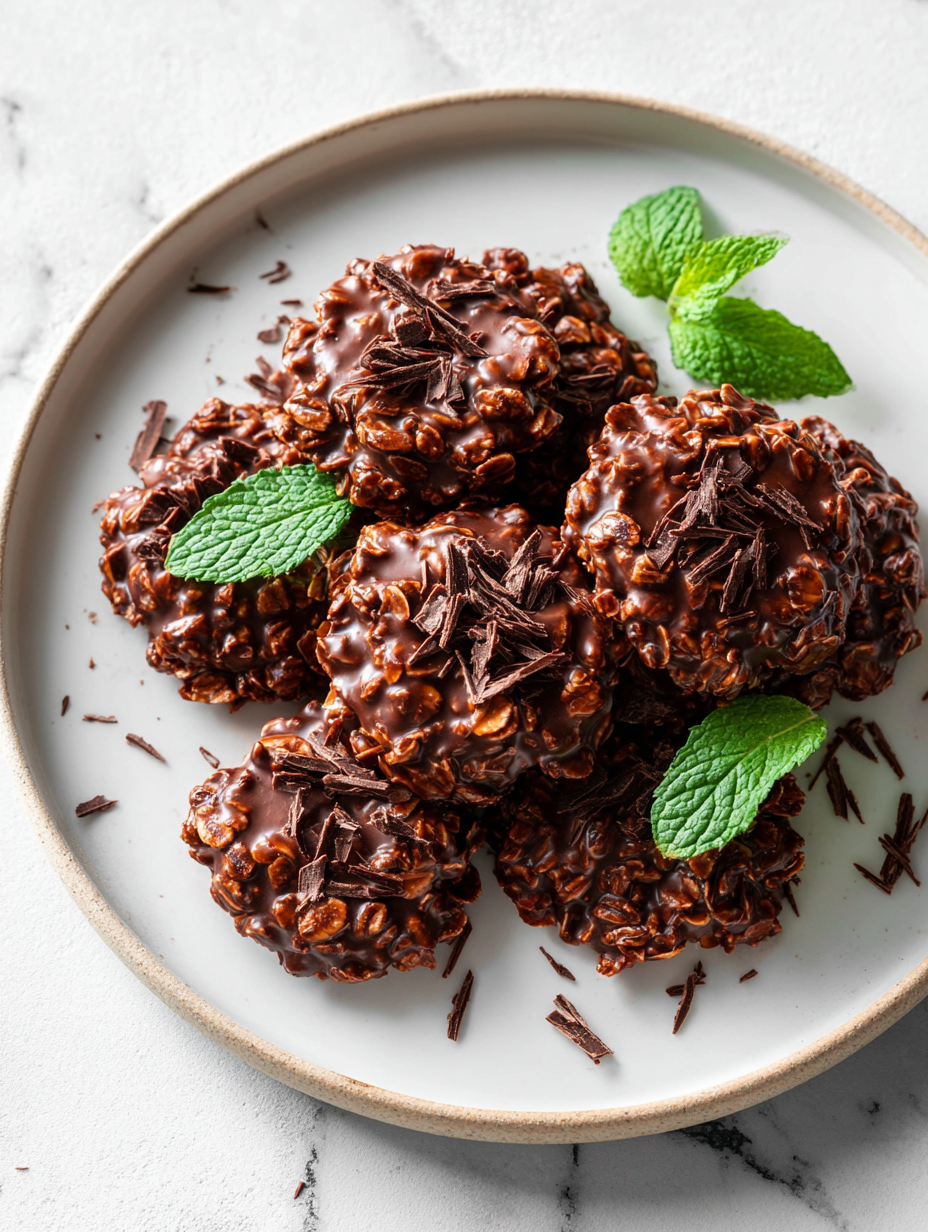
No-Bake Chocolate Oat Cookies
Ingredients
Equipment
Method
- Chop or break the dark chocolate into small pieces to help it melt quickly and evenly.
- Combine the butter, sugar, milk, and cocoa powder in a medium saucepan over medium heat.
- Stir constantly as the mixture heats, watching for it to come to a gentle boil and become smooth and fragrant, about 3-4 minutes.
- Add the chopped chocolate to the hot mixture, stirring until it is completely melted and glossy.
- Remove the saucepan from heat and immediately stir in the rolled oats until they are fully coated and the mixture thickens slightly.
- Using a spoon, drop dollops of the mixture onto a parchment-lined baking sheet, spacing them evenly apart.
- Gently press down on each dollop to flatten slightly, creating a rustic cookie shape.
- Let the cookies cool at room temperature for about 30 minutes until they are firm and glossy, or refrigerate for quicker setting.
- Once set, gently lift the cookies from the parchment and enjoy their chewy, fudgy texture with a glossy finish.
Notes
Tips for perfect no-bake cookies
- Bolded mini-head: Use fully melted chocolate for a glossy, smooth mixture—avoid lumps that can cause uneven setting.
- Bolded mini-head: Stir constantly when melting to prevent scorching and ensure even heat distribution, releasing a rich chocolate aroma.
- Bolded mini-head: Let the mixture cool just enough so oats don’t get mushy—aim for a warm, not hot, consistency for best texture.
- Bolded mini-head: Drop cookies onto parchment with a spoon, then press gently—this helps shape them smoothly and prevents sticking.
- Bolded mini-head: Chill the cookies in the fridge if you’re in a rush—this speeds up setting and enhances the firm, chewy bite.
- Bolded mini-head: For shiny tops, briefly refrigerate after setting—adds a crisp, crackly surface that contrasts with chewy interior.
- Bolded mini-head: Incorporate add-ins last—nuts or dried fruit—so they stay evenly distributed without sinking or making cookies too soft.
Common mistakes and how to fix them
- FORGOT to read the recipe: Always measure ingredients precisely before starting.
- DUMPED in all ingredients at once: Add liquids gradually to control the mixture’s consistency.
- OVER-TORCHED the chocolate: Remove from heat as soon as it melts to avoid bitterness and burning.
- MISSED the cooling step: Let the mixture cool slightly for better oats incorporation and easier handling.
Quick Fixes and Pantry Swaps
- If mixture is too stiff, splash in a little hot water to loosen it gently.
- When cookies stick, patch with a small piece of parchment or reuse the same sheet.
- Splash a few drops of vanilla or milk if the mixture feels dry or crumbly.
- When cookies are oozing, shield with a bit more oats or refrigerate to firm up.
- If your cookies crumble, rescue with a quick re-melt of chocolate and a gentle stir.
Prep, store, and reheat tips
- Prepare the mixture: melt chocolate and butter, then stir in oats and sugar. Once cooled slightly, portion onto parchment. These steps can be done a day ahead; keep covered in the fridge to prevent drying out.
- Storage: Store the cookies in an airtight container at room temperature for up to 5 days, or in the fridge for up to 2 weeks. They develop a richer, fudgier flavor over time, with a chewy texture that stays inviting.
- Shelf life: Expect them to stay fresh for about a week at room temp, longer if refrigerated. The chocolate flavor intensifies, and they become more fudgy, but may lose some of their initial shine.
- Reheating: To soften refrigerated cookies, briefly microwave for 10-15 seconds until warm and slightly gooey. Feel the texture: they should be tender, with a glossy, melt-in-your-mouth quality. Avoid overheating to prevent melting completely.
Top questions about no bake cookies
1. Can I make these cookies dairy-free?
Yes, you can swap coconut oil for butter, which makes the cookies dairy-free and adds a subtle coconut aroma. Expect a slightly different melt and texture, but still delicious.
2. Can I use a different sweetener?
Absolutely. You can replace brown sugar with maple syrup or honey. Keep in mind they might make the mixture slightly stickier and alter the flavor subtly.
3. Can I use chocolate chips instead of a bar?
Yes, milk chocolate chips work fine and make the cookies sweeter and creamier. Just watch the added sugar content for a less overly sweet treat.
4. Can I substitute steel-cut oats?
Steel-cut oats can be used if you prefer a denser, chewier cookie. They need a bit more mixing time, but work well as a substitute.
5. Can I use a different type of milk?
Using almond or soy milk instead of regular milk adds a nutty or neutral flavor. Just ensure the mixture remains thick enough to hold shape.
6. Can I add other ingredients?
Feel free to add nuts, dried fruits, or coconut flakes. Keep proportions moderate so the cookies stay firm and manageable.
7. Do I need parchment paper?
Line your baking sheet with parchment paper to prevent sticking. These cookies are sticky before they set, and cleanup can be messy without it.
8. What if the mixture is too thick?
Yes, if mixture is too stiff, add a splash of hot water to loosen it. It helps achieve the right consistency for easier spooning.
9. How do I fix sticky cookies?
When cookies are too soft or sticky, refrigerate for 15-20 minutes. The cold helps them set and become chewy but firm.
10. How can I prevent oozing?
If they start to ooze or flatten too much, chill the tray briefly or add a little more oats to firm them up.
Making these no-bake cookies is a little ritual I turn to when I need a quick sweet fix that feels comforting and honest. There’s something about the rich chocolate and chewy oats that brings back childhood afternoons, even on busy days.
They remind me that sometimes, simplicity in ingredients and method creates the most satisfying treats. No matter how many fancy desserts I try, these remain my go-to for a quick, honest indulgence that hits all the right notes in flavor and memory.

I’m Emily Richardson, the heart and soul behind Playing with Flavors. Cooking isn’t just a hobby for me – it’s a passion that I’ve cultivated for years, and it’s become the driving force of my life.
From the kitchen of my cozy café to the pages of this blog, every dish I create is a reflection of my love for food and the joy it brings to people.


