
This creamy asparagus risotto is my go-to when spring hits and the first tender stalks arrive at the market. There’s something about that bright green color and the fresh, vegetal aroma that lifts the spirits, even on a rushed weeknight. It’s not fancy, just honest cooking that celebrates those fleeting, vibrant days of the season.
I love how the texture of the rice becomes velvety, almost luxurious, while the asparagus stays just tender enough to give a slight crunch. It’s a dish that feels both comforting and lively, perfect for showcasing the season’s best produce without fuss. You really can’t go wrong with a simple finish of parmesan melting into that rich, creamy base.
Focusing on how this risotto can be a canvas for seasonal, fresh asparagus, highlighting the textures and vibrant green color that make each bite feel like a celebration of spring.
The story behind this recipe
- This recipe came together one rainy afternoon when I found myself craving something bright and comforting. I had a bunch of fresh asparagus in the fridge and a handful of Parmesan that I didn’t want to waste. Stirring those ingredients into a creamy risotto felt like capturing spring in a bowl, even if outside was grey and drizzly.
- I remember the first time I made it for friends — the way the green spears stayed just a little al dente, and the Parmesan melted into that velvety rice. It’s become a bit of a ritual now, a dish that marks the start of the season’s best produce. It’s honest, simple, and somehow feels like a small celebration every time I make it.
- heading: ‘The story behind this recipe’
Key ingredients and tips
- Asparagus: I love using fresh, bright green spears that snap with a slight crunch. If yours are a bit woody, trim and peel the lower ends for tenderness.
- Parmesan: The real stuff melts beautifully and gives that savory, umami punch. If you’re out, Pecorino offers a sharper note, but skip the pre-grated stuff for best melt.
- Arborio rice: It’s the starchy core that makes the risotto creamy. Don’t rinse it — that starchy surface is what creates that velvety texture.
- Vegetable broth: Use homemade or store-bought, but warm it first. Cold broth cools down the rice and slows the cooking, making it gluey.
- Onion & garlic: They build a gentle base. Sauté until fragrant but not browned — you want a sweet, mild aroma, not burnt edges.
- Butter & olive oil: I usually combine both for richness and depth. Use good quality butter — it’s the subtle secret to that silky finish.
- Lemon zest (optional): Adds a bright, zesty contrast to the richness. Just a touch can lift the dish from cozy to lively — don’t skip it if you want that extra spark.
Spotlight on key ingredients
Asparagus:
- I love using fresh, bright green spears that snap with a slight crunch. If yours are a bit woody, trim and peel the lower ends for tenderness.
- Parmesan: The real stuff melts beautifully and gives that savory, umami punch. If you’re out, Pecorino offers a sharper note, but skip the pre-grated stuff for best melt.
Parmesan:
- Freshly grated melts into the rice, creating that irresistible creamy texture. Watch for clumps if it’s pre-shredded — grate just before adding.
- It’s also the salt and umami backbone here. A good quality Parmesan has a nutty, slightly fruity aroma that intensifies as it melts, enriching every bite.
Notes for ingredient swaps
- Dairy-Free: Use a plant-based cheese or nutritional yeast. It won’t be as oozy but still adds savory umami.
- Vegan: Swap Parmesan for a vegan cheese or a splash of miso paste. Keeps the savory punch without dairy.
- Gluten-Free: Ensure broth is gluten-free; most vegetable broths are naturally GF, but check label for safety.
- Lower Sodium: Use a low-sodium broth and skip added salt until final tasting. You can always add more later.
- Lemon Variations: Skip lemon zest if you don’t have it, or substitute with a splash of white wine for acidity.
- Rice Alternatives: Carnaroli or Vialone Nano can replace Arborio for slightly different textures — similar starchy rice types.
- Asparagus Prep: If fresh isn’t available, frozen asparagus works — just add a few extra minutes to cooking, and ensure it’s well-drained.
Equipment & Tools
- Large heavy-bottomed pan: Ensure even heat distribution for consistent cooking
- Wooden spoon: Gentle stirring to release rice starch and prevent sticking
- Ladle: Add hot broth incrementally
- Sharp knife: Trim and chop asparagus neatly
Step-by-step guide to creamy asparagus risotto
- Equipment & Tools: Gather a large, heavy-bottomed pan for even heat; a wooden spoon for stirring; a ladle for adding broth; and a sharp knife for trimming asparagus.
- Heat 1 tbsp olive oil and 1 tbsp butter over medium heat (about 160°C / 320°F) in the pan until shimmering and fragrant, about 2 minutes.
- Add finely chopped onion (about 1 cup) and cook, stirring often, until translucent and soft, around 5 minutes. Do not brown.
- Stir in Arborio rice (1 ½ cups) and toast lightly, about 2 minutes, until edges are translucent. It should smell nutty.
- Pour in warm vegetable broth (about 4 cups total), one ladle at a time. Stir until almost absorbed before adding more. Keep heat at medium-low (around 85°C / 185°F).
- Meanwhile, trim and chop asparagus (about 1 lb). Blanch in boiling water for 2 minutes until bright green and slightly tender, then drain and set aside.
- Add the first ladle of broth to the rice, stirring constantly. Continue adding broth incrementally, stirring and waiting for absorption, for about 18-20 minutes. Rice should be creamy and tender but still slightly al dente.
- When rice is nearly done, stir in the cooked asparagus and cook for another 2 minutes. The mixture should be velvety, not soupy.
- Remove from heat. Stir in grated Parmesan (about ¾ cup), a squeeze of lemon zest (optional), and adjust seasoning with salt and pepper. The risotto should be rich, creamy, and fragrant.
- Let rest for 2 minutes. Serve immediately, garnished with extra Parmesan and a drizzle of good olive oil if desired.
Serve immediately while hot, garnished with extra Parmesan and a drizzle of olive oil if desired. The risotto should be velvety, fragrant, and bright from the asparagus and lemon zest.
How to Know It’s Done
- Rice is tender but firm in the center when tested with a spoon.
- Risotto has a velvety, slightly glossy appearance with no raw rice grains visible.
- Parmesan is fully melted and integrates smoothly into the mixture.
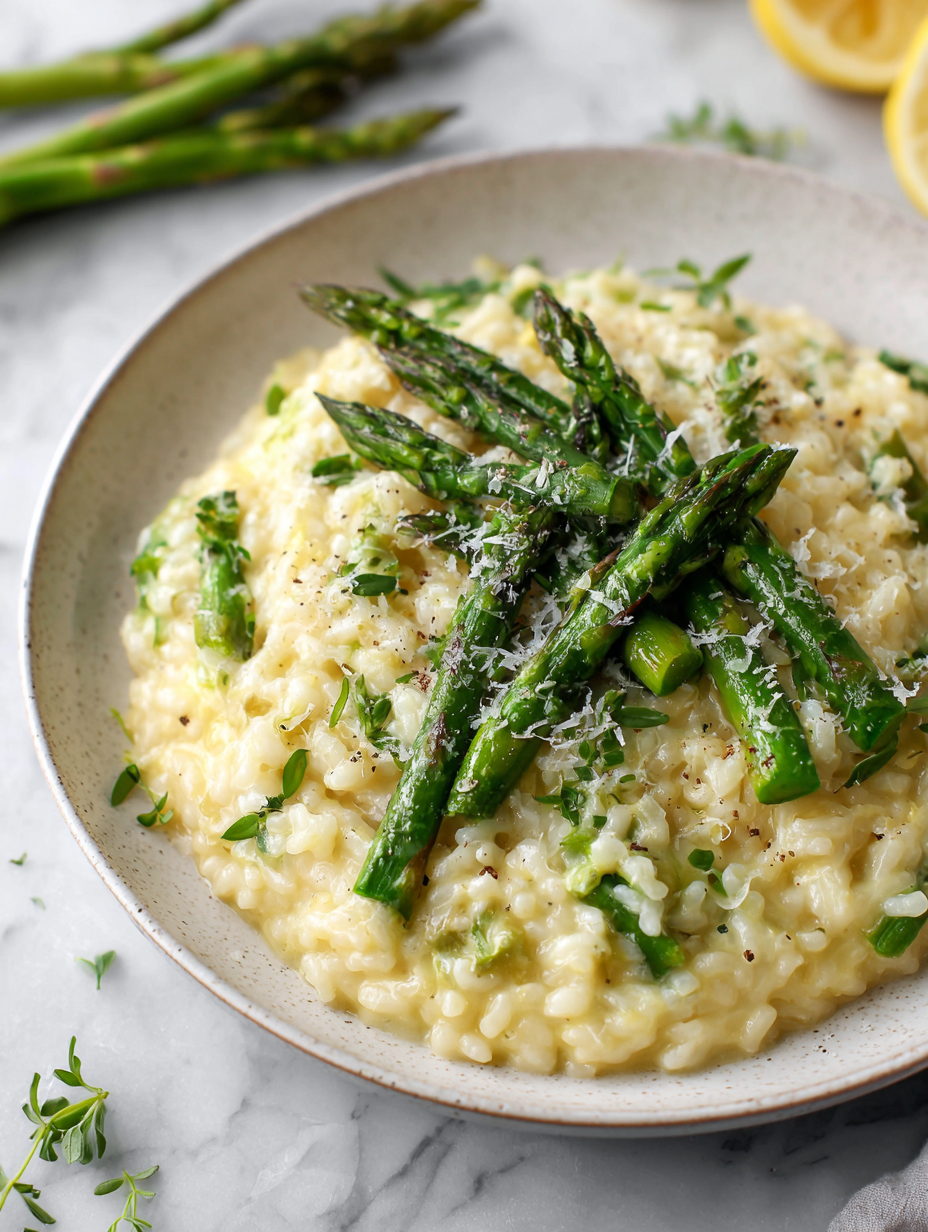
Creamy Asparagus Risotto
Ingredients
Equipment
Method
- Heat the olive oil and butter together in a large heavy-bottomed pan over medium heat until shimmering and fragrant, about 2 minutes.
- Add the finely chopped onion and cook, stirring frequently, until translucent and soft—about 5 minutes. You should smell a sweet aroma, and the onion will turn a delicate, glassy look.
- Stir in the Arborio rice and toast it gently for about 2 minutes, stirring constantly. The rice edges will turn slightly translucent, and you'll notice a nutty aroma filling the kitchen.
- Pour in the warm vegetable broth one ladle at a time, stirring continuously. Wait until almost all the liquid is absorbed before adding the next ladle. Keep the heat at a gentle simmer so the rice cooks evenly and releases its starch, creating a creamy texture.
- Meanwhile, trim the asparagus by snapping off the tough ends, then chop into bite-sized pieces. Blanch the asparagus in boiling water for 2 minutes until bright green and slightly tender, then drain and set aside.
- Continue adding broth and stirring, letting each addition absorb before the next, for about 18-20 minutes. The rice should become tender yet still hold a slight bite, and the mixture will turn velvety and glossy.
- When the rice is almost ready, gently fold in the cooked asparagus and cook for another 2 minutes, allowing the flavors to meld and the asparagus to stay just tender and vibrant.
- Remove the pan from heat and stir in the freshly grated Parmesan cheese and lemon zest, if using. Taste and season with salt and pepper as needed. The risotto should be rich, creamy, and fragrant.
- Let the risotto rest for 2 minutes, then give it a gentle stir. Serve immediately, garnished with extra Parmesan and a drizzle of olive oil if desired, while it’s still hot and velvety.
Pro tips for creamy risotto
- Bold the rice: Use a consistent, gentle stir to release starch and achieve that creamy texture.
- Adjust heat carefully: Keep the simmer gentle (around 85°C/185°F) to prevent rice from breaking down too quickly.
- Taste often: Check for seasoning and creaminess after each addition of broth to avoid dull or overdone risotto.
- Finish with Parmesan: Stir in grated cheese off the heat for maximum melt and a silky finish.
- Reserve some asparagus: Add a few cooked spears on top for texture contrast and vibrant color.
- Use warm broth: Keep your broth heated before adding to maintain steady cooking and prevent temperature drops.
- Don’t rush the process: Patience ensures the rice cooks evenly, absorbing flavors and becoming perfectly tender.
Common mistakes and how to fix them
- FORGOT to stir constantly → Stir often to prevent sticking and release rice starch.
- DUMPED all broth at once → Add broth gradually, one ladle at a time, for creamy texture.
- OVER-TORCHED the rice → Cook over medium-low heat, watch for gentle simmer and velvety appearance.
- FAILED to taste for seasoning → Adjust salt and Parmesan at the end for balanced flavor.
Quick fixes and pantry swaps
- When risotto is too gluey → Splash in a bit more broth and stir vigorously.
- If Parmesan isn’t melting smoothly → Grate it finely and add off heat for better integration.
- Splash of lemon brightening too much → Patch with a teaspoon of olive oil for richness.
- Overcooked asparagus → Shield with a quick blanch in ice water, then refresh in warm broth.
- When rice isn’t tender enough → Rest for 2 minutes off heat to soften slightly and finish cooking gently.
Prep, store, and reheat tips
- Trim and blanch the asparagus up to 1 hour ahead; keep chilled, the vibrant green stays sharp and fresh.
- Cook the risotto fully, then cool quickly in shallow containers; store in the fridge for up to 2 days, the flavor deepens.
- Reheat gently in a pan over low heat, stirring often. Add a splash of broth if it thickens too much, for that velvety texture.
- Parmesan can be added fresh when reheating, but the dish is best enjoyed fresh for peak creaminess and aroma.
- The flavors mellow slightly overnight, so taste and adjust salt or lemon zest before serving again.
Top questions about creamy asparagus risotto
1. Can I use frozen asparagus?
Use fresh asparagus for the best flavor and texture. Frozen works in a pinch, just thaw and drain well.
2. How do I know when the risotto is done?
Cook the risotto until it’s velvety and the rice is tender but still has a slight bite. It shouldn’t be soupy or gluey.
3. When should I add the Parmesan?
Stir in the Parmesan off the heat to prevent clumping and maximize creaminess. Use freshly grated for best melt.
4. How do I get a creamy texture?
Add broth gradually, about a ladle at a time, stirring constantly. This releases starch and creates that creamy texture.
5. What pan should I use?
Use a heavy-bottomed pan over medium-low heat for even cooking. Keep the broth warm before adding.
6. Can I skip the lemon zest?
Finish with a bit of lemon zest and extra Parmesan for brightness and depth of flavor.
7. What if my risotto is too thick?
If the risotto becomes too thick, stir in a splash of warm broth to loosen it up without losing creaminess.
8. Can I use a different cheese?
Use good quality Parmesan for richer flavor and better melting. Pre-grated cheese melts less smoothly.
9. How do I reheat leftovers?
Reheat gently over low heat, adding a little broth if needed to restore creaminess. Serve immediately for best texture.
10. Should I season at the end?
Make sure to taste and adjust seasoning before serving. Risotto can sometimes need a pinch more salt or lemon.
This dish is a little reminder that spring isn’t just a season, it’s a state of mind. The bright green asparagus and the richness of Parmesan make each bite feel like a breath of fresh air, even in the busiest moments. It’s simple, honest cooking that celebrates what’s fresh and in season right now.
Sharing it around the table, I notice how that velvety texture and fresh flavor seem to slow everything down for a moment. No matter how hectic the day, this risotto somehow grounds me—reminding me that good, straightforward food can be the quiet highlight of any meal.