
There’s something almost magical about how a slow cooker turns everyday ingredients into something richer and more satisfying than the sum of its parts. I’ve always loved the way the gentle simmering process coaxes out deep, layered flavors from simple chicken and vegetables, especially on busy days when I want comfort without much fuss. This stew is what I turn to when I need a warm, filling meal that practically makes itself.
What keeps me coming back to this recipe is its forgiving nature—adjust the veggies, tweak the herbs, and it still turns out great. It’s a dish that feels like a little bit of home, slow-cooked into tender chicken, soft carrots, and potatoes that melt on the tongue. Plus, the aroma that wafts through the house as it cooks is enough to make anyone’s stomach rumble with anticipation.
In a way, this stew has become my kitchen’s quiet hero—an unassuming pot that delivers big on flavor. It’s perfect for those days when I want a cozy, nourishing meal without standing over the stove. And honestly, the best part? Coming home to find it all ready to scoop into bowls, the smell alone brightening up even the gloomiest afternoon.
This recipe focuses on how a slow cooker can transform humble ingredients into a deeply flavorful, comforting stew, emphasizing the magic of low, slow heat to develop rich, layered flavors without much fuss.
The story behind this recipe
- This stew was born out of a chaotic Sunday, when I needed something nourishing but didn’t want to spend hours in the kitchen. I threw together what I had—some chicken thighs, carrots, potatoes—and let the slow cooker do its magic. The aroma that filled the house was a surprise; it smelled like a cozy hug on a chilly day.
- Every time I make this, I remember my grandma’s kitchen, where simple ingredients simmered into something comforting without fuss. It’s a reminder that good food doesn’t have to be complicated, just honest and slow-cooked with care.
- This recipe stuck around because it’s reliable—no matter how rough the week, I know I’ll end up with a tender, flavorful stew that warms you from the inside out. It’s become a little ritual, a soft place to land after busy days, and honestly, I look forward to that smell every time.
Ingredient breakdown: key components
- Chicken thighs: I prefer bone-in, skinless thighs for richer flavor and tender meat. You can swap with breasts, just expect slightly less juiciness.
- Carrots: I love using heirloom carrots—those vibrant orange ones burst with sweetness and color. Regular carrots work fine, just chop evenly for uniform cooking.
- Potatoes: Russets become soft and fluffy, soaking up all that savory broth. Sweet potatoes add a gentle sweetness, if you prefer a different twist.
- Onions: Sautéed onions develop a sweet, caramelized aroma that forms the stew’s base. Raw onions can be added directly, but expect a sharper bite.
- Herbs: Fresh thyme or rosemary brightens the dish with herbal notes. Dried herbs work, but add them early so their flavors bloom during slow cooking.
- Broth: Use a good-quality chicken broth—its umami depth makes the stew richer. If you want a lighter version, dilute with water or add a splash of white wine.
- Vegetables (optional extras): Peas or green beans added near the end give a fresh, slightly crisp contrast. Frozen is fine; just toss them in during the last 15 minutes.
Spotlight on key ingredients
Chicken thighs:
- I prefer bone-in, skinless thighs for richer flavor and tender meat. You can swap with breasts, just expect slightly less juiciness.
- Carrots: I love using heirloom carrots—those vibrant orange ones burst with sweetness and color. Regular carrots work fine, just chop evenly for uniform cooking.
- Potatoes: Russets become soft and fluffy, soaking up all that savory broth. Sweet potatoes add a gentle sweetness, if you prefer a different twist.
Carrots:
- I love using heirloom carrots—those vibrant orange ones burst with sweetness and color. Regular carrots work fine, just chop evenly for uniform cooking.
- Potatoes: Russets become soft and fluffy, soaking up all that savory broth. Sweet potatoes add a gentle sweetness, if you prefer a different twist.
Notes for ingredient swaps
- Dairy-Free: Swap heavy cream for coconut milk. It adds creaminess without dairy, but expect a subtle coconut aroma.
- Low-Sodium: Use homemade or low-sodium broth to control salt. Store-bought broth can be quite salty, so adjust seasoning accordingly.
- Vegetarian: Replace chicken with hearty mushrooms like shiitake or portobello. They bring umami and meaty texture, just be sure to cook longer if needed.
- Gluten-Free: Ensure broth and any added thickeners are gluten-free. Cornstarch can replace flour for thickening without gluten.
- Fresh Herbs: Use fresh thyme or rosemary for brighter, more vibrant herbal notes. Dried herbs can be used but add earlier to develop flavor.
- Root Vegetables: Carrots or parsnips can be swapped based on availability. They add sweetness and texture, just adjust cooking time if needed.
- Potatoes: Sweet potatoes add a gentle sweetness and vibrant color. They cook similarly but can turn softer, so watch for over-mushing.
Equipment & Tools
- Slow cooker: Main cooking vessel, slow-cooks the stew evenly.
- Sharp knife: Prepares chicken and vegetables cleanly and safely.
- Cutting board: Provides a stable surface for chopping.
- Mixing spoon: Stirs ingredients during prep and after cooking.
- Measuring cup: Ensures accurate broth and seasoning quantities.
- Skillet: Seals in flavor by searing chicken before slow cooking.
Step-by-step guide to crockpot chicken stew
- Gather your equipment: a large slow cooker, a sharp knife, a cutting board, a mixing spoon, and a measuring cup. The slow cooker is the star here, so make sure it’s clean and ready.
- Prep the chicken: trim excess fat and cut into large chunks, about 4 cm (1.5 inches). Season lightly with salt and pepper. This ensures even cooking and flavor absorption.
- Chop the vegetables: peel and dice 2 carrots, 2 potatoes, and 1 onion. Keep pieces uniform for even cooking. Set aside, ready to throw in.
- Heat a little oil in a skillet over medium. Sear the chicken chunks for 2-3 minutes per side until golden. This step adds depth and flavor, but if rushed, skip and add raw to the slow cooker.
- Add the seared chicken to the slow cooker. Toss in the chopped vegetables and 2 cloves garlic minced. Pour in 4 cups (1 liter) of chicken broth. Stir gently to combine.
- Season with 1 tsp dried thyme, a bay leaf, and a pinch of salt and pepper. Cover the lid tightly, set to low, and cook for 6-8 hours. The house will fill with a savory, bubbling aroma.
- Check the stew after 6 hours: the chicken should be tender and the vegetables soft but not mushy. If the potatoes fall apart easily, it’s done. If not, cook a bit longer.
- Once cooked, turn off the heat. Remove the bay leaf and taste for seasoning. Adjust salt or herbs if needed. Let it rest for 10 minutes to settle flavors.
- Serve hot, ladled into bowls. Garnish with fresh parsley if you like. The stew should be thick, fragrant, and full of tender chicken and soft vegetables.
- Enjoy the comforting warmth and rich aroma that’s perfect after a chilly day or when you need a hearty meal that practically cooks itself.
Let the stew rest off the heat for 10 minutes. Remove the bay leaf. Serve in warm bowls, garnished with herbs if you like. The flavors deepen slightly as it rests, making each spoonful richer and more balanced.
How to Know It’s Done
- Chicken is fully cooked and tender when pierced; juices run clear.
- Vegetables are soft but not falling apart, with a slight al dente bite.
- Stew has a rich, savory aroma and a slightly thickened broth.
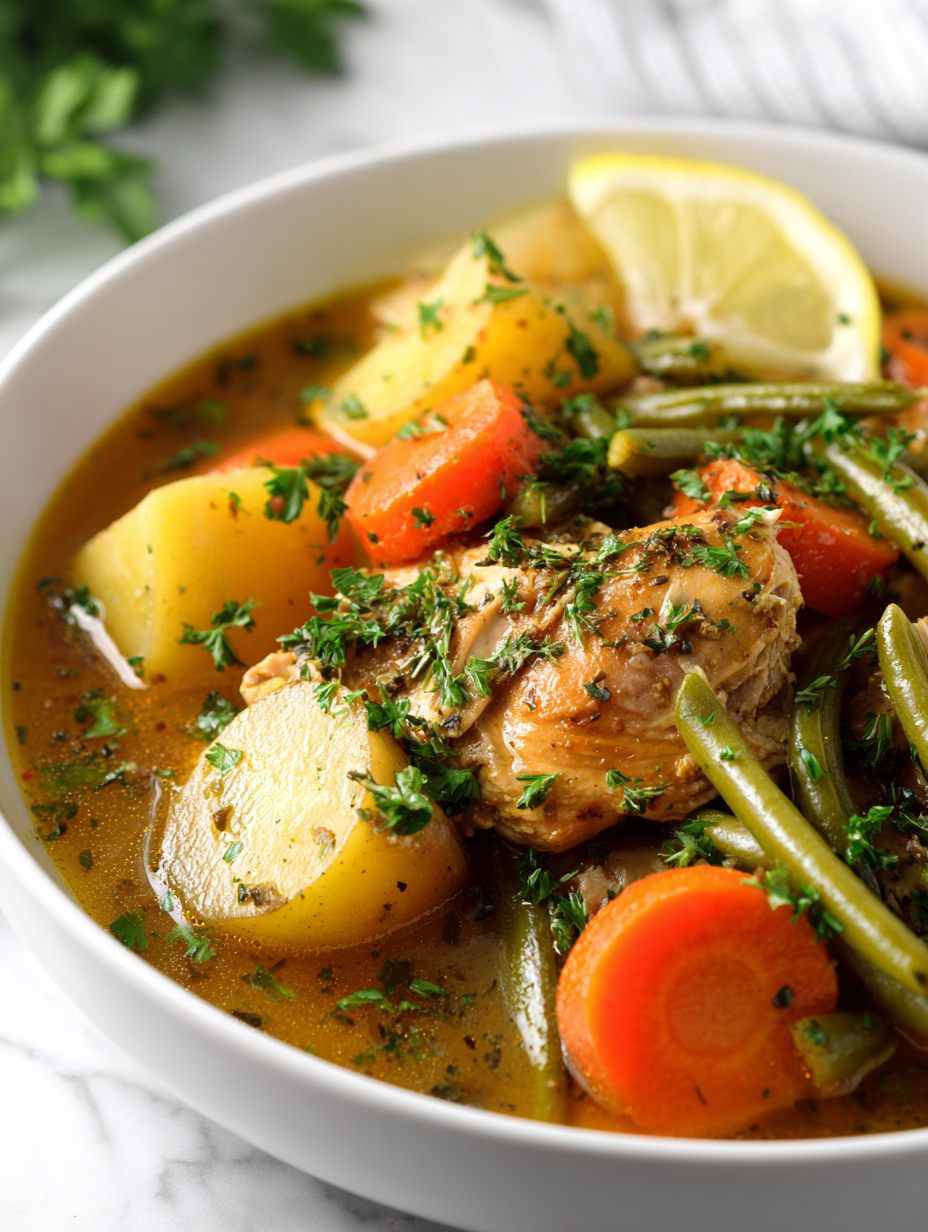
Slow Cooker Chicken and Vegetable Stew
Ingredients
Equipment
Method
- Start by prepping your ingredients: peel and dice the carrots and potatoes, dice the onion, and mince the garlic. Trim excess fat from the chicken thighs and cut into large chunks. Gather your skillet and slow cooker ready for action.
- Heat a tablespoon of oil in the skillet over medium heat. Once hot, add the chicken chunks and sear for about 2-3 minutes per side until they develop a golden-brown crust. This step deepens the flavor for the stew.
- Transfer the seared chicken to the slow cooker. Add the diced carrots, potatoes, onion, and minced garlic. Pour in the chicken broth, ensuring all ingredients are submerged.
- Sprinkle the dried thyme over the ingredients, add the bay leaf, and season with salt and pepper. Cover with the lid and set the slow cooker to low for 6-8 hours.
- As the hours pass, your kitchen will fill with a warm, savory aroma. The chicken and vegetables will soften and absorb the flavorful broth, creating a rich, thick stew.
- After 6 to 8 hours, check that the chicken is tender and falling apart, and the vegetables are soft but not mushy. Remove the bay leaf and taste the broth, adjusting salt and pepper if needed.
- Serve the stew hot in bowls, garnished with chopped fresh herbs if desired. The dish should be thick, tender, and full of layered flavors, ready to warm you from the inside out.
Pro tips for best results
- BOLD BROWNED CHICKEN: Sear the chicken first to develop a deep, savory flavor that permeates the stew.
- VEGETABLE TIMING: Add denser vegetables like potatoes early, and softer ones like peas later, for perfect texture.
- HERB INFUSION: Toss herbs into the cooker early to allow their flavors to bloom fully into the broth.
- BROTH BALANCE: Taste and adjust seasoning at the end; the slow cooker can mute or intensify flavors unexpectedly.
- MINIMAL LID REMOVAL: Keep the lid on as much as possible to retain moisture and heat, ensuring tender chicken and vegetables.
- STIR GENTLY: Mix only when necessary to keep ingredients intact and prevent breaking down softer vegetables.
- FINAL REST: Let the stew sit for 10 minutes after cooking to allow flavors to meld and broth to thicken slightly.
Common mistakes and how to fix them
- FORGOT to brown the chicken → Sear chicken first for deeper flavor.
- DUMPED vegetables too early → Add vegetables in stages for perfect tenderness.
- OVER-TORCHED broth → Reduce heat if it starts to shimmer or smell burnt.
- MISSED seasoning adjustments → Taste and adjust salt at the end for best flavor.
Quick fixes for common issues
- When stew lacks flavor → Splash a dash of soy sauce or Worcestershire for umami boost.
- If vegetables are mushy → Patch with a splash of vinegar to brighten the dish.
- Splash in a little extra broth if it reduces too much during cooking.
- Shield burnt bits by scraping off the top layer and adding fresh broth for a fresh start.
- Dumped in too many vegetables → Stir in a pinch of sugar or lemon juice to balance excess bulk.
Prep, store, and reheat tips
- Chop vegetables the night before; store in an airtight container in the fridge for up to 24 hours, ensuring they stay crisp and vibrant.
- Shredded cooked chicken can be prepared ahead and refrigerated for 2-3 days, but avoid freezing to maintain texture.
- The stew tastes even better the next day as flavors meld; refrigerate in an airtight container for up to 3 days, with a rich, savory aroma.
- Reheat gently on the stove over low heat, stirring occasionally, until steaming hot and fragrant, about 5-10 minutes.
- For longer storage, freeze the cooled stew in portions for up to 2 months; thaw overnight in the fridge for best texture and aroma.
Top questions about crockpot chicken stew
1. How do I know when the chicken is fully cooked?
Cooked chicken should be tender and easy to shred, with a rich aroma filling your kitchen.
2. What’s the right texture for the vegetables?
Vegetables should be soft but not falling apart, with a slightly thickened, savory broth.
3. How can I tell when the stew is ready?
The stew is done when the chicken is tender, vegetables are soft, and the broth is flavorful and slightly thickened.
4. Should I add herbs at the beginning or end?
Use fresh herbs early for flavor, and taste at the end to adjust salt and seasoning.
5. Can I skip searing the chicken?
Seared chicken adds depth of flavor, but you can skip searing if you’re short on time.
6. When should I add quick-cooking vegetables?
Use dense vegetables like potatoes early, and softer ones like peas later, for perfect texture.
7. How do I reheat leftovers without overcooking?
Reheat gently over low heat, stirring occasionally, until steaming hot and fragrant.
8. How long can I store leftovers?
Store in airtight containers for up to 3 days in the fridge, or freeze for up to 2 months.
9. What if my stew lacks flavor?
Adding a splash of soy sauce or Worcestershire can boost umami if the stew feels flat.
10. How do I fix overcooked vegetables?
If veggies are mushy, stir in a splash of vinegar or lemon juice to brighten the dish.
This stew isn’t just a meal; it’s a little reminder that simple ingredients, when slow-cooked with patience, can become something deeply comforting. The smell of tender chicken, fragrant herbs, and caramelized vegetables filling the house feels like a warm hug after a hectic day.
Whenever I make this, I think about how good food is often about the quiet moments—those hours of waiting that turn humble ingredients into something memorable. It’s a dish that’s easy to fall into, but each spoonful keeps you coming back for more, especially when the house smells like a cozy, savory dream.