
This humble crockpot vegetable stew became my unexpected comfort during hectic weeks, proving that slow-cooked simplicity can bring peace and nourishment when life feels chaotic.
There’s something about tossing a handful of vegetables, a dash of herbs, and broth into the slow cooker that feels like setting a gentle reminder to take a moment for yourself.
It’s not just about the ease—this stew offers a warm, honest flavor that sticks with you, especially when days are too full for anything more complicated.
How this humble crockpot vegetable stew became my unexpected comfort during hectic weeks, proving that slow-cooked simplicity can bring peace and nourishment when life feels chaotic.
The story behind this recipe
- This vegetable stew was born from a busy week when I needed something hearty but effortless. I threw together what I had—root vegetables, a few herbs, and a splash of broth—and let it do its thing. What surprised me was how the slow cooking deepened the flavors and made everything feel cozy, even on the most chaotic days.
- It’s become my go-to comfort, especially when I want something nourishing without fuss. There’s a quiet satisfaction in knowing I can set it up in the morning and come home to a warm, fulfilling meal. Sometimes, it’s the simplest dishes that remind us to slow down and enjoy the little moments.
- heading”: “The story behind this recipe”
Ingredient breakdown: key components
- Carrots: I like mine slightly sweet and tender, so I chop them small. If you prefer more bite, leave larger pieces. Their natural sweetness really comes out as they cook slowly and fill the kitchen with a warm, earthy aroma.
- Onions: I always use yellow onions for depth, letting them caramelize just a bit before adding other veg. If you want a milder flavor, sauté them a little longer until they’re golden—gives the stew a richer, sweeter base.
- Celery: Adds a fresh, slightly peppery note that balances the sweetness of the carrots. If you don’t have celery, a small handful of fennel fronds can add a similar brightness, just with a slightly different aroma.
- Vegetable Broth: I prefer homemade or low-sodium store-bought to control salt. If you’re in a rush, a good quality cube dissolved in hot water works, but watch the salt levels. The broth should smell savory and inviting, not too salty or bland.
- Potatoes: I use starchy Russets for a thicker stew, but sweet potatoes add a lovely sweetness and vibrant color. Cut into uniform chunks so they cook evenly, and keep an eye on them—they should be tender but not falling apart.
- Herbs: Fresh thyme and bay leaves are my staples—they add a subtle, fragrant layer. Dry herbs work fine, just use a slightly larger pinch. If you’re feeling adventurous, a pinch of smoked paprika can lend a smoky undertone that’s unexpected but cozy.
- Tomatoes (optional): A handful of diced canned tomatoes can add a bright, tangy note. If you skip them, the stew still feels hearty—think of it as a blank canvas for whatever spices or herbs you love.
Spotlight on key ingredients
Carrots:
- I like mine slightly sweet and tender, so I chop them small. If you prefer more bite, leave larger pieces. Their natural sweetness really comes out as they cook slowly and fill the kitchen with a warm, earthy aroma.
- Onions: I always use yellow onions for depth, letting them caramelize just a bit before adding other veg. If you want a milder flavor, sauté them a little longer until they’re golden—gives the stew a richer, sweeter base.
Vegetable broth:
- Celery: Adds a fresh, slightly peppery note that balances the sweetness of the carrots. If you don’t have celery, a small handful of fennel fronds can add a similar brightness, just with a slightly different aroma.
- I prefer homemade or low-sodium store-bought to control salt. If you’re in a rush, a good quality cube dissolved in hot water works, but watch the salt levels. The broth should smell savory and inviting, not too salty or bland.
Notes for ingredient swaps
- Broth: Using vegetable stock from a carton is quick, but homemade broth adds a richer, deeper flavor that’s hard to beat.
- Carrots: If you’re out, parsnips give a similar sweetness and texture, but with a slightly earthier aroma. Go easy with the cooking time to keep them tender.
- Potatoes: Sweet potatoes lend vibrant color and sweetness, but regular starchy potatoes thicken the stew nicely and keep it classic.
- Herbs: Fresh thyme and bay leaves are my favorites, but dried herbs like oregano or rosemary can add a different, more pungent note—just use a pinch of dried.
- Onions: Red onions can be swapped in if yellow are unavailable; they’re milder and a little sweeter, which still works well in the slow cooker.
- Tomatoes: Canned diced tomatoes brighten the stew with tang, but if you skip them, it turns into a more neutral, hearty vegetable medley that still feels satisfying.
- Additional veggies: Zucchini or green beans can be added in the last 30 minutes for a fresh, tender bite, especially if you want a lighter, summer twist.
Equipment & Tools
- Large crockpot: Main cooking vessel for slow simmering.
- Sharp knife: Prep vegetables cleanly and efficiently.
- Cutting board: Protect surfaces and keep veg organized.
- Wooden spoon: Stir ingredients gently without scratching crockpot.
Step-by-step guide to vegetable stew
- Gather your equipment: a large crockpot, a sharp knife, a cutting board, and a wooden spoon for stirring.
- Prep your veg: peel and chop carrots, potatoes, and onions into bite-sized pieces. Aim for uniform sizes for even cooking.
- Layer the vegetables: place the root veggies on the bottom, then add the onions, celery, and any softer veg on top.
- Pour in broth: add enough to cover the vegetables by about an inch. Use homemade or store-bought, seasoned lightly.
- Add herbs and spices: toss in bay leaves, thyme sprigs, and a pinch of salt and pepper. For extra depth, a dash of smoked paprika works well.
- Set your crockpot: cover and cook on low for 6-8 hours, or until the vegetables are tender and fragrant. No need to stir much.
- Check for doneness: at around 6 hours, poke a potato with a fork. It should slide in easily, and the stew should smell savory and warm.
- Adjust seasoning: taste and add more salt or herbs if needed. If the stew is too thick, stir in a splash of hot water or broth.
- Rest and finish: turn off the heat, let it sit 10 minutes uncovered to settle flavors. Remove bay leaves and herb stems.
- Serve hot: ladle into bowls, maybe with a crusty bread or a sprinkle of fresh herbs. It should be hearty, warm, and fragrant.
Once cooked, turn off the crockpot and let the stew sit uncovered for 10 minutes. Remove bay leaves and herb stems. Serve in bowls, ideally with crusty bread or fresh herbs for garnish.
How to Know It’s Done
- Vegetables are tender when pierced with a fork, and aroma is rich and inviting.
- Stew has thickened slightly but remains saucy, not watery or gloopy.
- Color is vibrant, with carrots and potatoes showing mellowed, earthy hues.
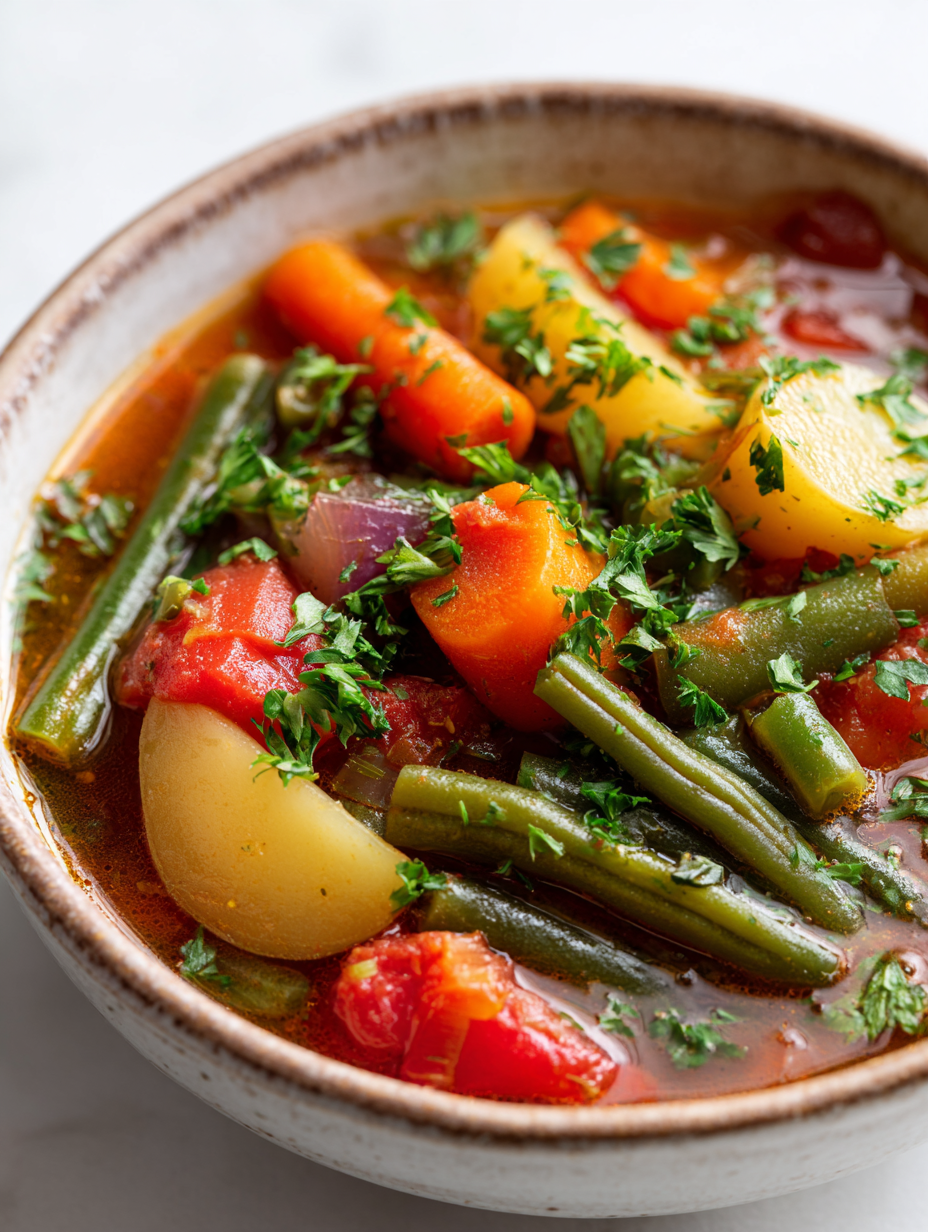
Crockpot Vegetable Stew
Ingredients
Equipment
Method
- Start by peeling and chopping the carrots into small, even pieces. Then dice the potatoes into uniform chunks and dice the onion and celery. This prep ensures everything cooks evenly and looks beautiful in the final dish.
- Layer the root vegetables—carrots and potatoes—at the bottom of your crockpot, followed by the diced onion and chopped celery on top. This layering helps prevent delicate ingredients from overcooking while the hearty vegetables soften slowly.
- Pour in the vegetable broth, making sure it covers the vegetables by about an inch. The broth should smell savory and inviting as it begins to mingle with the vegetables.
- Sprinkle the dried thyme, add the bay leaves, and a pinch of smoked paprika if using. These herbs and spices will infuse the stew with fragrant, cozy flavors as it cooks.
- Cover the crockpot and set it to low. Let the stew cook gently for 6 to 8 hours, or until the vegetables are tender and the flavors have melded beautifully. You’ll start to smell warm, earthy aromas filling your kitchen.
- About halfway through, check the stew to ensure the vegetables are soft and the broth has thickened slightly. If you'd like a brighter flavor, stir in the canned diced tomatoes at this point.
- Once the vegetables are easily pierced with a fork and the stew smells rich and fragrant, turn off the crockpot. Taste and season with salt and pepper as needed to balance the flavors.
- Remove the bay leaves and thyme stems, then ladle the stew into bowls. The mixture should be thick, hearty, with soft, colorful vegetables swimming in fragrant broth. Serve hot, perhaps with crusty bread or fresh herbs on top.
Pro tips for perfect vegetable stew
- Use fresh herbs at the end for a burst of aroma and bright flavor.
- Layer vegetables in the crockpot to prevent over-softening of delicate ingredients.
- Sear root vegetables briefly before slow cooking for a caramelized depth.
- Keep the lid slightly ajar during the last hour to help the stew thicken naturally.
- Add a splash of acid (like lemon juice) just before serving to brighten the overall taste.
- Use a silicone spatula to gently stir without breaking apart softer vegetables in the crockpot.
- For richer flavor, toss in a small knob of butter or a drizzle of good olive oil right before serving.
Common mistakes and how to fix them
- FORGOT to check vegetable tenderness, fix by cooking longer if needed.
- DUMPED too much salt initially, fix by diluting with water or broth.
- OVER-TORCHED the stew, fix by reducing heat immediately and adding liquid.
- MISSED removing bay leaves, fix by double-checking before serving.
Quick fixes and pantry swaps
- When stew smells burnt, splash in a little hot water and stir gently.
- If vegetables are too firm, extend cooking time by 30 minutes.
- DUMPED too much salt? Fix with a peeled potato to absorb excess, then remove.
- Over-torched? Shield with a splash of broth and lower heat immediately.
- Splash some lemon juice or vinegar if the stew feels dull or flat.
Prep, store, and reheat tips
- Chop vegetables the night before; store in airtight containers in the fridge for up to 24 hours. The fresh scents of earth and sweetness will be preserved.
- Measure out broth and herbs ahead of time; keep refrigerated for up to 2 days. The aroma of herbs intensifies as it sits, making prep quicker on cooking day.
- Stew can be made a day in advance; store in an airtight container in the fridge for 2-3 days. Flavors deepen overnight, with a richer, more integrated taste.
- Reheat gently on the stove over low heat until steaming hot; stirring occasionally. Expect the stew to shimmer and aroma to become even more inviting.
- For longer storage, freeze in portions up to 3 months. Thaw overnight in the fridge, then reheat, noticing the flavors mellow and the texture soften slightly.
Top questions about Crockpot Vegetable Stew
1. How do I prepare vegetables evenly?
Use a sharp knife to chop vegetables into uniform pieces for even cooking. The size affects texture and cooking time.
2. How should I layer ingredients in the crockpot?
Start with hearty root vegetables like carrots and potatoes at the bottom, softer ones on top. Layering helps prevent overcooking delicate ingredients.
3. What’s the ideal cooking time?
Cook on low for 6-8 hours. Check tenderness with a fork—vegetables should be soft but not mushy.
4. When should I add herbs and seasoning?
Add herbs like thyme and bay leaves at the start for flavor. Taste and adjust salt near the end for balance.
5. How do I thicken my stew?
If the stew is too watery, remove the lid during the last hour or stir in a cornstarch slurry to thicken.
6. Can I substitute broth types?
Use homemade or low-sodium broth for a richer, more controlled flavor. Store-bought works fine too, just watch the salt.
7. How long can I store leftovers?
Leftovers keep well in the fridge for up to 3 days, and in the freezer for 2-3 months. Reheat on low, stirring occasionally.
8. How can I enhance the flavor before serving?
Stir in a splash of lemon juice or vinegar before serving to brighten flavors and add a fresh note.
9. What if my vegetables aren’t tender enough?
If vegetables are undercooked, extend cooking time or increase heat slightly. Use a fork to check tenderness.
10. How often should I open the crockpot?
Avoid opening the lid too often, as it releases heat and lengthens cooking time. Check once or twice near the end.
This humble stew is a reminder that simple ingredients and patience can create something unexpectedly comforting. It’s the kind of dish that tastes like a warm hug after a long day, filling your kitchen with familiar, earthy aromas.
In times when life feels busy and overwhelming, this crockpot vegetable stew offers a quiet moment of nourishment—easy, honest, and deeply satisfying. Sometimes, the most unassuming recipes become the ones we turn to again and again, finding peace in their quiet presence.