
Lobster tails can feel fancy, but there’s something about finishing them with a homemade garlic butter that makes the whole experience feel warm and personal. It’s not just about the richness, but that smoky, garlicky punch that hits just right after a quick broil or grill. I’ve found that this simple step turns a restaurant classic into a cozy weekend treat you can pull off with just a few ingredients.
What I love most is how forgiving this dish is — a little butter, some garlic, a splash of lemon, and you’re set. It’s the kind of recipe that feels indulgent but doesn’t require a lot of fuss. Plus, the smell of melting butter mingling with toasted garlic in the oven is enough to make anyone’s kitchen feel like a special occasion.
Focusing on the overlooked art of finishing lobster tails with a homemade garlic butter that’s rich, slightly smoky, and perfectly coats every bite, transforming an elegant dish into a cozy, approachable Sunday night feast.
The inspiration behind this dish
- This recipe was born out of a lazy Sunday evening craving for something indulgent yet simple. I remember the first time I tried broiling lobster tails and then finishing them with a homemade garlic butter—something about that combination just stuck with me. It felt like a small act of luxury I could easily recreate at home, especially when I wanted to impress without fuss.
- Over the years, I’ve tweaked the butter to include a smoky element with a touch of lemon for brightness. What keeps bringing me back is how this dish feels both fancy and cozy, perfect for unwinding after a long week or celebrating something small. It’s a kind of reminder that good, honest ingredients can turn a simple meal into a special moment.
- The smell of garlic and butter crackling in the oven, the way the lobster’s shell turns a vibrant red—these little details remind me that good cooking is about capturing those sensory moments. It’s not just about the taste, but the atmosphere you create with each step.
Ingredient breakdown
- Butter: I use a good quality unsalted butter, the kind that smells rich and slightly nutty as it melts. You can swap for ghee if you want a nuttier, more stable fat that won’t scorch easily.
- Garlic: Fresh garlic cloves are a must—pungent and juicy, they turn sweet and fragrant as they toast. If you’re pressed for time, pre-minced garlic works but loses some punch.
- Lemon: I love a squeeze of fresh lemon juice for brightness—look for lemons with firm, shiny skin. Skip if you want a more subdued, buttery flavor, but I think it’s essential here.
- Lobster Tail: Fresh, wild lobster tails are best—firm meat, bright color, and a slight briny scent. Frozen works in a pinch, just thaw thoroughly and pat dry so the butter adheres well.
- Herbs: A sprinkle of parsley or chives at the end adds freshness. Dried herbs are okay if fresh isn’t available, but they won’t deliver the same vibrant aroma.
- Seasonings: Just salt and pepper—don’t overdo it. The butter and lobster’s natural sweetness should shine through, with a hint of smoky char if you broil properly.
Spotlight on key ingredients
Butter:
- I prefer European-style, high-fat butter for a richer, silkier sauce that clings to the lobster. It melts with a slight nutty aroma, creating a luscious base.
- Lobster Tail: Fresh, wild lobster has a vibrant, briny scent and firm, bright meat. Frozen works well if thoroughly thawed and patted dry to prevent excess water from diluting the butter.
Garlic and Lemon:
- Garlic: Fresh garlic cloves are essential—pungent when raw, but they mellow into a sweet, toasted aroma as they cook. The tiny juice sacs burst with flavor, infusing the butter with a smoky, garlicky punch.
- Lemon: Bright, zesty, and juicy, a good lemon adds a clean citrus note that cuts through the richness. Look for firm, shiny lemons with a slight give when squeezed, avoiding dull or soft ones.
Notes for ingredient swaps
- Dairy-Free: Swap butter for coconut oil or olive oil. You’ll lose some richness but gain a subtle, fruity note.
- Garlic: Use roasted garlic or garlic powder in a pinch. Roasted garlic adds sweetness, while powder is more subdued.
- Lemon: Lime or vinegar can replace lemon juice for acidity, but they won’t have that bright, citrus zing.
- Lobster Tail: King crab legs or large shrimp as more affordable, quick alternatives. Expect different textures but similar luxury.
- Herbs: Basil, tarragon, or dill work well for fresh herbs, each bringing a unique aroma and flavor twist.
- Seasonings: A pinch of smoked paprika or cayenne can add smoky heat or spice—use sparingly to avoid overpowering.
Equipment & Tools
- Kitchen scissors: Cut through the shell cleanly for easy meat removal.
- Baking sheet: Provide even heat for broiling the lobster.
- Small saucepan: Melt butter and cook garlic without burning.
- Spoon or brush: Apply garlic butter evenly over the lobster meat.
- Tongs: Handle hot lobster with safety and precision.
Step-by-step guide to lobster prep
- Preheat your oven to 220°C (430°F). Grab a baking sheet lined with foil or parchment—easy cleanup, folks. Have a small saucepan ready for melting butter and garlic.
- Prepare the lobster tails: Using kitchen scissors, cut down the top shell from the fan end to the tail, about 1 inch deep, to expose the meat. Gently pry the shell apart without ripping, and lift the meat out, resting it on top of the shell for a neat presentation.
- Pat the lobster meat dry with paper towels. Season lightly with salt and pepper—don’t go overboard, the butter’s got enough salt. Set aside.
- In the saucepan, melt 4 tablespoons of butter over medium-low heat. Add 3 minced garlic cloves. Cook just until fragrant, about 1 minute. Watch for a golden hue and a waft of garlicky aroma—don’t let it burn.
- Place the lobster tails on the prepared baking sheet, meat side up. Spoon the garlic butter generously over the meat, letting it pool slightly in the shell. Broil for 10 minutes, checking after 8—look for a bright red shell and meat that’s just firm and opaque.
- Check for doneness: the meat should jiggle slightly when nudged, and the edges may start to caramelize. If it’s still translucent or feels too soft, give it a couple more minutes, but no more than 12.
- Once cooked, remove from the oven. Drizzle with a squeeze of fresh lemon juice for brightness and garnish with chopped parsley or chives if you like. Let rest for 2 minutes—carry that buttery aroma to the table.
- Serve hot, preferably with crusty bread or a simple green salad. Enjoy the contrast of smoky garlic butter on tender lobster meat—satisfyingly rich but balanced with that citrus zing.
Let the lobster rest for 2 minutes after baking. Then, serve immediately, drizzled with fresh lemon juice, and garnished with herbs for color and aroma. Pair with crusty bread or a crisp salad to balance the richness.
How to Know It’s Done
- Lobster meat is opaque and firm, not translucent.
- Shell turns bright red with slight caramelization at edges.
- Garlic butter is bubbling and fragrant, not burnt.
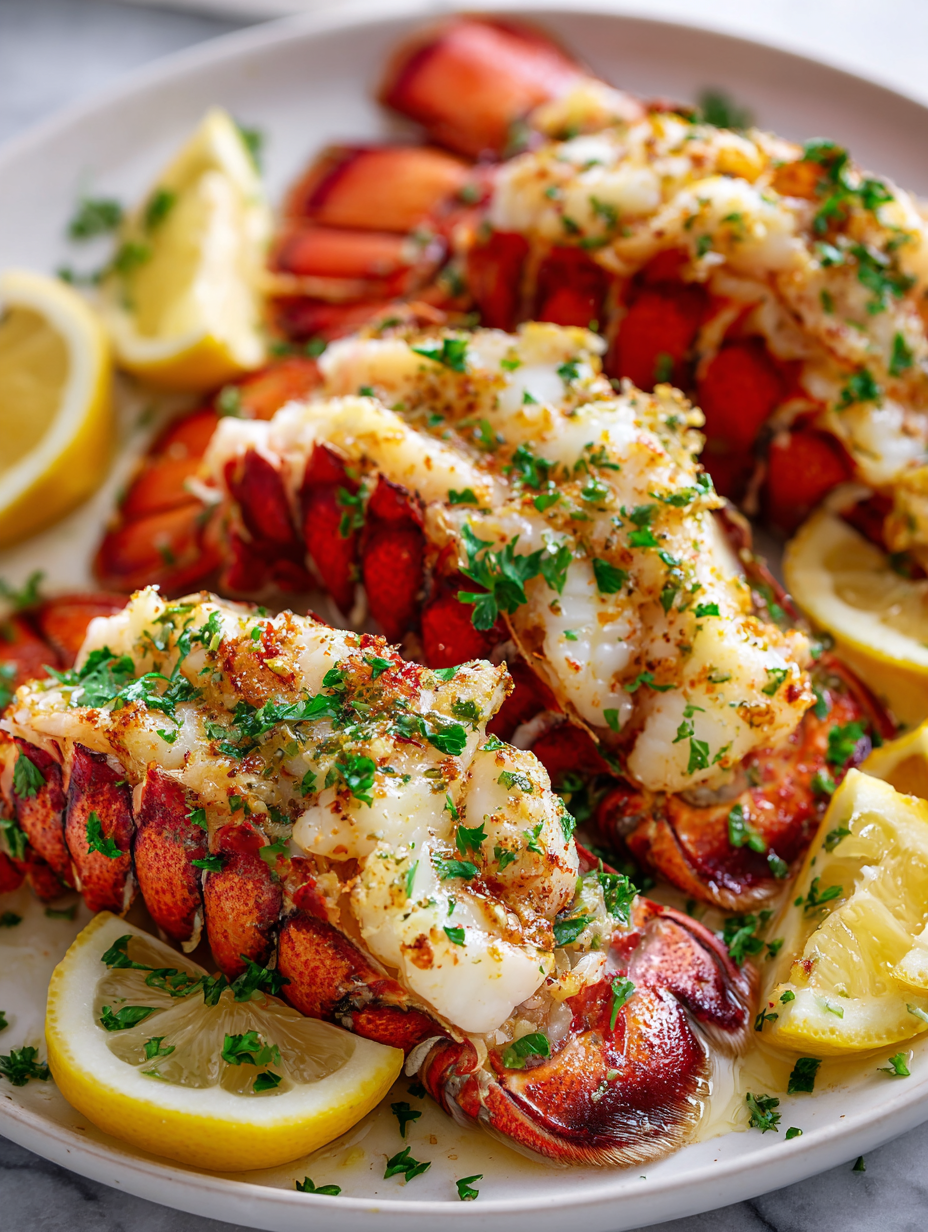
Garlic Butter Lobster Tails
Ingredients
Equipment
Method
- Preheat your oven to 220°C (430°F). Line a baking sheet with foil or parchment for easy cleanup.
- Using kitchen scissors, carefully cut down the top shell of each lobster tail from the fan end to the midpoint, about 1 inch deep, then gently pry the shell apart without ripping it.
- Gently lift the lobster meat out of the shell, resting it on top of the shell for a clean, elegant presentation. Pat the meat dry with paper towels to remove excess moisture.
- Melt the butter in a small saucepan over medium-low heat. Add the minced garlic and cook gently until fragrant, about 1 minute, until the butter is bubbling and the garlic is golden.
- Squeeze fresh lemon juice over the lobster meat and season lightly with salt and pepper. Spoon the garlic butter generously over the meat, allowing it to pool in the shell.
- Place the lobster tails on the prepared baking sheet, meat side up, and broil in the preheated oven for about 10 minutes. Check after 8 minutes: the shell should be bright red, and the meat opaque and slightly caramelized at the edges.
- Remove from the oven once cooked, drizzle with additional lemon juice if desired, and sprinkle with chopped parsley or chives for a fresh burst of flavor and color.
- Serve immediately with extra lemon wedges and enjoy the rich, smoky garlic butter coating tender lobster meat that’s perfect for a cozy weekend treat.
Pro tips for perfect lobster
- garlic: Crush and finely chop to release maximum aroma and flavor before adding to butter.
- Sizzle test: When butter and garlic hit the pan, listen for a gentle crackle—stop before it turns to burn.
- Color check: Broiling should turn the shell a vibrant red and the meat opaque with slight caramelization edges.
- Butter basting: Spoon hot garlic butter over the lobster meat during broiling for extra richness and even flavor.
- Rest briefly: Let the lobster rest for a minute after baking to allow juices to redistribute and flavors to settle.
- Lemon splash: Finish with a quick squeeze of fresh lemon for bright contrast—don’t skip this step.
- Herb garnish: Sprinkle chopped parsley or chives right before serving to add freshness and color.
Common mistakes and how to fix them
- OVERCOOKED: Lobster becomes rubbery. Fix by removing from oven once just opaque and firm.
- DUMPED: Too much butter makes it greasy. Use measured amounts, balance with lemon juice.
- FORGOT: To preheat oven properly. Always start with a hot oven to ensure even cooking.
- RIPPED: Shell during prep. Use sharp scissors carefully and handle lobster gently.
Quick Fixes for Common Issues
- When sauce separates, splash a teaspoon of cold water and stir gently to re-emulsify.
- If butter starts to burn, immediately remove from heat and add a splash of lemon juice to cool it down.
- Dumped too much garlic? Add a bit more butter to mellow the flavor and prevent bitterness.
- Overcooked lobster? Cover with foil and gently reheat in a 150°C (300°F) oven for 2 minutes.
- Shield lobster from direct heat if shell begins to burn; slide the rack lower in the oven.
Prep, store, and reheat tips
- Prepare the garlic butter mixture ahead by melting butter and mincing garlic; store in the fridge for up to 2 days. It firms up in the fridge but warms quickly in the pan, releasing fragrant aromas when reheated.
- Thaw frozen lobster tails in the fridge overnight, then pat dry thoroughly. Once thawed, keep them covered in the fridge for an additional 24 hours, ensuring they stay firm and fresh for cooking.
- If making the dish in advance, assemble the lobster on a baking sheet, spoon with garlic butter, then cover tightly with plastic wrap. Reheat in a 180°C (350°F) oven for about 8–10 minutes until warmed through and fragrant.
- Reheating lobster leftovers can cause the meat to dry out; gently warm in a covered dish in the oven or microwave at low power. Look for a slight shimmer of butter and a warm, tender texture when ready to serve again.
Top questions about Garlic Butter Lobster
1. Can I use frozen lobster tails?
Use fresh lobster tails if possible; frozen works but ensure they are fully thawed and patted dry for the best texture.
2. How long does it take to cook lobster tails?
Yes, preheat your oven to 220°C (430°F). Broil the lobster for about 10 minutes, until the shell turns bright red and the meat is opaque.
3. Should I add lemon during cooking or after?
Add lemon juice at the end to brighten the rich butter and garlic flavor. It’s a simple splash that makes a big difference.
4. Can I make the garlic butter in advance?
Yes, you can prepare the garlic butter ahead. Keep it in the fridge for up to 2 days, then reheat gently before using.
5. How do I prep the lobster shell?
Use a sharp pair of kitchen scissors to cut along the shell. Avoid ripping the shell to keep the lobster intact and looking neat.
6. How do I know when lobster is cooked enough?
The lobster is done when the shell is bright red, the meat jiggles slightly when nudged, and it’s firm and opaque.
7. What ingredients make the best garlic butter?
Use a good quality unsalted butter for richness, and add a splash of lemon for brightness and contrast. Fresh garlic is key for punch.
8. What if my garlic butter burns?
If the butter starts burning, remove from heat immediately and add a squeeze of lemon. Keep the garlic gentle and fragrant, not charred.
9. How should I reheat lobster leftovers?
Reheat leftovers in a low oven or microwave, covered, until just warmed through. Add a splash of lemon or fresh herbs before serving again.
10. Any tips for handling hot lobster?
Always handle hot lobster carefully—use tongs or gloves. Keep an eye on the broil to prevent burning the shell edges.
This garlic butter lobster tail is one of those dishes that makes a simple night feel a bit special. The rich, garlicky aroma lingering in the kitchen is enough to spark a little celebration, even on a quiet evening. It’s a reminder that with just a handful of ingredients, you can create something truly memorable.
In the end, it’s about those small moments—the crackle of butter, the bright squeeze of lemon, the tender lobster meat—that turn an ordinary dinner into a satisfying experience. No matter how many times I make this, it still feels like a little treat I can’t quite get tired of.