
Lobster tails often seem like a special occasion only dish, but there’s something so satisfying about keeping it simple. A generous brush of garlic herb butter transforms that tender, slightly sweet meat into a burst of aroma and flavor that feels indulgent without fuss. It’s one of those recipes that reminds me you don’t need complicated techniques to make a stunning meal.
What I love about this approach is how forgiving it is. You can’t really overcook lobster if you keep an eye on it, and the herbs add bright freshness that balances the richness. It’s a quick dinner that makes you feel fancy, perfect for when you want to treat yourself but don’t want to spend hours in the kitchen.
Focusing on the underappreciated charm of lobster tails cooked simply with garlic and herbs, highlighting how a straightforward approach can elevate this luxury ingredient to an everyday indulgence, especially when you want a meal that feels fancy but is actually quick and forgiving.
The story behind this recipe
This recipe came from a lazy Sunday craving for something rich but without the fuss. I remember the first time I tried lobster with just garlic and herbs—everything else seemed unnecessary. It struck me how a simple tweak in ingredients could turn a luxury into a comfort food. Since then, I’ve kept it as my go-to way to indulge without overcomplicating things.
Key ingredients and tips
- Lobster tails: I love how their firm, slightly sweet meat responds beautifully to just a quick sear—aim for that tender, juicy bite. Swap with langoustines if you want a smaller, more delicate shellfish experience.
- Garlic: When minced fresh, it releases a warm, fragrant aroma that fills the kitchen—don’t skimp here. If you’re in a pinch, garlic powder works but loses that sharp punch.
- Herbs (parsley, thyme): Fresh herbs add brightness and a pop of green—crisp and aromatic. Dried herbs can be used but will be less vibrant, so use a little more and crush them first.
- Butter: Rich, velvety, and golden—this is the base of the whole dish. For a dairy-free version, try browned olive oil for a smoky twist, though it won’t be as luscious.
- Lemon: Brightens everything with a zingy, citrus burst—add just before serving to keep that fresh, zingy punch. Lime can be a good substitute if you prefer a slightly different tang.
- Olive oil: Just a splash helps prevent sticking and adds a subtle fruitiness—use good-quality for best flavor. Vegetable oil can work but won’t add the same depth.
- Sea salt & black pepper: Essential for seasoning, but go easy on the salt if your butter is salted. Freshly cracked pepper adds a spicy kick and complexity.
Spotlight on key ingredients
Garlic:
- Lobster tails: Their firm, slightly sweet meat reacts beautifully to quick searing—aim for tender, juicy bites. Swap with langoustines for a smaller, delicate experience.
- When minced fresh, it releases a warm, fragrant aroma that fills the kitchen—don’t skimp. Garlic powder works in a pinch but loses that sharp punch.
Herbs & Butter:
- Herbs (parsley, thyme): Fresh herbs add brightness and a pop of green—crisp, aromatic, and lively. Dried herbs can be used but will lack vibrancy; crush first for better flavor.
- Butter: Rich, velvety, and golden—this forms the base of the dish. For a dairy-free version, browned olive oil offers a smoky twist, though it’s less luscious.
Notes for ingredient swaps
- Dairy-Free: Swap butter for browned olive oil to add a smoky, savory depth, though it won’t be as velvety.
- Herb Variations: Use basil or tarragon instead of parsley and thyme for a different aromatic punch.
- Lemon Substitute: Lime juice offers a similar brightness, but with a slightly more tart, floral note.
- Garlic Alternatives: Roasted garlic cloves provide a sweeter, milder flavor; garlic powder is quick but less pungent.
- Seafood Swap: If lobster isn’t available, langoustines or large shrimp can stand in, cooking times adjust accordingly.
- Oil Choices: Light vegetable oil works in a pinch but lacks the fruity richness of good-quality olive oil.
- Herb Freshness: Fresh herbs are best, but dried herbs can be used—crush them first to release more flavor.
Equipment & Tools
- Boning knife: To cut along the shell and loosen the meat.
- Baking sheet with rack: To hold the lobster tails and allow even heat circulation.
- Basting brush: To apply herb butter evenly over the lobster.
- Small saucepan: To melt and infuse the herb butter.
Step-by-step guide to lobster tail
- Equipment & Tools: Gather a sharp boning knife, a baking sheet with a rack, a basting brush, and a small saucepan for the herb butter.
- Preheat your oven to 200°C (390°F). Position the rack in the middle. This ensures even cooking and easy handling.
- Prepare lobster tails: Use scissors or kitchen shears to cut along the top shell from base to tip, stopping just before the tail fin. Carefully pry open the shell, revealing the meat.
- Clean the meat: Gently lift it out of the shell, keeping it attached at the tail end if possible. Rinse lightly if needed, then pat dry with paper towels.
- Make herb butter: Melt ½ cup unsalted butter in the saucepan over low heat. Mince 3 cloves garlic and add to the butter. Stir in chopped parsley, thyme, a squeeze of lemon juice, salt, and pepper. Remove from heat once fragrant.
- Brush the lobster meat generously with the garlic herb butter, making sure to get into all crevices. Place the tails on the rack in the baking sheet.
- Bake for 12-15 minutes: The lobster is done when the meat is opaque and firm, and the shell turns slightly red. Baste halfway through for extra flavor and moisture.
- Check for doneness: The meat should jiggle slightly when moved, and the edges may start to caramelize. If the meat is still translucent, give it a few more minutes.
- Rest briefly: Let the lobster tails sit for 2 minutes after baking. Finish with a squeeze of lemon and a sprinkle of fresh herbs before serving.
Let the lobster tails rest for 2 minutes. Serve drizzled with extra lemon and fresh herbs, perhaps alongside a simple green salad or crusty bread for soaking up the butter.
How to Know It’s Done
- Lobster meat is opaque and firm, with a slight jiggle.
- Shell turns a light red or pink, indicating doneness.
- Herb butter is bubbling and fragrant, coating the meat evenly.
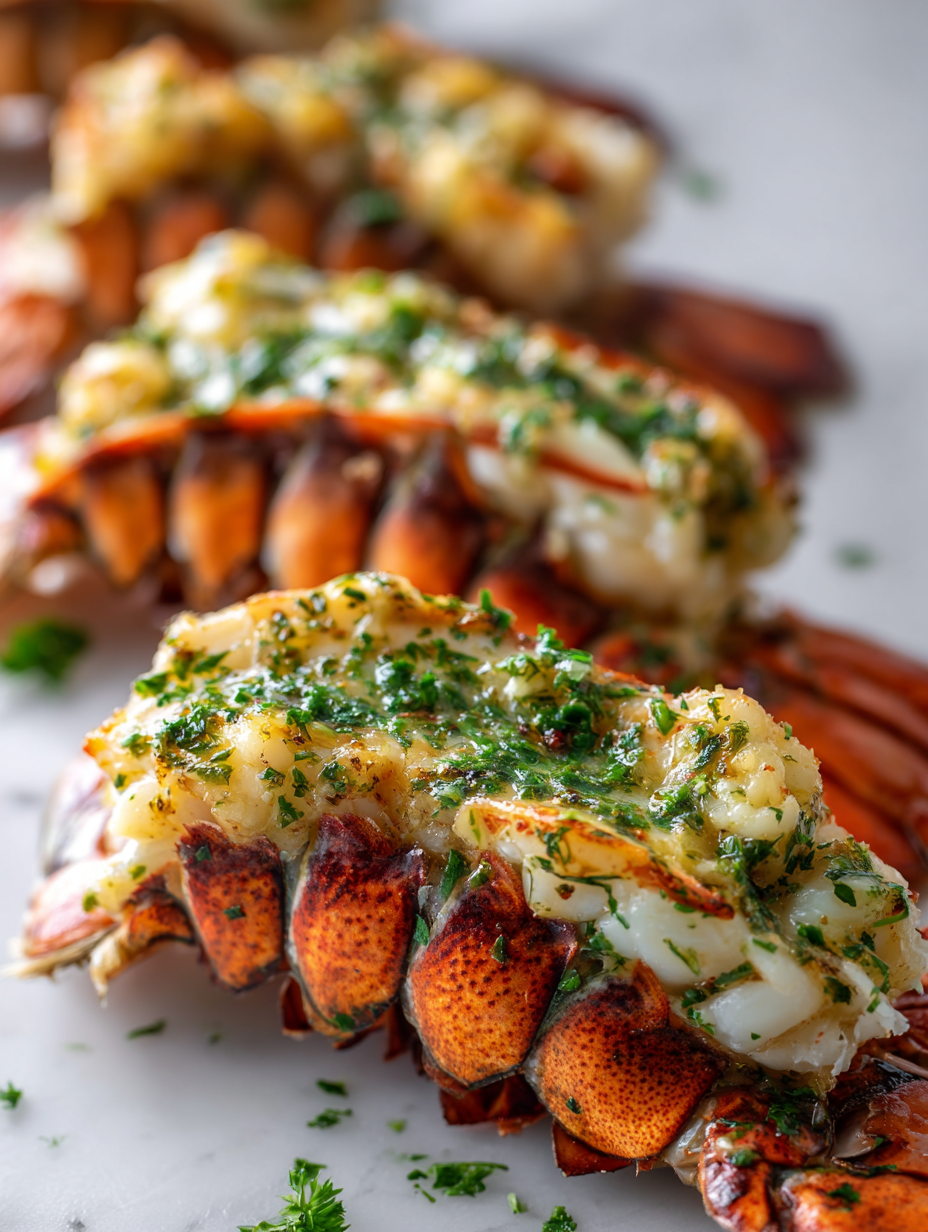
Garlic Herb Lobster Tails
Ingredients
Equipment
Method
- Preheat your oven to 200°C (390°F) and position a rack in the middle. Prepare your lobster tails by using a sharp boning knife to cut along the top shell from base to tip, stopping just before the tail fin. Gently pry the shell apart to expose the meat without tearing it.
- Carefully lift the lobster meat out of the shell, keeping it attached at the tail end if possible, and rinse lightly if needed. Pat it dry with paper towels until it feels firm and slightly moist.
- Melt the butter in a small saucepan over low heat. Mince the garlic finely and add it to the butter, cooking until fragrant, about 1-2 minutes. Stir in chopped parsley, thyme, and a squeeze of lemon juice. Season with salt and pepper to taste. Remove from heat once aromatic and well combined.
- Brush the lobster meat generously with the warm garlic herb butter, making sure to coat all sides and get into the crevices. Use a basting brush for even coverage. Place the prepared lobster tails on a rack set over a baking sheet.
- Bake the lobster tails in the preheated oven for 12-15 minutes, until the meat turns opaque and firm, and the shells take on a light red or pink hue. Baste once halfway through to keep the meat moist and flavorful.
- Once cooked, remove from the oven and let rest for 2 minutes. Squeeze fresh lemon juice over the lobster, sprinkle with additional herbs if desired, and serve immediately with lemon wedges for an extra bright finish.
Notes
Pro Tips for Perfect Lobster
- Bolded Mini-Head: Use a sharp knife to mince garlic finely—this releases more aroma and ensures even distribution.
- Bolded Mini-Head: Brush the lobster meat generously with herb butter—don’t be shy, it’s what keeps it moist and flavorful.
- Bolded Mini-Head: Keep an eye on the oven—lobster can go from perfect to overcooked quickly, so check for opaque, firm meat around 12 minutes.
- Bolded Mini-Head: Baste halfway through baking—this keeps the meat juicy and infuses the herbs deeper into the flesh.
- Bolded Mini-Head: Rest the lobster for 2 minutes after baking—this allows juices to settle for a tender bite.
- Bolded Mini-Head: Finish with a squeeze of lemon—brightens the dish and balances the richness of the butter.
Common mistakes and how to fix them
- FORGOT to adjust cooking time for smaller lobsters, leading to overcooked meat.
- DUMPED too much salt in the herb butter, making it overly salty and unbalanced.
- OVER-TORCHED the lobster shell, causing a bitter, charred flavor.
- MISSED the resting step, resulting in dry, less flavorful lobster meat.
Quick Kitchen Fixes
- When sauce shimmers, splash a bit of water to loosen clumps.
- If shells crackle too loudly, reduce oven heat slightly.
- DUMPED too much salt? Rinse lobster briefly and pat dry.
- When butter separates, add a teaspoon of cold water and whisk quickly.
- Splash lemon juice if herbs burn or lose brightness during baking.
Prep, store, and reheat tips
- Prep the herb butter and mince garlic 1 day ahead; store in the fridge for easy application. The aroma will be more pronounced as flavors meld overnight.
- You can clean and cut the lobster tails 2-3 hours before cooking, keeping them covered and chilled to prevent spoilage. The meat stays tender and fresh for that time.
- Refrigerate cooked lobster tails for up to 2 days; reheat gently to preserve moisture, aiming for warm, fragrant meat with a slight bounce.
- To reheat, wrap lobster loosely in foil and warm in a 150°C (300°F) oven for 8-10 minutes. Expect the meat to be juicy and the herbs fragrant, with a slight shimmer of butter.
- Avoid freezing cooked lobster; raw lobster tails freeze well for up to 3 months, but cooked reheat may lose some of that fresh, bright flavor.
Top questions about Garlic Herb Lobster Tail
1. How can I tell if the lobster is fresh?
Fresh lobster tail should feel firm and spring back when pressed. If it feels mushy, it’s past its prime.
2. How do I know when the lobster is done?
Cook the lobster until the meat is opaque and firm, usually about 12-15 minutes at 200°C (390°F).
3. What’s the best way to prepare the lobster shell?
Use a sharp knife to cut through the shell, making it easier to lift the meat without tearing it.
4. Should I baste the lobster during cooking?
Baste with herb butter halfway through baking to keep the meat moist and flavorful.
5. Can I use dried herbs instead of fresh?
Yes, fresh herbs like parsley and thyme bring brightness; dried herbs work but are less vibrant.
6. Can I substitute margarine or oil for butter?
Use unsalted butter for better control of saltiness; add a pinch of salt if using salted butter.
7. When should I add lemon juice?
Add lemon juice just before serving for a zesty, fresh flavor that brightens the richness.
8. What if the lobster turns rubbery?
If lobster meat is overcooked, it can become tough. Keep an eye on the color and texture.
9. How can I avoid overcooking or burning the lobster?
To prevent burning, keep an eye on the oven and reduce heat if shell starts to char.
10. How do I reheat leftover lobster without drying it out?
Reheat gently in the oven wrapped in foil at 150°C (300°F) for about 8-10 minutes until warm.
This garlic herb lobster tail is a reminder that simplicity can shine in a dish that feels luxurious but comes together quickly. The bright aroma of herbs and the tender, juicy meat make it a special treat for any occasion. It’s one of those recipes that’s easy to remember and even easier to enjoy.
Whenever I make this, it’s a little moment of celebration—something about the fragrant butter and the crackle of the shell. It’s messy, imperfect, but so satisfying. A dish like this makes any meal feel a little more special, and honestly, that’s enough for me.