
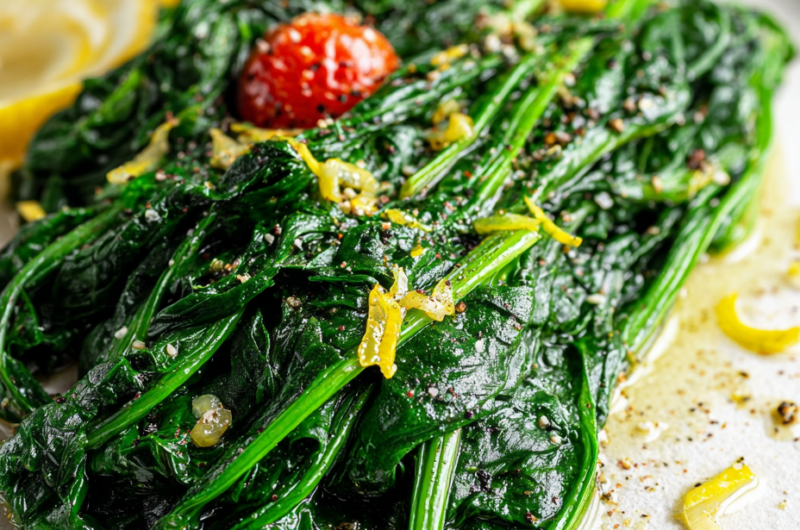
This garlic sautéed spinach isn’t just a quick side; it’s a tactile experience, where the gentle crackle of garlic in hot oil and the tender, wilted leaves come together in a dance of textures and aromas. I love how simple ingredients can become a sensory journey, emphasizing the feel of each step and the scent that lingers long after the pan’s cooled.
Focusing on the tactile joy of cooking, I find that this dish highlights how a humble greens can transform through just a bit of heat and patience. The way the garlic releases its pungency and then mellows into a fragrant, smoky punch makes each bite a reminder that simplicity often hides the most complex pleasures. It’s a dish that celebrates the small, satisfying moments in the kitchen.
This recipe is my go-to when I need something quick yet deeply satisfying, with layers of aroma and a satisfying texture that keeps me coming back. It’s about appreciating the small transformations—the way spinach shrinks, the garlic flushes golden, and everything cooks in just a few minutes, making the kitchen smell like home.
Focusing on how a simple garlic sauté can serve as a canvas for exploring the tactile joy of cooking—emphasizing the texture and aroma layers that develop with each step, transforming fresh spinach into a dish that’s both comforting and unexpectedly sensory-rich.
The story behind this recipe
This garlic sautéed spinach came about during a rushed weeknight dinner, when I needed something quick but still full of flavor. I remember the first time I added a splash of lemon at the end—it brightened everything up in a way that made me pause and realize how a simple dish can be elevated with just a few tweaks. It’s become a staple in my kitchen, a reminder that even the humblest greens can carry a lot of personality. Over time, I’ve learned to appreciate the tactile contrast—the tender leaves, the fragrant garlic, and that final drizzle of olive oil—each step adding layers of sensory delight.
Ingredient breakdown: key components
- Fresh spinach: I love the vibrant scent of just-washed leaves, still damp, ready to wilt quickly—skip the bagged stuff if you want more flavor punch.
- Garlic: When I slice it thin and hear that first crackle in hot oil, I know I’m about to get a smoky, pungent aroma that signals it’s time.
- Olive oil: I use a good extra virgin for that rich, fruity smell that intensifies as it heats—don’t skimp, it’s the flavor base.
- Salt: A pinch of flaky sea salt at the end heightens the earthy greens and amplifies garlic’s punch—taste as you go.
- Lemon juice (optional): A squeeze brightens the whole dish with a zesty pop—don’t skip this if you want freshness without fuss.
- Red pepper flakes (optional): I toss these in for a subtle heat that lingers—start small, you can always add more.
- Black pepper: Freshly cracked, it adds a warm, spicy aroma that complements the garlic and greens—go easy until you get your preferred heat level.
Spotlight on key ingredients
Spinach:
- Fresh spinach: I love the vibrant scent of just-washed leaves, still damp, ready to wilt quickly—skip the bagged stuff if you want more flavor punch.
- Garlic: When I slice it thin and hear that first crackle in hot oil, I know I’m about to get a smoky, pungent aroma that signals it’s time.
- Olive oil: I use a good extra virgin for that rich, fruity smell that intensifies as it heats—don’t skimp, it’s the flavor base.
Garlic:
- The way it transforms from pungent to sweet and mellow as it cooks, releasing a fragrant aroma that fills the kitchen—don’t rush the process.
- Olive oil: Its silky texture and grassy flavor become more pronounced when heated, creating a fragrant foundation that coats each leaf—look for that slight shimmer.
Notes for ingredient swaps
- Dairy-Free: Skip butter or cheese—your dish will still have the smoky garlic punch, but missing that creamy richness.
- Vegan: Use olive oil instead of butter; the flavor stays bright and the texture remains tender and vibrant.
- Low-Sodium: Opt for unsalted butter or reduce added salt; the greens will still pop with garlic and oil, just a tad milder.
- Nut-Free: No nuts here, but ensure your oil and seasonings are nut-free if allergies are a concern.
- Herb Twist: Toss in a handful of chopped fresh herbs like parsley or dill after cooking for a fresh, fragrant lift.
- Spice Level: Add red pepper flakes or a dash of hot sauce to bring a smoky heat; start small and taste as you go.
- Citrus Variations: Swap lemon juice for lime or a splash of white wine vinegar to brighten the greens in different ways.
Equipment & Tools
- Large skillet: Provides ample space for even cooking and wilting.
- Tongs or spatula: To toss and turn the greens gently during cooking.
- Sharp knife: For slicing garlic thinly to maximize flavor release.
Step-by-step guide to sautéing spinach
- Equipment & Tools: Use a large skillet with a lid, tongs or a spatula, and a sharp knife for slicing garlic. The skillet needs enough space for the spinach to wilt evenly.
- Warm 2 tbsp olive oil over medium heat (160°C/320°F) in the skillet. When shimmering, add 3-4 minced garlic cloves. Cook until fragrant, about 30 seconds — the garlic should crackle and turn just golden.
- Add 4-6 cups fresh spinach (stems removed if thick). Toss quickly to coat with oil and garlic. Cook, stirring, until spinach wilts, about 2-3 minutes. The leaves should reduce significantly and turn bright green.
- Step 3a: If the skillet seems dry, add a splash of water or broth to help wilt the spinach evenly. Cover loosely with a lid if necessary.
- Step 3b: Check the texture—spinach should be tender but not mushy; it should still have some bite and a slight sheen of oil.
- Season with a pinch of flaky sea salt and freshly cracked black pepper. Optional: squeeze a wedge of lemon for brightness. Toss again to distribute the flavors evenly.
- Remove from heat. Drizzle with a little extra virgin olive oil if you like a richer finish. Serve immediately in a warm bowl.
Serve in a warm bowl immediately. Optionally, add a drizzle of good olive oil and a squeeze of lemon. Toss gently to coat before eating to keep the greens vibrant and flavorful.
How to Know It’s Done
- Garlic turns fragrant and golden, not burnt.
- Spinach is wilted but vibrant, not overcooked or slimy.
- Oil coats leaves evenly, with a slight shimmer, not pooling excessively.
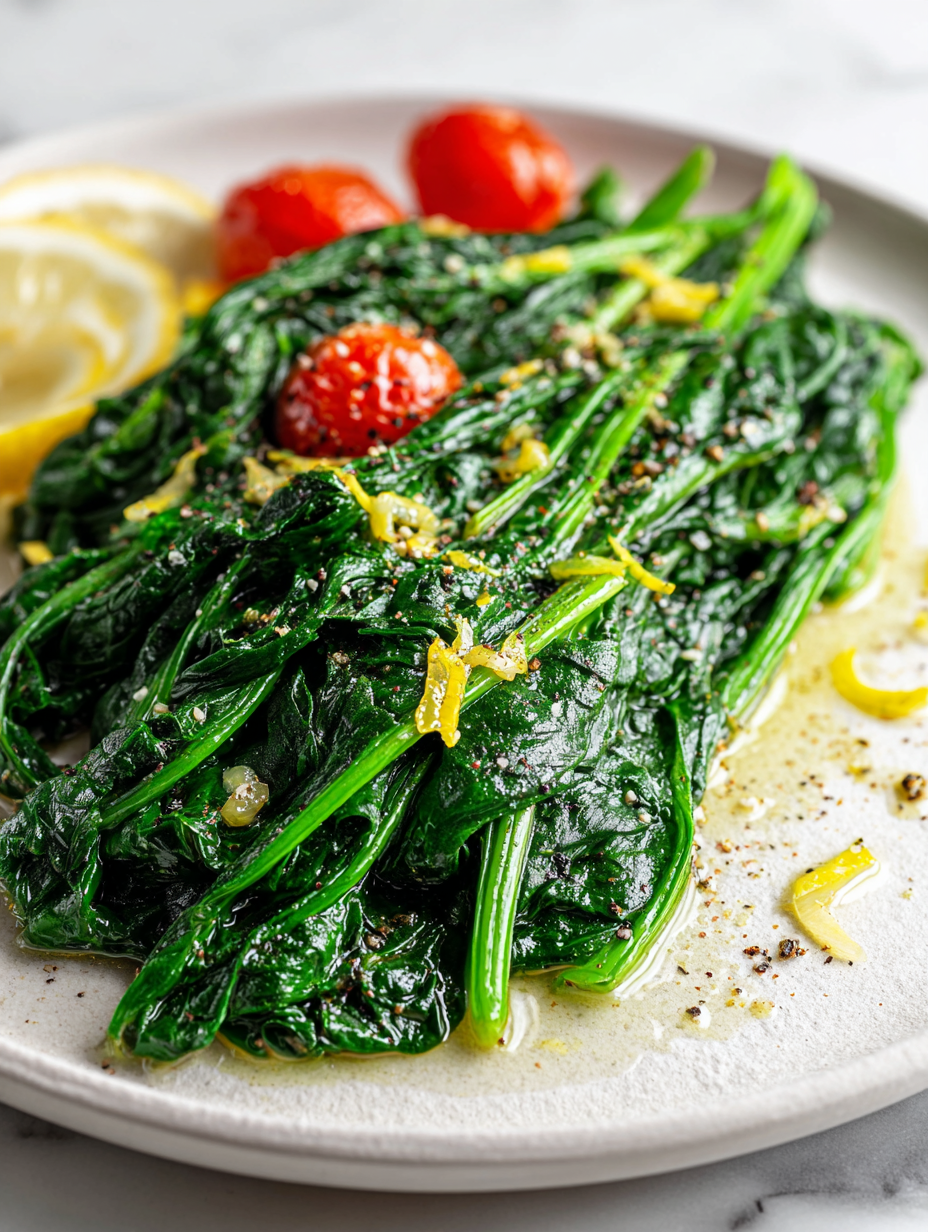
Garlic Sautéed Spinach
Ingredients
Equipment
Method
- Warm a large skillet over medium heat and add the olive oil, letting it shimmer and become fragrant.
- Add the thinly sliced garlic to the hot oil. Cook for about 30 seconds until it begins to crackle and turns fragrant, with a light golden hue.
- Quickly add the fresh spinach to the skillet, tossing gently with tongs or a spatula to coat it evenly with the garlic and oil.
- Cook the spinach, stirring often, until it wilts down significantly and turns bright green, about 2-3 minutes. The leaves should be tender but still vibrant and glossy.
- If the skillet seems dry, splash a little water or broth to help the greens wilt evenly. Cover loosely if needed to speed up the process.
- Remove the skillet from heat, then season with flaky sea salt and freshly cracked black pepper. Squeeze a lemon wedge over the greens for a bright, fresh finish if desired.
- Give everything a gentle toss to distribute the seasonings and flavors evenly. Drizzle with a little extra virgin olive oil if you like a richer, glossier look.
- Serve immediately in a warm bowl, allowing the vibrant color and fragrant aroma to shine. Enjoy the tender greens with their fragrant garlic and a splash of citrus for brightness.
Notes
Pro tips for perfect sautéed spinach
- Bolded mini-head: Use a wide skillet → Ensures even heat distribution and quick wilting.
- Bolded mini-head: Slice garlic thin → Maximizes surface area, releasing more aroma in less time.
- Bolded mini-head: Add spinach in batches → Prevents overcrowding, keeping leaves vibrant and tender.
- Bolded mini-head: Watch garlic carefully → Remove from heat once fragrant to avoid bitterness.
- Bolded mini-head: Finish with a squeeze of lemon → Brightens flavors and cuts through the richness.
- Bolded mini-head: Toss gently at the end → Keeps the greens tender and prevents crushing.
Common mistakes and how to fix them
- FORGOT to watch garlic: Burnt garlic turns bitter; lower heat and stir constantly.
- DUMPED spinach too quickly: Add in batches and wait for it to wilt before adding more.
- OVER-TORCHED oil: Remove from heat immediately if oil smokes or turns dark.
- MISSED seasoning: Taste and adjust salt before serving to balance flavors.
Quick fixes and pantry swaps
- If garlic burns, splash in a little water to cool and prevent bitterness.
- When spinach looks wilted but dry, toss in a splash of broth for more moisture.
- Dumped too much oil? Pat the greens with a paper towel, then add a tiny splash more oil.
- Over-torched garlic? Remove from heat immediately and start again with fresh slices.
- Splash some lemon juice or vinegar if the dish feels dull or flat after cooking.
Prep, store, and reheat tips
- Prep the garlic: Thinly slice and store in an airtight container in the fridge for up to 2 days. The aroma will be fresher when you cook.
- Wash and dry spinach thoroughly; store in a paper towel-lined container for 1-2 days. Keep it crisp and vibrant, ready to wilt quickly.
- Refrigerate cooked spinach for up to 1 day in an airtight container. Reheat gently in a skillet over low heat, watching for steam and aroma revival.
- To reheat, toss in a hot pan just until warmed through—spinach should be tender, not soggy. Expect a slight wilt and fragrant re-emergence of garlic.
Top questions about garlic sautéed spinach
1. Can I use frozen spinach?
Use fresh spinach for the best flavor and texture; frozen can be watery and less vibrant.
2. How do I know when garlic is done?
Cook garlic just until fragrant and golden, about 30 seconds; avoid burning it to prevent bitterness.
3. Should I add lemon?
Add a squeeze of lemon after cooking to brighten the flavors and balance the richness of the oil and garlic.
4. Can I make this in a small pan?
Use a large skillet to give the spinach room to wilt evenly and prevent steaming in its own juices.
5. How often should I stir?
Stir frequently once the spinach is in the skillet to ensure even wilting and prevent the garlic from burning.
6. Can I make it spicy?
Add red pepper flakes or a pinch of chili for a spicy kick, adjusting to taste at the end.
7. Should I add more oil at the end?
Finish with a drizzle of good-quality olive oil to add richness and a glossy finish to the greens.
8. Can I make this ahead?
To keep the spinach bright green and tender, serve immediately after sautéing; reheating can cause it to wilt further.
9. What if garlic burns?
If garlic turns dark or bitter, remove from heat immediately and start fresh with new slices.
10. What oil is best for sautéing spinach?
Use high-quality extra virgin olive oil for a richer aroma and flavor that enhances the dish.
This garlic sautéed spinach isn’t just a quick side; it’s a sensory pause, where the aroma of garlic mingles with tender leaves, reminding me that simplicity can be so layered. It’s perfect for those nights when I crave something familiar yet invigorating, with every bite offering a touch of brightness.
In the end, it’s about the small, tactile moments—the sizzling garlic, the vibrant green, the glossy finish—that make this dish feel like an honest, heartfelt expression of what a humble green can be. No matter how often I make it, it always pulls me back into that warm, fragrant space of home cooking.

I’m Emily Richardson, the heart and soul behind Playing with Flavors. Cooking isn’t just a hobby for me – it’s a passion that I’ve cultivated for years, and it’s become the driving force of my life.
From the kitchen of my cozy café to the pages of this blog, every dish I create is a reflection of my love for food and the joy it brings to people.


