
This green pea curry recipe is a little rebellion against the usual. Instead of hiding their sweetness, it celebrates it, turning those tiny pods into a luscious, spiced sauce that’s both comforting and bright. It’s a reminder that humble ingredients can shine when treated right, especially when you’re after something quick but deeply satisfying.
I’ve made this dish on busy weeknights when I needed something nourishing but didn’t want to fuss. The aroma of cumin and coriander simmering with fresh peas always pulls me back to my childhood kitchen, where simple flavors told the best stories. It’s a recipe that feels honest, a little chaotic, and perfectly imperfect—just like good cooking should be.
This recipe explores the often overlooked potential of green peas, transforming their sweetness into a rich, savory curry that highlights their natural charm while balancing bold spices. It’s about giving these humble pods a stage, turning a simple vegetable into a comforting, satisfying dish that surprises even seasoned cooks.
The story behind this recipe
- This dish came together one rainy afternoon when I was rummaging through the freezer, hunting for something quick yet satisfying. I remembered how my grandmother used to toss frozen peas into her curries, believing they carried a touch of sunshine even on the gloomiest days. That memory stuck with me, and I started experimenting, aiming to preserve that sweet freshness while layering in bold spices. Turns out, green peas can really hold their own in a rich curry — it’s a bit of a sneaky way to get more veggies onto the table without fuss.
- I wanted a recipe that’s forgiving — no need for perfect ingredient prep, just fresh peas and honest spices.
- Cooking this reminds me of lazy Sunday afternoons in my childhood kitchen, the smell of cumin and garlic filling the air, making everything feel a little more manageable.
Ingredient breakdown
- Fresh green peas: I love the bright, sweet burst they bring; frozen peas work in a pinch but lose some vibrancy. Keep them chilled until use.
- Coconut milk: I prefer full-fat for creaminess, but light coconut milk keeps it lighter if you’re watching calories. Look for a rich, oozing texture as it simmers.
- Spices (cumin, coriander): Toast them gently in the pan first; the aroma should be nutty and inviting, not burnt. Adjust to taste if you like more punch.
- Garlic and ginger: I crush these fresh and fry until fragrant—about 30 seconds—until they crackle and fill the kitchen with sharp, warm scent. Skip if you’re pressed for time but don’t skip the flavor.
- Onion: I dice it small and cook until golden, which takes about 8-10 minutes. It adds a subtle sweetness and depth, so don’t rush this step. If it burns, turn down heat and add a splash of water.
- Chili (fresh or powder): I add a touch for warmth—taste as you go, because a little heat goes a long way. The chili should shimmer and slightly crackle in the oil.
- Lemon juice or lime: I squeeze just before serving for a bright, zesty finish. The citrus should be vivid and sharp, cutting through the richness.
Spotlight on key ingredients
Green peas:
- Fresh green peas: I love the bright, sweet burst they bring; frozen peas work in a pinch but lose some vibrancy. Keep them chilled until use.
- Coconut milk: I prefer full-fat for creaminess, but light coconut milk keeps it lighter if you’re watching calories. Look for a rich, oozing texture as it simmers.
- Spices (cumin, coriander): Toast them gently in the pan first; the aroma should be nutty and inviting, not burnt. Adjust to taste if you like more punch.
Coconut milk:
- It’s the creamy backbone that ties everything together, releasing a slightly sweet, smoky aroma as it simmers.
- Spices (cumin, coriander): They crackle and toast, filling the kitchen with warm, earthy scents that awaken the senses.
Notes for ingredient swaps
- Fresh green peas: I love the bright, sweet burst they bring; frozen peas work in a pinch but lose some vibrancy. Keep them chilled until use.
- Coconut milk: I prefer full-fat for creaminess, but light coconut milk keeps it lighter if you’re watching calories. Look for a rich, oozing texture as it simmers.
- Spices (cumin, coriander): Toast them gently in the pan first; the aroma should be nutty and inviting, not burnt. Adjust to taste if you like more punch.
- Garlic and ginger: I crush these fresh and fry until fragrant—about 30 seconds—until they crackle and fill the kitchen with sharp, warm scent. Skip if you’re pressed for time but don’t skip the flavor.
- Onion: I dice it small and cook until golden, which takes about 8-10 minutes. It adds a subtle sweetness and depth, so don’t rush this step. If it burns, turn down heat and add a splash of water.
- Chili (fresh or powder): I add a touch for warmth—taste as you go, because a little heat goes a long way. The chili should shimmer and slightly crackle in the oil.
- Lemon juice or lime: I squeeze just before serving for a bright, zesty finish. The citrus should be vivid and sharp, cutting through the richness.
Equipment & Tools
- Medium heavy-bottomed pan: For even heating and sautéing the spices and aromatics.
- Wooden spoon: To stir ingredients without scratching the pan.
- Measuring cups and spoons: To accurately measure liquids and spices.
- Blender or immersion stick: Optional, for blending part of the curry for a smoother texture.
Step-by-step guide to green pea curry
- Gather all equipment: a medium-sized heavy-bottomed pan for sautéing, a wooden spoon for stirring, a measuring cup for liquids, and a blender or immersion stick if you prefer a smoother curry.
- Heat the pan over medium heat (~160°C / 320°F). Add 2 tbsp oil—preferably coconut or neutral—until shimmering but not smoking.
- Add 1 diced onion (about 1 cup). Cook, stirring often, until golden and translucent—about 8-10 minutes. Adjust heat if it browns too fast.
- Stir in 2 tsp cumin seeds and 1 tsp coriander seeds. Toast for 30 seconds until fragrant; they should crackle and release a nutty aroma.
- Add 3 minced garlic cloves and 1 tbsp grated ginger. Sauté until fragrant, about 30 seconds. Be careful not to burn the garlic—reduce heat if needed.
- Pour in 1 can (13.5 oz) coconut milk and stir to combine. Bring to a gentle simmer, about 2 minutes, until the mixture is warm and slightly thickened.
- Add 2 cups fresh or frozen green peas. Stir well, then cover and cook on low heat (~140°C / 280°F) for 10-12 minutes. The peas should be tender but still bright green.
- Taste and adjust salt, adding a pinch of sea salt or soy sauce if desired. If you want more heat, sprinkle in chili flakes or add a dash of hot sauce. Simmer for another 2 minutes.
- Finish with a squeeze of lemon or lime juice, about 1 tbsp. Stir and taste again—brighten up the flavors with the citrus.
- Remove from heat. Let the curry rest for 2-3 minutes—this helps the flavors meld. Serve with rice or flatbread, garnished with fresh herbs if you like.
Let the curry sit off heat for a few minutes to settle. Serve hot, garnished with fresh herbs or a squeeze of citrus for brightness.
How to Know It’s Done
- The coconut milk should be slightly thickened and fragrant, not watery.
- The peas are tender but still vibrantly green, with a slight bite.
- The aroma should be warm, spicy, and inviting—cumin, garlic, and ginger should be prominent.
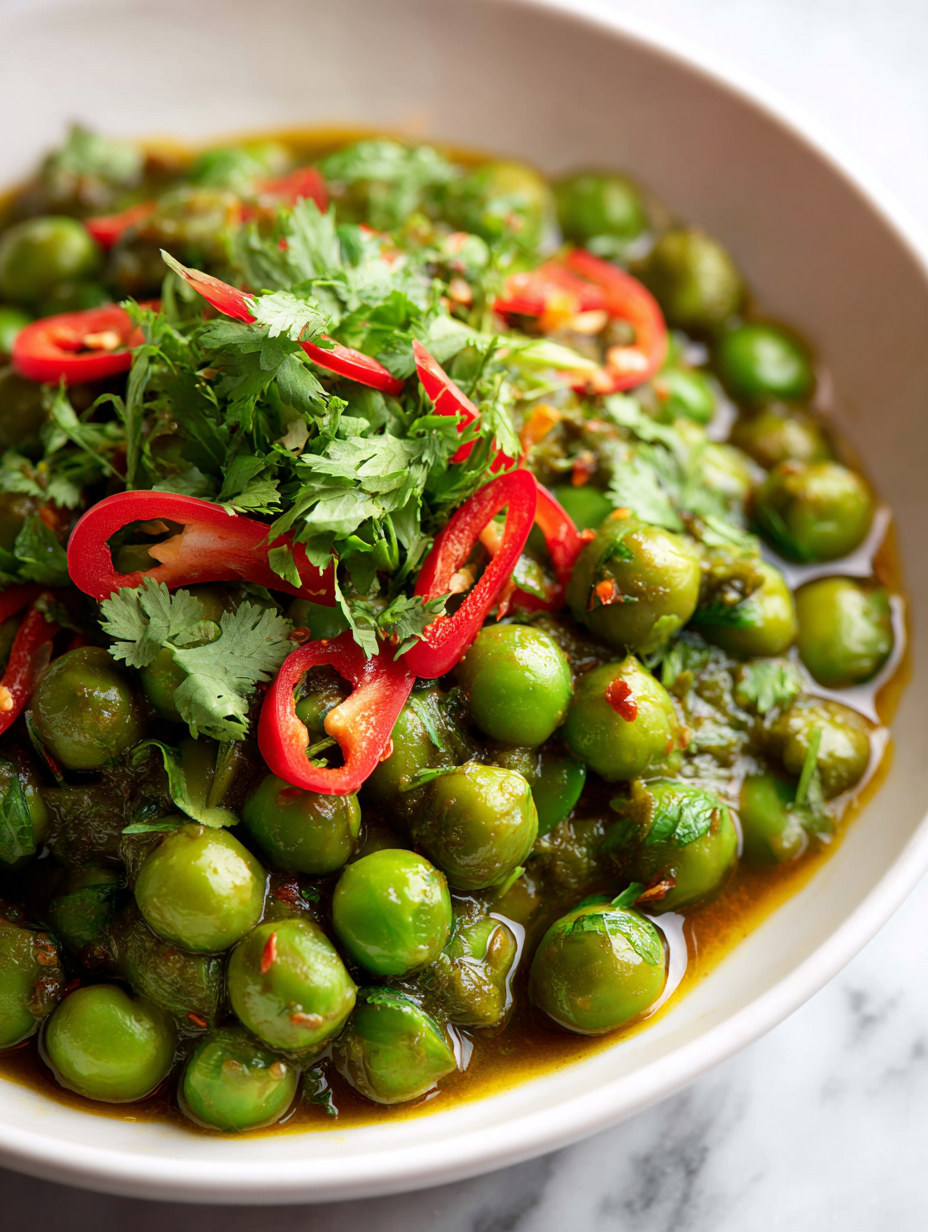
Spiced Green Pea Curry
Ingredients
Equipment
Method
- Start by heating a medium heavy-bottomed pan over medium heat, adding the oil until shimmering.
- Add the cumin and coriander seeds to the hot oil and toast gently for about 30 seconds until fragrant; they should crackle softly.
- Stir in the diced onion and cook, stirring often, until golden and translucent—about 8 to 10 minutes. The onions should smell sweet and look tender.
- Add the crushed garlic and grated ginger, cooking for another 30 seconds until fragrant and sizzling, filling the kitchen with warm, spicy aroma.
- Pour in the coconut milk and stir well, bringing the mixture to a gentle simmer. Let it bubble softly for about 2 minutes until slightly thickened.
- Add the green peas to the pan, stir to coat with the sauce, then cover and cook on low heat for 10-12 minutes until peas are tender but still vibrantly green.
- Taste the curry and season with salt and chili flakes, adjusting to your spice preference. Let it simmer uncovered for another 2 minutes to meld flavors.
- Remove from heat and squeeze fresh lemon juice over the curry, stirring to brighten the flavors and add a zesty finish.
- Give the curry a final stir, then let it rest for a couple of minutes to allow flavors to settle. Serve hot with rice or flatbread, garnished with herbs if desired.
Pro tips for perfect green pea curry
- Bolded mini-head: Toast spices gently → Releases warm, nutty aromas, avoid burning for maximum flavor.
- Bolded mini-head: Sauté garlic and ginger until fragrant → Crackles and fills the kitchen with sharp warmth, don’t rush this step.
- Bolded mini-head: Add peas at the right time → Tender but vibrant green, avoid overcooking to keep the freshness.
- Bolded mini-head: Use coconut milk last → Simmer briefly until slightly thickened, for a rich, velvety texture.
- Bolded mini-head: Finish with citrus → Brighten the curry with a quick squeeze of lemon or lime for contrast.
- Bolded mini-head: Taste and adjust → Salt and spice levels throughout, ensuring balanced, lively flavors.
Common mistakes and how to fix them
- FORGOT to adjust heat after adding peas → Do so to prevent mushiness.
- DUMPED oil too quickly → Add gradually for even cooking and flavor development.
- OVER-TORCHED spices → Toast until fragrant, not burnt, for optimal aroma.
- MISTAKENLY used frozen peas directly → Rinse and thaw slightly for even cooking.
Quick fixes and pantry swaps
- If the curry looks too thick, splash in warm water and stir until smooth.
- When the peas are mushy, reduce heat and add a splash of lemon juice to brighten.
- Splash a bit of soy sauce or tamari for depth if you find the flavor flat.
- Patch bubbling over by lowering heat immediately to prevent burning the spices.
- Shield the curry with a lid if it starts to scorch on the bottom, and stir frequently.
Prep, store, and reheat tips
- Prep the ingredients: chop onions, grate ginger, and measure spices the day before to save time and keep flavors fresh.
- Store cooked or uncooked peas in an airtight container in the fridge for up to 2 days; they tend to lose brightness after that.
- Coconut milk can be made ahead and kept in the fridge for 2-3 days. Stir well before reheating to reincorporate separation.
- Reheat curry gently on the stove over low heat (~140°C / 280°F), stirring occasionally. Expect the aroma to deepen and flavors to meld.
- The curry’s flavor will mellow slightly overnight, so a quick splash of lemon or lime can brighten it right before serving.
Top questions about green pea curry
1. Can I use frozen peas instead of fresh?
Frozen peas are fine, but fresh peas give a brighter, crisper flavor with a slight crunch in each bite.
2. What can I substitute for coconut milk?
Coconut milk adds richness and a subtle sweetness, but if you prefer a tangy twist, try adding a splash of lemon juice at the end.
3. How do I enhance the spice flavor?
To deepen flavor, toast the cumin and coriander seeds until fragrant, then grind or add whole for a more textured taste.
4. How long should I cook the onions?
Cook the onions until golden and translucent—about 8-10 minutes—to develop sweetness and depth in the curry.
5. How can I make it spicier?
Adding a pinch of chili flakes or hot sauce can boost heat, but start small and taste to avoid overpowering the delicate sweetness of peas.
6. When should I add citrus to the curry?
Finish with a squeeze of fresh lemon or lime juice just before serving to add brightness and cut through the richness.
7. How long does the curry last in the fridge?
Store leftovers in an airtight container in the fridge for up to 2 days. Reheat gently on the stove, stirring to reincorporate separation.
8. How do I avoid overcooking the peas?
To prevent mushy peas, add them near the end of cooking and keep the heat gentle—aim for tender but vibrant green.
9. How can I fix a too-thick curry?
If the curry thickens too much after cooling, splash in warm water or broth, stir well, and gently reheat.
10. When should I season the curry?
Taste and adjust seasoning throughout cooking—more salt, spice, or acidity—to achieve balanced, lively flavors that excite the palate.
This green pea curry feels like a little secret in my weeknight cooking. It’s simple, honest, and the kind of dish that makes you pause and really taste those sweet, bright peas against warm spices. It’s a reminder that humble ingredients can carry a lot of personality, especially when treated with care.
Sharing this recipe feels like passing on a quiet joy—something that’s been part of my kitchen stories for years. It’s perfect for when you want something comforting but not heavy, and it’s a way to celebrate the everyday magic of good, honest food.