
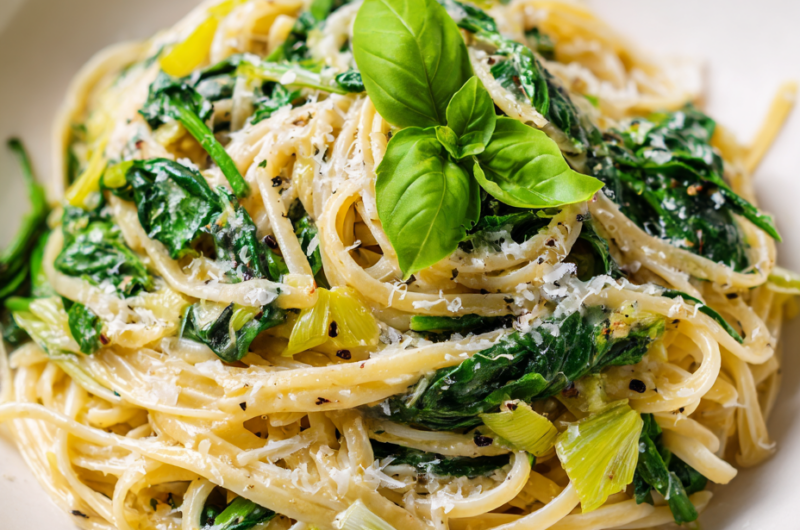
Sometimes the simplest greens—leeks and spinach—get overshadowed by flashier ingredients. But when cooked with honest care, they transform into something quietly nourishing and unexpectedly tender. This pasta isn’t about fancy tricks; it’s about celebrating those humble flavors that are often overlooked, yet always there, waiting to shine.
I’ve always loved how a handful of greens can turn a plain bowl of pasta into a meal that feels both familiar and fresh. It’s a dish that’s perfect for those nights when you want something comforting but not weighed down, with a subtle sweetness from the leeks and the bright pop of fresh spinach. It’s honest, straightforward, and makes me feel grounded every time I cook it.
Cooking with greens like leeks and spinach isn’t just about nutrition—it’s about honoring the quiet, unassuming beauty of everyday ingredients. This recipe came about during a busy week when I needed something quick, but I didn’t want to sacrifice flavor or soul. The leeks soften into a delicate sweetness, while the spinach adds a vibrant, slightly earthy punch that makes every bite feel alive.
It’s a reminder that the best meals often come from simple ingredients treated with patience. The aroma of cooked leeks blending with garlic, the way the spinach wilts into the pasta water—these small moments turn a regular supper into something worth savoring. It’s a dish I keep coming back to when I need comfort in a bowl.
Focusing on the overlooked beauty of humble greens, this recipe elevates leek and spinach pasta into a comforting yet surprising dish that celebrates everyday ingredients with honest, unpolished charm.
The story behind this recipe
This recipe was born out of a lazy Sunday afternoon when I was rummaging through my fridge and found a lonely leek and a bag of wilted spinach. Instead of tossing them out, I decided to see if they could become something more than just ingredients—maybe a pasta dish that’s honest and simple. The aroma of sautéed leeks filling the kitchen reminded me of childhood comfort foods, where humble ingredients come together to create something unexpectedly warm. It’s a dish that feels like a small act of kindness, made with what’s on hand and cooked with care.
Ingredient breakdown: key components
- Leeks: I love how their gentle sweetness develops when slowly cooked; you can skip if you’re in a rush, but their mellow flavor is worth the time. Aim for tender, translucent slices—think soft, not mushy—and watch out for sandy bits hiding between the layers.
- Spinach: I prefer fresh, vibrant leaves that wilt quickly and add a pop of color and earthiness. If your spinach looks wilted or slimy, it’s better to toss it or give it a quick rinse. When stirring it in, let it shrink and darken—then it’s ready for the next step.
- Pasta: I usually go for a sturdy shape like bucatini or rigatoni that holds up well to the greens and sauce. Cook it just shy of al dente—then it will finish absorbing flavors in the pan. Keep some starchy pasta water aside for loosening the sauce if needed.
- Olive oil: I use a good extra virgin for that fruity punch and smooth richness. If you prefer a milder oil, you can blend in a touch of neutral oil, but don’t skip the oil altogether—it’s the base for sautéing and flavor.
- Garlic: I love the pungent aroma it releases—crushed and minced, it hits the pan with a crackle. If you’re sensitive, add it later to avoid burning; burnt garlic brings a bitter note you don’t want in this dish.
- Lemon zest: I add just a hint of bright, fragrant zest at the end—provides a zing that lifts all the earthy greens. If you don’t have lemon, a splash of vinegar can mimic that fresh acidity without overpowering.
- Salt & pepper: I season generously but taste as I go—leeks and spinach can be shy at first, so adjust until it sings. A pinch of flaky sea salt and freshly cracked black pepper makes all the difference.
Spotlight on key ingredients
Leek:
- Leeks: Their gentle sweetness deepens slowly, filling the kitchen with a warm, earthy aroma. Watch for sandy bits hiding between layers; slicing thin helps them cook evenly.
- Spinach: Bright, vivid leaves wilt quickly, turning a rich dark green. When it shrinks and darkens, you know it’s ready to fold into the pasta—no sliminess here.
Spinach:
- Its tender, slightly earthy leaves release a vibrant, fresh aroma as they wilt. Keep an eye on color—dark green and shrunken means it’s perfectly done—no bitter aftertaste.
- Leek: The subtle, sweet aroma intensifies as it softens, creating a comforting scent that’s almost nostalgic. Proper slicing and slow cooking prevent bitterness and bring out its mellow charm.
Notes for ingredient swaps
- Dairy-Free: Swap butter for olive oil or dairy-free margarine. Keep in mind, it won’t add richness, but it’ll still sauté smoothly.
- Vegan: Use nutritional yeast instead of Parmesan for a cheesy umami kick, though it won’t melt like cheese, so sprinkle at the end.
- Gluten-Free: Choose rice or corn pasta—these hold up well but may have a different texture and slightly different flavor.
- Lemon Variations: Lime zest or vinegar can brighten the dish similarly, but the citrus note will shift slightly.
- Spinach Alternatives: Kale or chard work well—just chop them finer and cook a bit longer for tender results.
- Oils: If you don’t have olive oil, light vegetable or avocado oil are neutral choices, but they won’t add that fruity note.
- Leek Substitute: Shallots or scallions can work in a pinch, offering milder flavor—add later to prevent overpowering the greens.
Equipment & Tools
- Large skillet: For sautéing leeks and spinach, and combining pasta
- Wooden spoon: Stirring ingredients without scratching the skillet
- Colander: Draining cooked pasta
- Lemon zester: Adding bright citrus zest to finish
Step-by-step guide to making the pasta
- Equipment & Tools: Use a large, deep skillet (about 30cm diameter) with a lid for sautéing, a wooden spoon for stirring, a colander for pasta, and a zester or fine grater for lemon zest.
- Bring a large pot of salted water to a rolling boil—about 1 tablespoon salt per liter. Cook pasta until just shy of al dente—about 1 minute less than package instructions, around 8 minutes for most shapes. Save 1 cup of starchy pasta water before draining.
- While pasta cooks, prep the greens: Slice leeks thinly, keeping the slices uniform so they cook evenly. Rinse thoroughly to remove grit, then drain well.
- Heat the skillet over medium-low (about 160°C/320°F). Add 2-3 tablespoons olive oil. When shimmering, add the sliced leeks. Cook gently—stir often—for about 8-10 minutes, until they’re soft, translucent, and smell sweet and earthy.
- Add 2 minced garlic cloves to the leeks. Cook for 30 seconds until fragrant, but don’t let it burn—if garlic starts to brown too quickly, lower the heat.
- Toss in a handful of fresh spinach (about 2-3 cups). Stir until wilted—about 2-3 minutes. The spinach should turn dark green and shrink significantly. If it releases excess moisture, cook a bit longer to evaporate it.
- Add the drained pasta to the skillet. Pour in about 1/4 cup of reserved pasta water. Toss everything together—use more water if needed—to loosen the sauce and coat the pasta evenly. It should be silky with a little sheen.
- Finish with a teaspoon of lemon zest and a squeeze of fresh lemon juice, stirring to brighten the flavors. Season with salt and pepper to taste. Adjust with more pasta water if the mixture seems dry.
- Rest the pasta for 1-2 minutes in the skillet off heat—this helps flavors meld. Serve immediately, garnished with extra lemon zest or a drizzle of olive oil if desired.
Serve the pasta hot, garnished with extra lemon zest or a drizzle of olive oil. Rest for 1-2 minutes to allow flavors to meld before plating.
How to Know It’s Done
- Leeks are tender, slightly caramelized, and fragrant.
- Spinach is fully wilted, dark green, and releases no excess moisture.
- Pasta is coated in a glossy, slightly saucy mixture with a bright aroma.
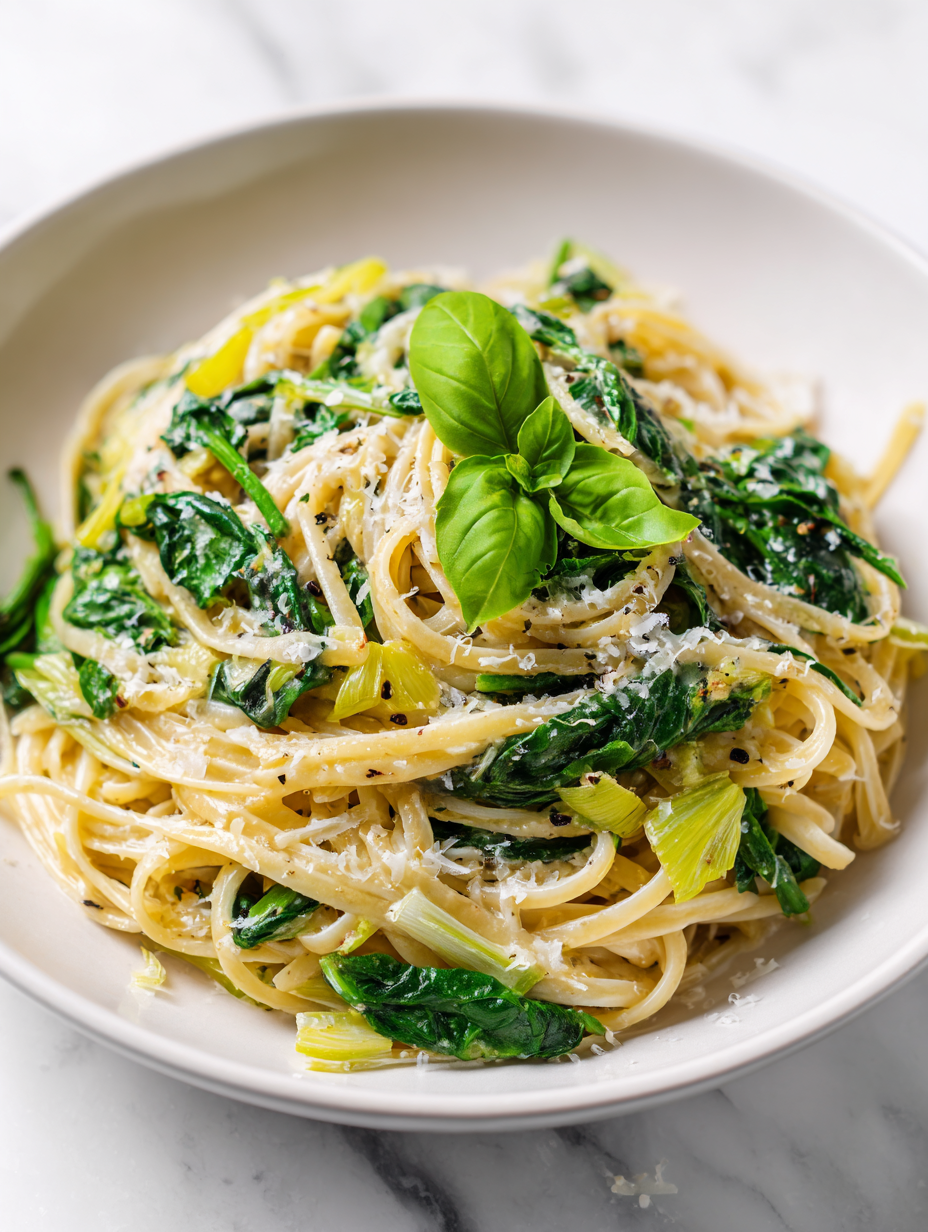
Leek and Spinach Pasta
Ingredients
Equipment
Method
- Bring a large pot of salted water to a rolling boil. Add the pasta and cook until just shy of al dente, about 1 minute less than package instructions. Reserve 1 cup of starchy pasta water before draining.
- While the pasta cooks, slice the leeks thinly, then rinse thoroughly to remove any grit between the layers. Drain well and set aside.
- Heat the large skillet over medium-low heat. Add the olive oil and gently sauté the sliced leeks, stirring often. Cook slowly for about 8-10 minutes until they become soft, translucent, and fragrant with a subtle sweetness.
- Add the minced garlic to the skillet and cook for about 30 seconds until it releases a fragrant aroma, being careful not to let it burn.
- Toss in the fresh spinach and stir until it wilts, about 2-3 minutes. The leaves will darken and shrink significantly, creating a vibrant, earthy aroma.
- Add the drained pasta to the skillet and pour in about 1/4 cup of the reserved pasta water. Toss everything together until the pasta is coated in the greens and a silky sauce forms. Add more water if needed to loosen the mixture.
- Remove the skillet from heat and stir in the lemon zest. Squeeze a little lemon juice over the pasta for brightness. Season with salt and pepper, tasting and adjusting as needed.
- Let the pasta rest off the heat for a minute to allow flavors to meld. Give it a final toss and serve immediately, garnished with extra lemon zest or a drizzle of olive oil if desired.
Tips and tricks for perfect green pasta
- Bolded mini-head: Use gentle heat → Sauté leeks slowly on low to develop their natural sweetness without browning.
- Bolded mini-head: Keep spinach dry → Add fresh spinach directly from rinsing, but ensure it’s well-drained to prevent excess moisture.
- Bolded mini-head: Save pasta water → Scoop out about a cup before draining; its starchy quality helps create a silky sauce.
- Bolded mini-head: Mind the garlic → Add minced garlic after leeks are translucent; avoid burning to prevent bitterness.
- Bolded mini-head: Zest at the end → Grate lemon zest just before serving for maximum aroma and brightness.
- Bolded mini-head: Taste as you go → Adjust salt and pepper gradually; greens can be shy, so season in layers.
- Bolded mini-head: Rest briefly after mixing → Let the pasta sit off heat for a minute to mellow flavors and improve cohesion.
Common mistakes and how to fix them
- FORGOT to monitor leek color—should be translucent, not browned.
- DUMPED spinach directly from fridge—wash thoroughly to remove grit before cooking.
- OVER-TORCHED garlic—burnt garlic turns bitter; add later or lower heat.
- MISSED pasta water reserve—save starchy water to loosen sauce if needed.
Quick fixes and pantry swaps
- When sauce is too thick, splash in hot pasta water and stir gently.
- If greens turn bitter, reduce cooking time or add a pinch of sugar.
- Splash lemon juice after cooking for an extra bright flavor.
- Patch over salted sauce with a bit more pasta or water to dilute saltiness.
- Shield garlic from direct heat to avoid burning and bitterness.
Prep, store, and reheat tips
- You can prep the leeks and wash the spinach a day ahead—store the greens in separate airtight containers in the fridge; leeks should be dry and kept in a paper towel-lined container. They’ll stay fresh for up to 24 hours.
- Cook the pasta ahead of time—al dente, then cool and toss with a little olive oil to prevent sticking. Store in an airtight container in the fridge for up to 24 hours, reheating in hot water or microwave with a splash of water to keep it tender.
- Sautéed leeks can be made ahead and kept refrigerated for up to 2 days. Reheat gently in a skillet over low heat, adding a splash of olive oil or water to refresh their softness and aroma.
- Refrigerated cooked greens will wilt further and lose some vibrancy; best to add fresh when reheating. Reheat pasta and greens together in a skillet on low, stirring until warmed through—look for a glossy sheen and fragrant aroma.
Top questions about leek and spinach pasta
1. Can I use frozen greens instead of fresh?
Use fresh leeks and spinach for the best flavor and texture. Frozen greens can be a bit mushy and dull in color.
2. Can I substitute frozen spinach?
Yes, but drain any excess moisture from frozen spinach before adding to prevent a watery sauce.
3. How do I prepare leeks properly?
Leeks should be sliced thinly and rinsed well to remove sandy grit. Translucent and tender leeks add subtle sweetness.
4. How long should I cook the leeks?
Cooking the leeks slowly over low heat develops their natural sweetness and avoids bitterness. It takes about 8-10 minutes.
5. When should I add lemon zest?
Adding lemon zest at the end brightens the dish and enhances the greens’ flavor. It’s best added just before serving.
6. Why should I save pasta water?
Reserve some pasta water before draining; its starchy quality helps create a silky, cohesive sauce.
7. What pasta shape works best?
Use a sturdy pasta shape like rigatoni or bucatini that holds up well to greens and sauce. Cook until just shy of al dente.
8. How do I avoid burning garlic?
Be careful not to burn the garlic; add it after the leeks are translucent and cook for just 30 seconds until fragrant.
9. What if the pasta feels too dry?
If the dish turns out too dry, splash in a bit more reserved pasta water or olive oil to loosen and brighten it.
10. Can I make this ahead of time?
You can prepare the sautéed leeks and washed greens a day ahead, then reheat gently to preserve flavor and texture.
This dish isn’t just about greens; it’s about celebrating the quiet, everyday ingredients that form the foundation of honest cooking. The gentle sweetness of leeks and the vibrant punch of spinach make every bite feel like a small, familiar comfort.
In a world obsessed with flashy ingredients and complicated techniques, sometimes the simplest pasta becomes the most memorable. It’s a reminder that good flavors often come from patience, care, and a bit of humility in the kitchen.

I’m Emily Richardson, the heart and soul behind Playing with Flavors. Cooking isn’t just a hobby for me – it’s a passion that I’ve cultivated for years, and it’s become the driving force of my life.
From the kitchen of my cozy café to the pages of this blog, every dish I create is a reflection of my love for food and the joy it brings to people.


