
Lobster ravioli isn’t just about fancy ingredients; it’s about capturing that elusive ocean brine in every bite. I love how the lobster’s sweet, slightly chewy texture contrasts with the tender pasta, making each forkful feel like a little seaside escape. When I make it, I aim to keep that fresh, briny essence front and center, not drowned out by heavy sauces or overpowering herbs.
This dish came about one quiet evening by the coast, watching the waves crash while peeling lobster shells for a simple broth. That moment stuck with me—the way the sea’s salty kiss can transform a humble pasta into something special. Now, whenever I crave that taste of the ocean, I turn to lobster ravioli, knowing it’s a straightforward way to bring a bit of the sea into my own kitchen.
Focusing on how to infuse lobster ravioli with a touch of the sea’s briny freshness, capturing the essence of ocean waves in each bite.
Infusing the Sea into Every Bite
- Cooking this dish always makes me nostalgic for seaside vacations, with that first burst of lobster aroma filling the kitchen.
- There’s a thrill in balancing the richness of lobster with a simple, bright sauce that keeps the ocean freshness alive.
- I love how making lobster ravioli feels like a small, indulgent ritual—careful filling, delicate pasta, slow simmering.
- Sharing this with friends feels special; it’s one of those meals that elevates a simple dinner into a celebration.
- Every time I crack open a lobster shell, it’s like unlocking a little secret from the sea, and I want that magic in every bite.
The story behind this recipe
Making lobster ravioli started from a memory of watching a fisherman gut his catch on a foggy morning. The smell of fresh lobster shells, the way the meat glistened under the early sun—that quiet, primal connection to the ocean stuck with me. I wanted to recreate that feeling in a dish, something that feels both indulgent and rooted in the sea’s wild, briny spirit. It’s about capturing that moment of raw, coastal beauty and turning it into something you can savor at home, whenever you need a little reminder of the ocean’s endless reach.
Historical & Cultural Tidbits
- Lobster ravioli’s roots trace back to Italian coastal regions where fresh seafood and pasta meet in classic combinations.
- The dish gained popularity in the mid-20th century as a luxurious twist on traditional ravioli, blending fine dining with rustic roots.
- Historically, lobster was considered a humble, even undesirable catch, until its transformation into a delicacy in the 19th century.
- Some culinary historians believe that the idea of stuffing pasta with lobster was inspired by early French seafood-filled pasta dishes, adapted over time in Italy.
Ingredient breakdown: key components
- Lobster meat: I love using tail meat for its firm, sweet bite and bright, oceanic aroma. If unavailable, try langoustine for a similar sweet, briny flavor.
- Fresh pasta sheets: I prefer thin, tender pasta that melts in your mouth. Skip pre-made if you want a more delicate, homemade feel, but watch the thickness.
- Lemon zest: Brightens the lobster’s richness with a zesty punch. If you want more citrus, add a splash of lemon juice to the filling or sauce.
- Butter: For a silky, rich sauce, I use high-quality unsalted butter. If you’re dairy-free, a good olive oil can add a touch of richness, though less lush.
- Herbs (chives or tarragon): I find these herbs add a subtle freshness that complements the seafood. Use fresh, and don’t be shy—more herbs boost brightness.
- Sea salt and pepper: I season generously to enhance the natural sweetness of lobster. Be cautious with salt if your broth or filling is already salty.
- White wine or vermouth: Adds a subtle acidity and depth. If you don’t have wine, a splash of seafood stock works well and keeps that briny note.
Spotlight on Key Ingredients
Lobster:
- Lobster meat: I love using tail meat for its firm, sweet bite and bright, oceanic aroma. If unavailable, try langoustine for a similar sweet, briny flavor.
- Fresh pasta sheets: I prefer thin, tender pasta that melts in your mouth. Skip pre-made if you want a more delicate, homemade feel, but watch the thickness.
Herbs and Lemon Zest:
- Herbs (chives or tarragon): I find these herbs add a subtle freshness that complements the seafood. Use fresh, and don’t be shy—more herbs boost brightness.
- Lemon zest: Brightens the lobster’s richness with a zesty punch. If you want more citrus, add a splash of lemon juice to the filling or sauce.
Notes for ingredient swaps
- Seafood Alternatives: Swap lobster for langoustine or crab meat for a similarly sweet, briny flavor. They cook quickly and keep that oceanic essence.
- Dairy-Free: Use a splash of good quality olive oil instead of butter for a silky finish, though it will lack some richness.
- Pasta Dough: If you’re out of traditional flour, try a gluten-free blend or even finely ground oats—just expect a slightly different texture.
- Herbs: Fresh tarragon or basil can replace chives for a different aromatic punch that still complements seafood well.
- Lemon Zest: Skip or replace with lime zest if you prefer a more tart, bright citrus note, but keep some zest for that essential zing.
- White Wine: If you don’t have wine, seafood stock or a splash of apple cider vinegar can add acidity and depth without missing the briny note.
- Salt & Pepper: Use sea salt flakes for a more pronounced briny crunch, or freshly cracked black pepper for a sharper bite.
Equipment & Tools
- small bowl: mix filling ingredients
- sharp knife: cut pasta and seal ravioli
- pasta roller or rolling pin: roll out thin pasta sheets
- ravioli cutter or sharp knife: cut and shape ravioli
- large pot: boil ravioli
- slotted spoon: gently lift cooked ravioli
- skillet: finish and coat ravioli with sauce
Step-by-step guide to lobster ravioli
- Gather your equipment: a small bowl, a sharp knife, a pasta roller or rolling pin, a ravioli cutter or sharp knife, and a large pot for boiling. Have your lobster meat ready, along with herbs, lemon, and butter for the filling and sauce.
- Prepare the lobster filling: chop lobster meat finely. Mix with minced herbs, lemon zest, a pinch of salt, and a dab of softened butter. Taste and adjust seasoning—aim for a bright, oceanic flavor.
- Roll out the pasta: divide your dough into manageable portions. Roll through the pasta machine or with a rolling pin until very thin, about 1-2 mm. Keep covered to prevent drying.
- Cut the pasta into squares or circles: use a cutter or knife, roughly 3-4 inches in size. Keep the cut pasta covered with a damp cloth to maintain moisture.
- Spoon filling: place a small dollop (about a teaspoon) in the center of each pasta piece. Do not overfill, or sealing becomes tricky.
- Seal the ravioli: brush edges with a little water or beaten egg. Fold over or cover with another pasta square, pressing firmly to seal all around, ensuring no air pockets. Crimp edges if needed.
- Cook the ravioli: bring a large pot of salted water (about 1 tablespoon salt per liter) to a gentle boil (~100°C / 212°F). Drop in ravioli one at a time. Cook for 3-4 minutes, or until they float and are tender.
- Check for doneness: ravioli should be tender but still hold shape. The pasta will turn slightly translucent, and the filling should be hot and firm.
- Prepare the sauce: melt butter in a skillet over medium heat (~160°C / 320°F). Add a splash of white wine or vermouth, then toss cooked ravioli gently to coat. Finish with a squeeze of lemon and a sprinkle of herbs.
- Rest and plate: let ravioli sit briefly off heat to settle. Plate carefully, spooning sauce over, and garnish with fresh herbs or lemon zest. Serve immediately while warm and briny.
Let cooked ravioli rest briefly on a warm plate. Spoon sauce generously, garnish with fresh herbs or lemon zest, and serve immediately while still warm and fragrant.
How to Know It’s Done
- Ravioli float and are tender in 3-4 minutes of boiling.
- Filling is hot, firm, and bright tasting after cooking.
- Sauce is silky, with aroma of butter, lemon, and herbs, coating each piece evenly.
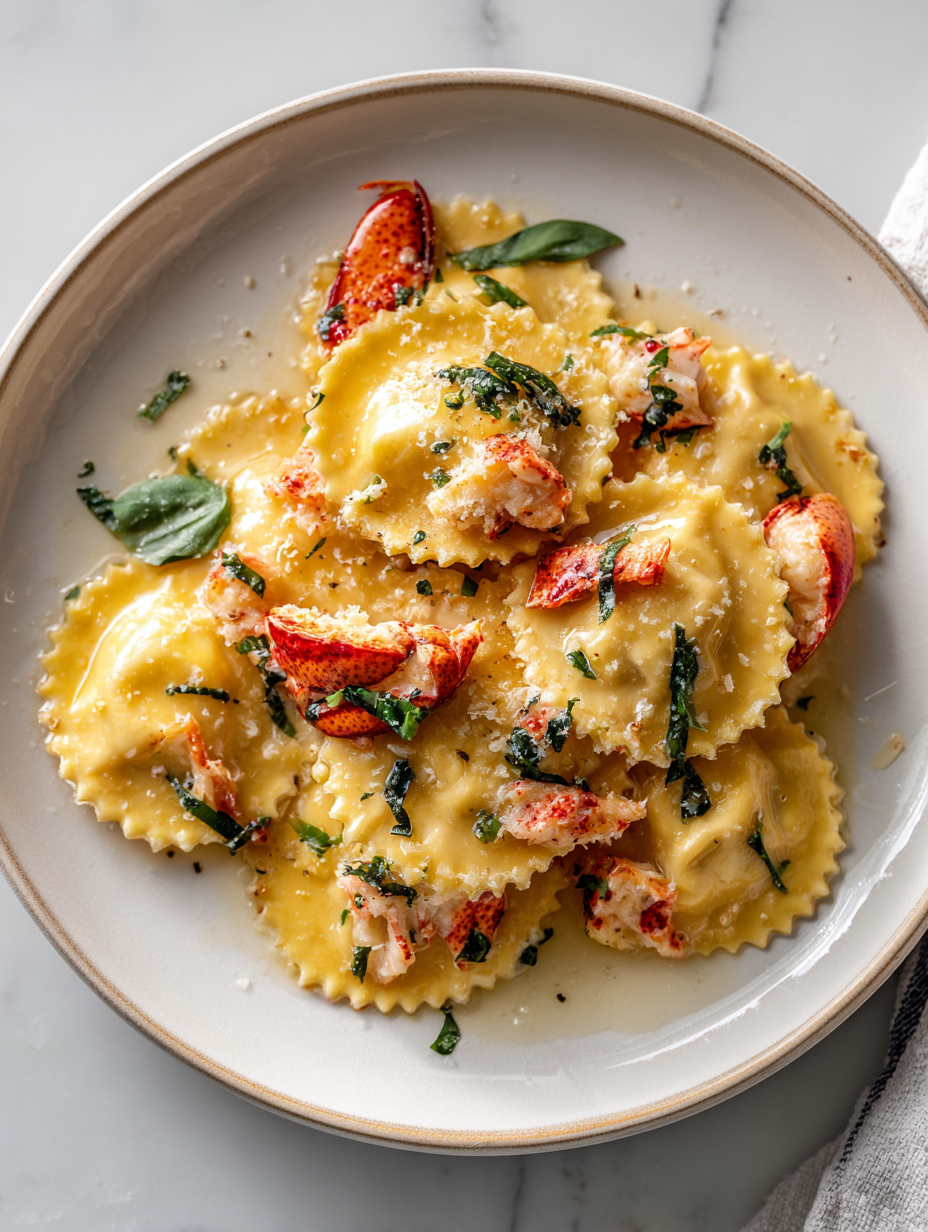
Lobster Ravioli
Ingredients
Equipment
Method
- Start by preparing your pasta dough: in a large bowl, combine flour and sea salt. Create a well in the center, crack in the eggs, and mix gently until the dough begins to come together. Knead on a floured surface until smooth and elastic, about 8 minutes. Cover and let rest for 20 minutes.
- While the dough rests, prepare the lobster filling: finely chop cooked lobster meat and transfer to a small bowl. Add lemon zest, chopped herbs, softened butter, a pinch of salt, and mix until well combined. Taste and adjust seasoning if needed.
- Divide the rested dough into 4 equal portions. Using a pasta roller or rolling pin, roll each portion into very thin sheets, about 1-2 mm thick. Keep covered with a damp cloth as you work to prevent drying out.
- Cut the pasta sheets into squares or circles about 3-4 inches wide. Place a teaspoon of filling in the center of each pasta piece, then brush the edges with a little water or beaten egg to help seal.
- Fold each piece over to enclose the filling, pressing firmly around the edges to seal completely. Crimp edges if desired to ensure they stay closed during cooking.
- Bring a large pot of salted water to a gentle boil. Carefully drop the ravioli in one at a time, ensuring they don't stick together. Cook for about 3-4 minutes, or until they float and are tender.
- While the ravioli cook, melt butter in a skillet over medium heat. Add white wine or vermouth and simmer until slightly reduced, about 2 minutes. Squeeze in fresh lemon juice for brightness.
- Using a slotted spoon, carefully transfer the cooked ravioli from the water into the skillet. Gently toss to coat each piece with the buttery, briny sauce, allowing the flavors to meld for about 1 minute.
- Serve the lobster ravioli immediately, garnished with additional chopped herbs or lemon zest if desired. Enjoy the tender pasta, sweet lobster filling, and ocean-inspired richness in every bite.
Tips & Tricks for Perfect Ravioli
- Bolded Mini-Head: Use a light touch when sealing ravioli to prevent air pockets that can cause bursting during boiling.
- Bolded Mini-Head: Keep your pasta sheets covered with a damp cloth to prevent drying and cracking while working.
- Bolded Mini-Head: When boiling, gently stir the water to prevent ravioli from sticking together or to the bottom of the pot.
- Bolded Mini-Head: Test a single ravioli for doneness by cutting one open—aim for tender pasta and hot filling.
- Bolded Mini-Head: Use high-quality butter for the sauce; it melts smoothly and enhances the briny, oceanic flavor.
- Bolded Mini-Head: Add lemon zest just before serving to keep the citrus aroma bright and vibrant in the dish.
- Bolded Mini-Head: Gently toss cooked ravioli in the skillet with butter and wine, avoiding over-agitating to keep delicate pasta intact.
Common Lobster Ravioli Mistakes and Fixes
- FORGOT to adjust heat → Use medium heat to prevent burning or overcooking.
- DUMPED the sauce too early → Let it simmer gently for fuller flavor development.
- OVER-TORCHED the pasta → Cook pasta just until tender, not mushy or stiff.
- MISSED sealing edges → Ensure edges are moist and pressed firmly to prevent filling leaks.
Quick fixes and pantry swaps
- When sauce shimmers, it’s ready to coat the ravioli—avoid over-reducing for silky texture.
- Splash cold water on boiling ravioli if they stick—rescue from overcooking and prevent mushiness.
- Patch over torn pasta edges with a tiny dab of water and press gently—no leaks during boiling.
- DUMPED too much salt in the water? Rinse ravioli briefly and start fresh to avoid overly salty bites.
- When in doubt, swap canned crab for lobster—still sweet and briny, but a quick pantry fix.
Prep, store, and reheat tips
- Prepare the lobster filling ahead: mix and season the chopped lobster with herbs and lemon zest up to a day in advance. Keep refrigerated, sensory cue: fresh, briny aroma intact.
- Assemble the ravioli: cut and fill the pasta, then seal them. Lay in a single layer on a floured tray, cover with a damp cloth. Can be refrigerated for up to 4 hours; pasta should stay moist and pliable.
- Store cooked ravioli: refrigerate in an airtight container for no more than 24 hours. The pasta may absorb some moisture, so reheat gently to avoid mushiness.
- Reheating: boil in salted water for 1-2 minutes or gently warm in a skillet with butter over low heat. The texture should be tender, and the filling hot and bright-tasting.
- Flavor notes: reheated ravioli might lose some of the initial briny freshness; a fresh squeeze of lemon or herbs can revive the dish before serving.
Top questions about lobster ravioli
1. Can I use frozen lobster for ravioli?
Fresh lobster meat gives the best sweet, briny flavor, but thawed frozen lobster works well too.
2. How do I know when the ravioli are done?
Yes, overcooking makes the pasta mushy and the filling dry out. Keep an eye and cook just until tender.
3. What’s the best way to seal the ravioli?
Use a sharp knife or pasta cutter for clean edges; sealing with a little water helps prevent leaks.
4. How long should I boil lobster ravioli?
Cooking in boiling salted water for about 3-4 minutes until they float and are tender is ideal.
5. Can I add lemon to the filling instead of the sauce?
Lemon zest brightens the dish with citrus aroma; add just before serving to keep it vibrant.
6. Can I make lobster ravioli ahead of time?
Yes, you can prepare the filling and cut the pasta in advance. Keep assembled ravioli covered in the fridge for up to 4 hours.
7. What can I use instead of wine in the sauce?
A splash of good white wine or vermouth adds depth. Seafood stock can be a flavorful alternative.
8. What if my ravioli edges don’t seal properly?
If pasta tears, press edges firmly with a little water, then reseal. Keep pasta covered to prevent drying.
9. Can I make this recipe dairy-free?
For a dairy-free version, substitute with a drizzle of high-quality olive oil and fresh herbs for flavor.
10. How do I season the filling properly?
Taste the filling after mixing; it should be bright, slightly salty, and bursting with ocean flavor before cooking.
Cooking lobster ravioli feels like a small celebration of the sea’s wild beauty. Each bite carries that briny, sweet punch that takes you straight to the coast, no matter where you are. It’s a dish that reminds me how simple ingredients, treated well, can deliver something truly special.
In these hectic times, it’s nice to have a recipe that’s honest and unpolished but still impressively flavorful. Sitting down with a plate of these ravioli, I’m always grateful for how a little effort can turn into a memorable moment of connection—whether alone or shared.