
This roast chicken with lemon and herbs is a reminder that simple ingredients, treated well, can shine brightest. I’ve always loved how a bright splash of citrus lifts the richness of chicken, cutting through the fatty skin with just a hint of tang. It’s honest, unpretentious, and perfect for those evenings when you want something straightforward but flavorful.
What makes this recipe stand out for me is its focus on balance—nothing overpowers, everything complements. I’ve tinkered with it over the years, tweaking the amount of lemon and herbs until I found that sweet spot where freshness and earthiness meet. It’s a dish that feels like a hug, but one that’s easy enough to throw together after a busy day.
Focusing on the overlooked simplicity of balancing citrus brightness with fresh herbs, this recipe explores how a few honest ingredients can elevate a humble roast chicken into a celebration of seasonal flavors, all with minimal fuss.
Balancing Citrus and Herbs
- This dish reminds me of lazy Sundays at my grandparents’ farm, where the scent of herbs filled the air and everyone gathered around the table with smiles.
- I get a quiet thrill every time the lemon zest crackles against the hot skin, releasing that bright, zingy aroma that makes my mouth water.
- Cooking this chicken feels like a small act of rebellion—simple ingredients, honest flavors, no fuss, just good food made with love.
- There’s a nostalgic comfort in slicing into the tender meat, the herbs and lemon juices pooling in each bite, reminding me of family dinners long past.
- I love the chaos of tossing herbs and lemon into the cavity—feels like a little ritual that guarantees freshness and flavor every time.
The story behind this recipe
- This recipe actually came from a moment of kitchen chaos. I had a whole lemon that needed using, a bunch of herbs that looked like they were about to go slimy, and a tired chicken in the fridge. Throwing it all together felt like a small act of rebellion against over-complicated meals. Turns out, simple is often better, especially when you’re after flavor that feels honest and fresh.
- I remember the first time I made this for a group of friends. The smell of lemon and herbs roasting in the oven—crisp skin, fragrant, just right—made everyone stop and inhale. It’s that kind of dish that feels like a quiet celebration, no fuss, just good ingredients treated honestly. It’s become my go-to for Sunday dinners and impromptu gatherings, a reminder that sometimes, simplicity wins.
- heading: ‘The story behind this recipe’
Contextual origin, trivia, or history
- This dish traces its roots to rustic European kitchens where simple, fresh ingredients were prized for their ability to transform humble poultry into a celebratory meal.
- Lemon and herbs became a classic pairing in Mediterranean cuisine, especially in coastal regions where citrus and fragrant greens were readily available.
- Historically, roasting chicken with citrus was believed to tenderize the meat and add a layer of bright flavor, making it a festive yet everyday dish.
Key Ingredients Breakdown
- Whole chicken: I prefer a free-range bird—more flavor and better skin that crisps up beautifully. You can swap in a smaller bird, but keep an eye on cooking time; it might need less time.
- Lemon: Zest and juice are both key. The zest adds a fragrant brightness, while the juice keeps the meat juicy and tangy. If you only have bottled lemon, adjust the amount slightly as it’s less vibrant.
- Fresh herbs: A mix of rosemary, thyme, and parsley feels like a garden in the oven. Dried herbs can be used if fresh aren’t available, but use half as much—they’re more concentrated.
- Garlic: I love the way garlic infuses the chicken with a warm, pungent aroma. Roasting mellows it out, making it sweet and nutty. If you’re sensitive to garlic, add less or omit it entirely.
- Olive oil: A good splash helps the herbs and lemon stick, and gives the skin that irresistible crackle. If you’re out, melted butter works too, adding a richer, slightly smoky note.
- Salt: Essential for drawing out moisture and enhancing flavor. I usually use sea salt, but kosher salt works well too. Be generous—this is what makes the skin crisp and the meat juicy.
- Black pepper: Freshly cracked gives a subtle heat and depth. You can skip if you prefer less spice, but I recommend a good grind for that punch of aroma and flavor.
Spotlight on Key Ingredients
Lemon:
- I love how lemon zest and juice add a bright, zesty aroma that crackles against the skin. It’s that sharp citrus punch that makes the dish pop.
- Fresh herbs: Rosemary, thyme, and parsley release fragrant oils as they roast, filling the kitchen with a garden-fresh scent. They become tender and slightly crispy, adding layers of earthy flavor.
Fresh herbs:
- Herbs: The mix of herbs provides an aromatic backbone, turning simple poultry into a flavorful feast. Their behavior during roasting—becoming fragrant and slightly crisp—is part of the magic.
- Herbs: They tend to shrink and mellow as they roast, but their oils and aroma intensify, giving each bite a fresh, green undertone that balances the richness of the chicken.
Notes for ingredient swaps
- Dairy-Free: Swap butter for olive oil or coconut oil for a similar richness without dairy, though the skin might not be as crisp.
- Herb Variations: Use dried herbs like oregano or Italian seasoning if fresh herbs aren’t available; reduce quantity by half to avoid overpowering.
- Citrus Alternative: Lime or orange zest and juice can replace lemon for a slightly different bright, fragrant note.
- Oil Choice: Avocado oil or grapeseed oil can stand in for olive oil, each adding a subtle flavor variation but maintaining moisture and crispness.
- Herb Boost: Fresh tarragon or basil can be used instead of traditional herbs, giving a different aromatic profile to the roast.
- Salt Type: Sea salt or kosher salt work best; table salt can be used but be mindful of quantity to avoid over-salting.
- Garlic Substitute: Shallots or garlic powder can be used if fresh garlic isn’t on hand, but fresh cloves give a more vibrant aroma.
Equipment & Tools
- Roasting pan or oven-proof skillet: Holds the chicken during roasting, allows air circulation for crisp skin.
- Kitchen tongs: For turning and basting the chicken.
- Meat thermometer: Checks for doneness, ensures the chicken is cooked through.
- Basting brush or spoon: To baste the chicken with juices during roasting.
- Aluminum foil: Tent loosely over the chicken if it browns too quickly.
Step-by-step guide to roast chicken
- Preheat your oven to 220°C (425°F). Take a sturdy roasting pan or oven-proof skillet—big enough for the whole chicken with some room to breathe.
- Pat the chicken dry with paper towels. Remove any giblets and pat the skin dry—this helps it crisp up.
- In a small bowl, mix chopped fresh herbs (about 2 tbsp each of rosemary, thyme, parsley), 3 cloves minced garlic, the zest and juice of one lemon, 2 tbsp olive oil, salt, and pepper.
- Rub this herb mixture all over the chicken, including under the skin if possible, and inside the cavity. Stuff half a lemon and a few sprigs of herbs into the cavity for extra flavor.
- Place the chicken breast-side up in the pan. Tuck wing tips underneath to prevent burning. Tuck a few lemon slices around the chicken if you like.
- Roast uncovered for about 20 minutes at 220°C (425°F). Then, lower the oven temperature to 180°C (350°F) and roast for another 45–55 minutes, depending on size.
- Baste the chicken with its juices every 20 minutes during roasting. If the skin starts to brown too quickly, tent loosely with foil.
- Check for doneness: the skin should be deep golden and crispy, the juices run clear when pierced, and the thigh temperature hits 75°C (165°F).
- If the skin isn’t quite crisp, turn on the broiler for 2–3 minutes, watching carefully to avoid burning.
- Remove the chicken from the oven. Let it rest for at least 10 minutes, tented loosely with foil. This helps juices redistribute and keeps the meat tender.
- Carve and serve with the pan juices spooned over, and maybe a squeeze of fresh lemon for brightness.
Let the chicken rest on a cutting board for 10 minutes, tented loosely with foil. Carve and serve with pan juices and fresh lemon wedges. This resting period keeps the meat juicy and makes carving easier.
How to Know It’s Done
- Skin is deeply golden and crispy.
- Juices run clear when pierced near the joint.
- Meat thermometer reads 75°C (165°F) in the thickest part of the thigh.
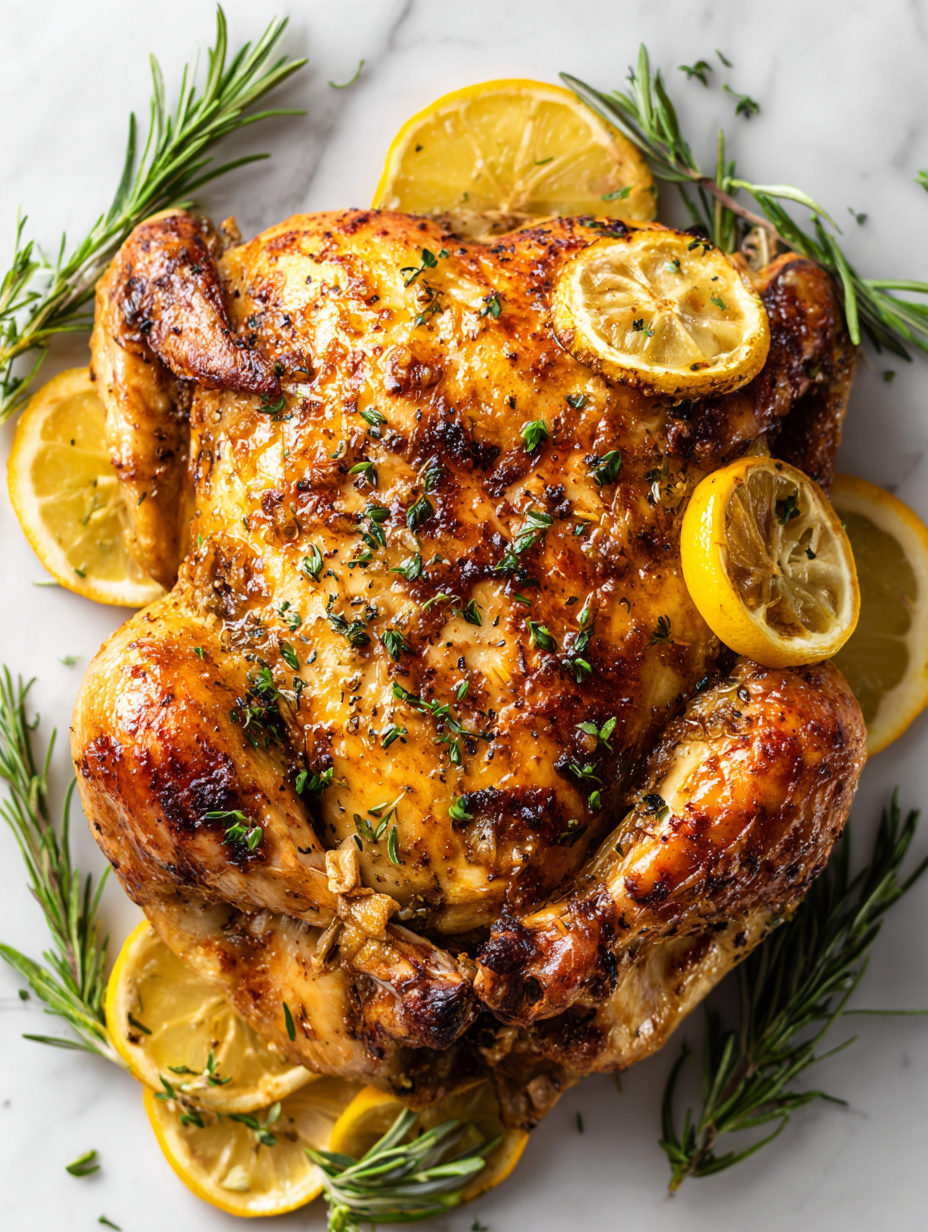
Lemon Herb Roast Chicken
Ingredients
Equipment
Method
- Preheat your oven to 220°C (425°F). Place a roasting pan or oven-proof skillet in the oven to heat up.
- Pat the chicken dry with paper towels, removing any excess moisture from the skin for maximum crispiness.
- Use a microplane or fine grater to zest the lemon, then juice it, setting both aside.
- In a small bowl, mix chopped herbs, minced garlic, lemon zest, lemon juice, olive oil, salt, and pepper to create a fragrant herb mixture.
- Rub the herb mixture all over the chicken, making sure to cover the skin and get some underneath if possible. Stuff half a lemon and a few sprigs of herbs into the cavity for extra flavor.
- Place the chicken breast-side up in the hot pan. Tuck the wing tips underneath and arrange lemon slices around the chicken if desired.
- Roast uncovered at 220°C (425°F) for 20 minutes, then lower the oven temperature to 180°C (350°F) and continue roasting for about 45–55 minutes, until golden and cooked through.
- Every 20 minutes, baste the chicken with its juices using a spoon or basting brush to keep it moist and shiny. If the skin browns too quickly, tent loosely with foil.
- Check the internal temperature using a meat thermometer; it should reach 75°C (165°F) in the thickest part of the thigh, and the juices should run clear.
- If the skin isn’t crispy enough, turn on the broiler for 2–3 minutes, watching carefully to avoid burning. Remove and let the chicken rest for at least 10 minutes, tented with foil.
- Carve the chicken, spoon over the pan juices, and serve with fresh lemon wedges for a bright finish. Enjoy the tender meat with crispy, fragrant skin.
Pro tips for perfect roast chicken
- Crisp Skin: Pat the chicken dry thoroughly before roasting to ensure a crackly, golden exterior.
- Herb Oil: Gently crush herbs before mixing to release more fragrant oils that infuse the meat deeply.
- Lemon Zest: Use a microplane for zest—bright, fragrant bits that crackle against the hot skin, adding zing.
- Baste Regularly: Spoon pan juices over the chicken every 20 minutes for moist, flavorful meat and shiny skin.
- Rest Properly: Let the chicken rest tented with foil for at least 10 minutes to keep juices locked in.
- High to Low Heat: Start roasting at high heat to brown, then reduce to moderate for even cooking without drying.
- Broil for Finish: A quick blast under the broiler in the last 2-3 minutes crisps the skin further, watch carefully!
Common mistakes and how to fix them
- FORGOT to dry the chicken skin, resulting in less crispness. Pat dry thoroughly before roasting.
- DUMPED the herbs directly into the pan, overshadowing the chicken’s flavor. Gently crush herbs first.
- OVER-TORCHED the skin by high heat too long. Lower oven temp after initial browning.
- MISSED resting the chicken; juices escape. Rest for 10 minutes before carving for tender meat.
Quick Fixes and Pantry Swaps
- When chicken skin isn’t crisp enough, splash a little vinegar in the pan before roasting.
- If herbs burn during roasting, patch with fresh herbs in the last 10 minutes.
- Dumped too much lemon juice? Shield the skin with foil to prevent over-brightening and bitterness.
- Over-torched skin? Rescue by turning down heat immediately and tenting with foil for gentle cooking.
- heading
Prep, store, and reheat tips
- You can prep the herb and lemon rub up to a day ahead; keep it in the fridge to intensify flavors and save time on cooking day.
- Roasted chicken keeps well in the fridge for up to 3 days; store in an airtight container and reheat gently to preserve moisture.
- Reheating in a warm oven (around 150°C/300°F) for about 10–15 minutes helps regain some crispness and warmth, while a quick microwave blast preserves juiciness but softens the skin.
- For longer storage, freeze cooked chicken for up to 2 months; reheat slowly in the oven to avoid drying out, until fragrant and steaming hot.
- The lemon-herb flavor intensifies slightly after a day in the fridge, making leftovers feel brighter and more balanced, but be mindful not to overheat to prevent drying out.
Top questions about roast chicken
1. How do I know when my roast chicken is done?
Use a thermometer to check that the thickest part of the thigh reaches 75°C (165°F). Juices should run clear. The skin should be deep golden and crispy. The meat should be tender and easily carved.
2. Why isn’t my chicken skin crispy?
Pat the chicken dry with paper towels before roasting. This helps the skin crisp up. Also, avoid overcrowding the pan, which can cause steaming instead of roasting.
3. Should I rest the chicken after roasting?
Let the chicken rest for at least 10 minutes after roasting. Resting allows juices to redistribute, making the meat juicy and easier to carve.
4. Can I use dried herbs instead of fresh?
Use fresh herbs like rosemary, thyme, and parsley for maximum flavor. Lemon zest adds brightness, while juice keeps the meat moist and tangy.
5. What oven temperature should I use?
Roast at high heat (around 220°C/425°F) initially to brown, then lower to 180°C/350°F to cook through evenly. Baste frequently for moistness.
6. My skin is burning before the meat is cooked—what now?
If the skin burns before the chicken is cooked, tent loosely with foil and lower the oven temperature. Use a meat thermometer to monitor doneness.
7. Can I substitute ingredients in this recipe?
Substitute with lime or orange zest and juice for a different citrus note. Use dried herbs if fresh aren’t available, but reduce the amount. Olive oil can be replaced with melted butter for richer flavor.
8. How should I store leftovers?
Roasted chicken keeps well in the fridge for up to 3 days. Reheat gently in a warm oven or microwave. Leftovers taste even better with a squeeze of fresh lemon.
9. What makes lemon and herbs special here?
Use a microplane to zest the lemon, releasing fragrant oils. Fresh herbs become tender and aromatic as they roast, adding depth to the dish.
10. What are common mistakes and how to fix them?
Forgot to dry the chicken? Pat it thoroughly to ensure crispy skin. Dumped too much lemon juice? Shield the skin with foil during roasting. Over-torched skin? Turn down the oven and tent with foil. If juices run pink, cook a few minutes longer.
This roast chicken with lemon and herbs is a reminder that honest, simple ingredients can create something memorable. The bright citrus and fragrant herbs make it perfect for any season or occasion when comfort and flavor matter.
As you carve into that crispy skin and savor the juicy, herb-infused meat, you’ll feel how a few thoughtful touches can elevate an everyday meal into something a little special. It’s straightforward, honest, and just right for those nights when you want good food without fuss.