
This oven roasted asparagus with olive oil and garlic is my go-to for making a humble veggie feel like a treat. It’s simple, yes, but that garlic and oil give it this glossy, smoky crust that’s unexpectedly indulgent. I usually whip it up last minute, and it’s always a hit, even when I’m just cooking for myself and a few leftovers.
What I love about this recipe is how it transforms everyday asparagus into something that feels cozy and special. The oven does most of the work — no fussing over boiling water or tricky grilling. Plus, the smell of roasting garlic filling the kitchen makes me feel like I’ve got a little secret, a quiet moment of comfort amid chaos.
This recipe is my secret weapon for transforming simple asparagus into a crispy, fragrant side that feels indulgent, even on a busy weeknight. I love how the garlic and olive oil create a glossy, smoky crust that adds depth, making plain veg feel special.
The story behind this recipe
- This recipe started as a way to make a veggie side feel a little more special without fuss. I remember the first time I roasted asparagus with garlic—smelled like a warm hug, and the crisp edges made me feel like I’d unlocked a small secret of flavor. It’s become my go-to whenever I want something quick, honest, and a little bit luxurious.
- Back then, I was juggling dinner for friends who dropped by unexpectedly. I grabbed some asparagus, a clove of garlic, and a splash of olive oil. The aroma filling the kitchen was so inviting, it turned a simple vegetable into a little celebration. Now, it’s my quiet, reliable side—something I trust to make any meal feel just right.
- heading
Ingredient breakdown: key components
- Asparagus: I pick firm, bright green spears with tight tips. If yours are limp or woody, choose fresher ones or trim the tough ends before roasting.
- Olive Oil: I use good-quality extra virgin olive oil for that rich, grassy aroma that deepens as it roasts. If you want a lighter touch, drizzle sparingly—still brings flavor.
- Garlic: I love fresh, plump garlic cloves that offer a mellow, sweet heat when roasted. If you only have dried garlic or powder, add it later or use less to avoid bitterness.
- Salt: I season generously—don’t be shy, a good pinch of flaky sea salt really pulls out the flavors. If you’re watching sodium, use a light hand or a salt substitute.
- Black Pepper: I prefer freshly cracked black pepper for a bit of bite and aroma. If you like it milder, skip or reduce; if you want a punch, sprinkle more after roasting.
- Lemon (Optional): I like a squeeze of lemon zest or juice after roasting—it brightens the dish and cuts through the richness. Skip it if you prefer a more earthy flavor.
- Optional Add-ins: Sometimes I toss in a sprinkle of red pepper flakes or a handful of toasted nuts for texture. Feel free to customize based on your mood!
Spotlight on key ingredients
Asparagus:
- I pick firm, bright green spears with tight tips. If yours are limp or woody, choose fresher ones or trim the tough ends before roasting.
- Olive Oil: I use good-quality extra virgin olive oil for that rich, grassy aroma that deepens as it roasts. If you want a lighter touch, drizzle sparingly—still brings flavor.
- Garlic: I love fresh, plump garlic cloves that offer a mellow, sweet heat when roasted. If you only have dried garlic or powder, add it later or use less to avoid bitterness.
Olive Oil:
- It becomes fragrant and slightly smoky during roasting, coating the spears with a glossy sheen that crisps at the edges.
- Garlic: Roasted garlic turns sweet and nutty, mellowing out and infusing the oil, creating a fragrant, flavorful crust that’s slightly caramelized.
Notes for ingredient swaps
- Dairy-Free: Skip butter or cheese; the garlic and olive oil give plenty of richness but you can add a splash of lemon for brightness.
- Vegan: Use a plant-based oil like avocado or sunflower oil instead of olive oil for a milder, less grassy flavor.
- Low-Sodium: Reduce salt or use a salt substitute; the roasting brings out flavor even with less seasoning.
- Herb Variations: Swap garlic for shallots or leeks for a sweeter, milder aroma; fresh herbs like thyme or rosemary also work.
- Acid Boost: Add a splash of balsamic vinegar or a squeeze of lemon after roasting for a tangy punch that cuts through the oil.
- Spice It Up: Mix in red pepper flakes or smoked paprika with the garlic oil for a smoky, spicy kick.
- Extra Crunch: Toss in toasted pine nuts or chopped almonds after roasting for added texture and nutty flavor.
Equipment & Tools
- Rimmed baking sheet: Contains the asparagus and prevents juices from spilling.
- Small bowl: Mixes garlic and olive oil for even coating.
- Tongs or hands: Toss and arrange asparagus evenly.
Roasting Guide for Asparagus
- Preheat your oven to 220°C (430°F). Use a rimmed baking sheet to prevent juices from spilling during roasting.
- Trim the woody ends off the asparagus spears — about 1 to 2 inches. Aim for even lengths for uniform cooking.
- In a small bowl, whisk together 3 tablespoons of good-quality olive oil and 3 minced garlic cloves. Set aside.
- Arrange the asparagus in a single layer on the baking sheet. Drizzle with the garlic oil mixture, tossing gently to coat evenly.
- Sprinkle generously with flaky sea salt and freshly cracked black pepper. Use your hands or tongs for even distribution.
- Slide the baking sheet into the oven. Roast for 12-15 minutes, turning halfway through for even browning.
- Check the asparagus at 12 minutes: tips should be slightly crispy and browned, stalks tender but still vibrant green.
- Once roasted, remove from oven and immediately transfer to a serving platter. Drizzle with a little extra olive oil if desired.
- Let it rest for 2 minutes—this helps the flavors settle and keeps the tips crisp. Serve warm or at room temperature.
Serve immediately on the platter. Optionally add a squeeze of lemon or a sprinkle of Parmesan for extra flavor. Rest for 2 minutes to allow flavors to meld before eating.
How to Know It’s Done
- Tips are crispy and browned, stalks vibrant green.
- Aroma of roasted garlic is fragrant and not burnt.
- Stems are tender when pierced with a fork, but not mushy.
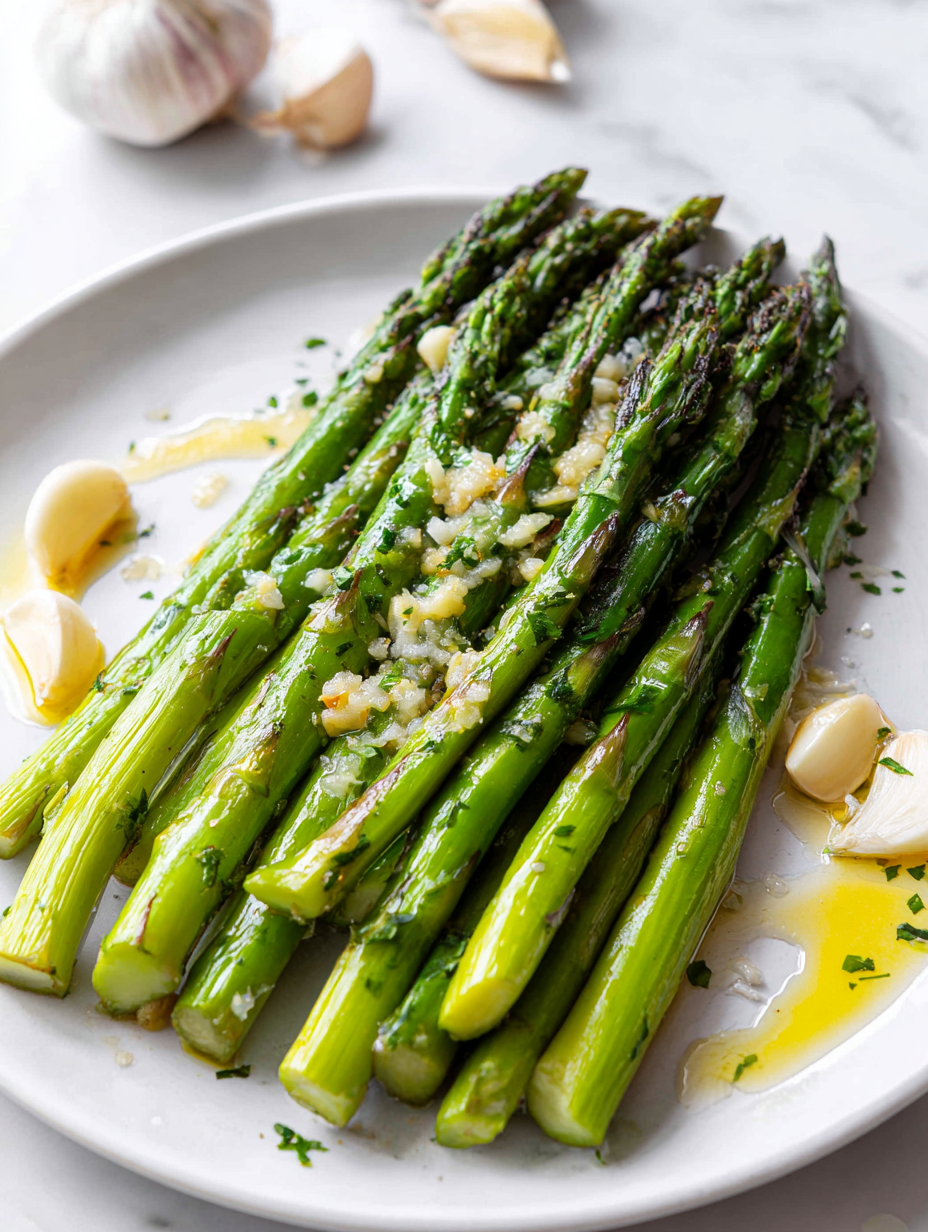
Oven Roasted Asparagus with Garlic and Olive Oil
Ingredients
Equipment
Method
- Preheat your oven to 220°C (430°F) and line a rimmed baking sheet with parchment or leave it plain for easy cleanup.
- Trim the woody ends off the asparagus, about 1 to 2 inches, and arrange the spears in a single layer on the baking sheet. Try to space them out so they roast evenly.
- In a small bowl, whisk together the olive oil and minced garlic until well combined. The garlic should smell fragrant and slightly mellow.
- Drizzle the garlic oil evenly over the asparagus, then use tongs or your hands to toss gently, ensuring each spear is coated with the fragrant oil.
- Sprinkle generously with flaky sea salt and freshly cracked black pepper to taste. Use your fingers or tongs to distribute evenly.
- Slide the baking sheet into the oven and roast for 12-15 minutes. During cooking, you’ll hear the garlic sizzle and smell the aroma filling your kitchen.
- Check the asparagus around 12 minutes: tips should be crispy and browned, while the stalks are tender and vibrant green. Turn the sheet or use tongs to flip the spears for even browning if needed.
- Once done, remove the baking sheet from the oven, and transfer the asparagus to a serving platter. Squeeze a little lemon zest or juice over the top if you like a fresh, bright flavor.
- Let the asparagus rest for a couple of minutes—this allows the flavors to settle and the tips to crisp up slightly before serving.
- Serve immediately, enjoying the glossy, smoky crust and tender, flavorful stalks. For an extra touch, sprinkle with additional salt, pepper, or a drizzle of olive oil.
Pro tips for perfect asparagus
- Bolded mini-head: Use high heat → Roast at 220°C (430°F) for crisp edges and tender stalks.
- Bolded mini-head: Space evenly → Arrange asparagus in a single layer to prevent steaming and ensure even browning.
- Bolded mini-head: Watch garlic → Roast until fragrant and golden, avoid burning to prevent bitterness.
- Bolded mini-head: Drizzle sparingly → Use just enough olive oil to coat, for crispness without sogginess.
- Bolded mini-head: Turn halfway → Shake or flip asparagus at 6-8 minutes for uniform color and texture.
- Bolded mini-head: Check for doneness → Tips should be crispy, stalks tender, with a fragrant garlic aroma.
- Bolded mini-head: Serve promptly → Rest for 2 minutes, then enjoy the glossy, smoky crust and vibrant flavor.
Common mistakes and how to fix them
- FORGOT to preheat the oven → Always preheat for even roasting and crispness.
- DUMPED the asparagus on the sheet → Arrange in a single layer to prevent steaming.
- OVER-TORCHED garlic → Roast until fragrant and slightly golden, avoid burnt bits.
- USED too much oil → Use just enough to coat; excess can lead to sogginess.
Quick kitchen fixes
- When in doubt, splash a little lemon juice to brighten the dish and mask any overpowering garlic scent.
- If asparagus looks limp, quick dunk in ice water post-roast to revive some firmness and brighten color.
- Patch over burnt garlic by sprinkling fresh chopped herbs or a squeeze of lemon to refresh the flavor.
- Shield uneven roasting by turning the sheet halfway—this ensures consistent crispness and color.
- When short on time, swap fresh garlic with a pinch of garlic powder—just add it in the final 2 minutes to avoid bitterness.
Prep, store, and reheat tips
- Trim and wash the asparagus the night before; keep it dry and refrigerated for up to 24 hours, so it’s ready to roast without extra prep.
- Mix garlic and olive oil ahead of time; store in a sealed jar or container in the fridge for up to 2 days, the aroma will intensify overnight.
- Roasted asparagus is best eaten fresh, but can be stored in an airtight container in the fridge for up to 1 day; the edges will soften slightly but still taste good.
- Reheat gently in a 180°C (350°F) oven for 5-7 minutes until warmed through; the tips will crisp again if you keep a close eye, and the garlic aroma will revive.
- For best flavor, avoid reheating in the microwave, as it can make the tips soggy and diminish the smoky garlic aroma.
Top questions about roasted asparagus
1. How do I pick the right asparagus?
Look for firm, bright green spears with tight tips. Avoid limp or woody stalks for the best texture.
2. Can I use a different oil?
Use good-quality extra virgin olive oil for a rich, fragrant flavor that deepens when roasted.
3. Should I use fresh or dried garlic?
Fresh garlic cloves offer a mellow, sweet heat that roasts into a nutty, caramelized flavor; dried garlic can become bitter.
4. How long should I roast the asparagus?
Roast for about 12-15 minutes at 220°C (430°F) until tips are crispy and browned, stalks tender but vibrant.
5. Can I add lemon or other acids?
Adding lemon zest or a squeeze of lemon juice brightens the dish, balancing the smoky garlic flavor nicely.
6. What if the tips burn?
If tips are burnt, reduce oven temperature slightly or check halfway and toss to prevent over-browning.
7. Can I prepare this ahead of time?
Store trimmed, washed asparagus in the fridge for up to 24 hours, covered lightly to prevent moisture buildup.
8. How do I reheat leftovers?
Reheat in a low oven (around 180°C/350°F) for 5-7 minutes to revive crispness and aroma.
9. Should I use a lot of oil?
Using too much oil can make the asparagus soggy; just a light coating is enough for crispness and flavor.
10. How can I fix uneven cooking?
When in doubt, turn the baking sheet halfway through roasting for even browning and crisp edges.
This simple dish is a reminder that good flavor often comes from straightforward techniques and quality ingredients. The smoky garlic aroma and tender-crisp spears are a satisfying contrast that makes me pause and enjoy the moment.
Whenever I roast asparagus this way, I feel a little more grounded, like I’ve connected with a honest, comforting kitchen rhythm. It’s a dish that feels like a small, everyday celebration, no fuss required.

I’m Emily Richardson, the heart and soul behind Playing with Flavors. Cooking isn’t just a hobby for me – it’s a passion that I’ve cultivated for years, and it’s become the driving force of my life.
From the kitchen of my cozy café to the pages of this blog, every dish I create is a reflection of my love for food and the joy it brings to people.


