
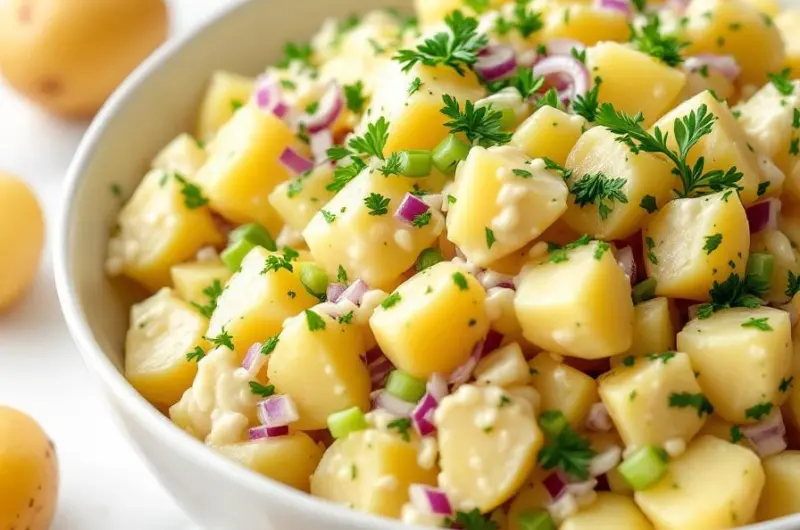
I start by boiling potatoes with a good pinch of salt, watching for that first slow boil that signals they’re tender enough. Once cooked, I drain them and let them sit for a few minutes to steam off excess moisture, so they don’t turn mushy when chopped.
Peeling is next—sometimes I leave the skins on for a more rustic feel, but usually I slip them off while they’re still warm, feeling the thick skins come away easily in my fingers. Dicing them while warm helps them absorb any dressing or seasonings I add later, making each bite a bit more flavorful.
The satisfying squish of boiled potatoes as you gently press them to check for doneness, feeling their soft, yielding flesh give way under your fingertips.
Grocery List Tweaks
- Potatoes: I prefer starchy Russets or Yukon Golds—they mash smoothly and soak up flavors well. Skip if you want a firmer bite, but avoid waxy varieties that stay too firm after boiling.
- Mayonnaise: I go for good-quality, tangy mayo—it’s creamy and brightens the salad. Feel free to swap with Greek yogurt for a lighter, slightly tangy twist, or skip entirely for a vegan version.
- Mustard: A dollop of Dijon adds sharpness and depth. If you only have yellow mustard, it’s fine, but the Dijon really wakes up the flavors with its spicy brightness.
- Vinegar: I use apple cider vinegar for a mellow tang, but lemon juice works just as well if you want a citrusy punch that brightens the potatoes. Just don’t skip the acid—it pulls everything together.
- Celery: Crunchy, fresh celery adds a grassy, crisp bite and a bit of juiciness. If you dislike it, chopped snap peas or thinly sliced bell peppers can give a similar crunch.
- Red onion: I prefer a finely chopped, soaked red onion—cuts sharpness and keeps it from overpowering. If raw onion is too strong for you, rinse it in cold water before adding.
- Herbs: Fresh parsley or dill brighten the dish with herbal freshness. Dried herbs can work in a pinch, but they won’t deliver the same vibrant aroma and punch.
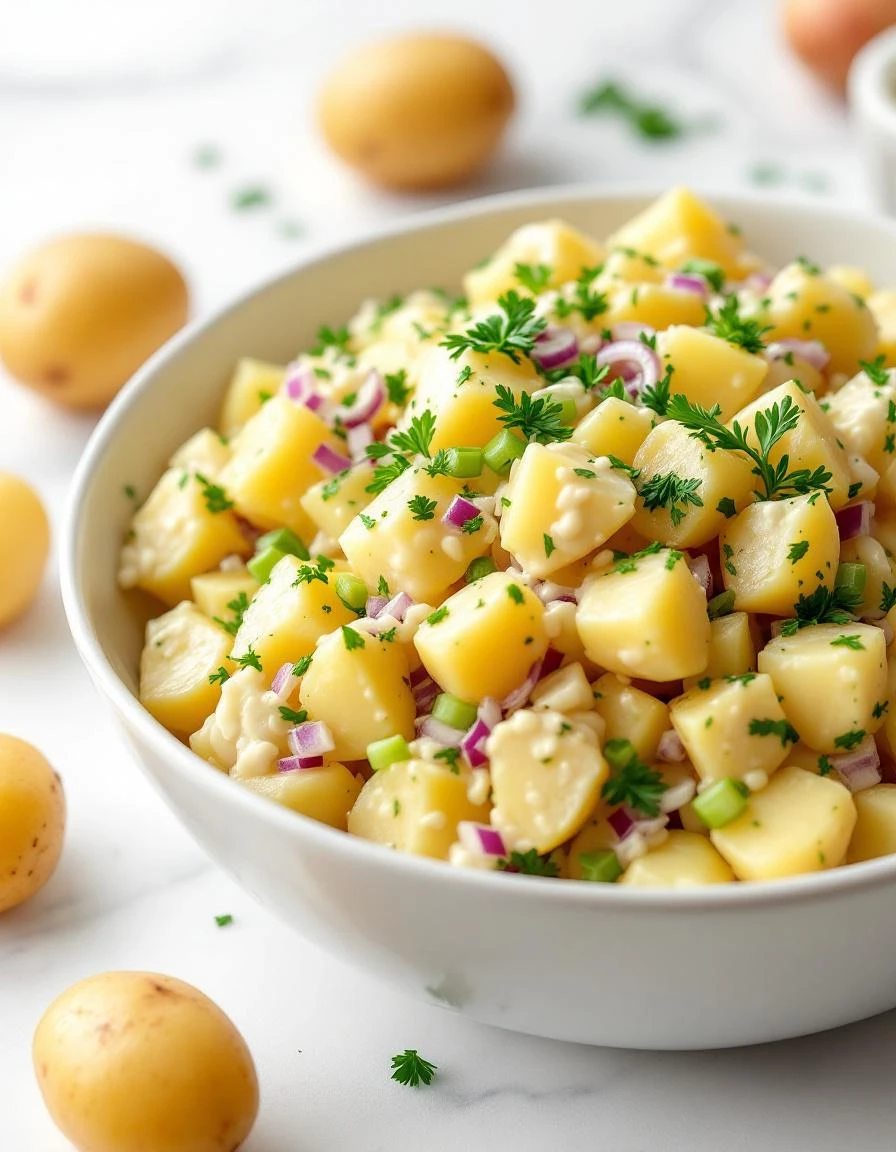
Classic Potato Salad
Ingredients
Equipment
Method
- Place the potatoes in a large pot, cover with cold water, add a pinch of salt, and bring to a gentle boil over medium-high heat. Cook until the potatoes are tender when pierced with a fork, about 15-20 minutes.
- Drain the potatoes in a colander and let them sit for a few minutes so excess moisture can evaporate, helping prevent a soggy salad.
- While still warm, peel the potatoes using a sharp knife or your fingers if the skins slip off easily. Alternatively, leave the skins on for a rustic feel.
- Dice the peeled potatoes into bite-sized chunks, being careful to keep them relatively uniform for even mixing.
- In a large mixing bowl, combine the mayonnaise, Dijon mustard, apple cider vinegar, and a pinch of salt and pepper. Whisk until smooth and creamy, creating a flavorful dressing.
- Add the chopped celery, soaked red onion, and herbs to the dressing, stirring to distribute evenly.
- Gently fold in the warm diced potatoes, making sure each piece is coated with the dressing without breaking apart the potatoes.
- Taste the salad and adjust seasoning with additional salt, pepper, or vinegar as needed for balance and brightness.
- Cover the bowl and refrigerate the potato salad for at least an hour to allow flavors to meld and chill thoroughly.
- Before serving, give the salad a gentle stir, add a sprinkle of fresh herbs if desired, and enjoy this creamy, crunchy, and flavorful dish.
Common Mistakes and How to Fix Them
- FORGOT to rinse potatoes after boiling? Add a splash of vinegar to the water to reduce starchiness.
- DUMPED all the dressing at once? Mix gradually to avoid oversaturating the potatoes.
- OVER-TORCHED the onions? Rinse in cold water to mellow sharpness before mixing.
- SKIPPED tasting before serving? Always taste and adjust salt and acidity for balance.
Make-Ahead and Storage Tips
- Potatoes can be boiled and peeled a day ahead; store in an airtight container in the fridge for up to 24 hours.
- Chopped vegetables and herbs can be prepped 1-2 days in advance; keep separate and combine just before serving to maintain crunch.
- Dressing can be made a day ahead; store in a jar in the fridge, give it a good shake before mixing with potatoes.
- Potato salad tastes better after a few hours, but avoid refrigerating beyond 2 days to prevent sogginess and flavor loss.
- Refrigerate leftovers promptly and consume within 2 days; bring to room temperature and stir well before serving again.
- Flavors meld over time, so the salad may become more savory and slightly softer after sitting overnight.
FAQs
1. How do I cut potatoes without crushing them?
Use a sharp knife to slice the potatoes; it feels satisfying to see clean, even cuts crunch through softly.
2. Should I serve potato salad cold or at room temp?
Chill the salad for at least an hour; the flavors settle, and the cold gives a crisp bite with each forkful.
3. What if my potato salad feels too dry?
If the salad is too dry, stir in a bit more mayo or a splash of lemon juice to bring back moisture and zing.
4. How do I know if my dressing is seasoned right?
Tasting the dressing before mixing helps; the bright acidity should cut through the creamy potatoes without overpowering.
5. When should I add herbs to my potato salad?
Add herbs just before serving; they lose their vibrant aroma if mixed too early, leaving the salad dull and flat.

I’m Emily Richardson, the heart and soul behind Playing with Flavors. Cooking isn’t just a hobby for me – it’s a passion that I’ve cultivated for years, and it’s become the driving force of my life.
From the kitchen of my cozy café to the pages of this blog, every dish I create is a reflection of my love for food and the joy it brings to people.


