
Sometimes, the simplest ingredients can surprise you with their potential. Take asparagus, for example—so humble but when roasted until slightly charred, it gains a smoky depth that’s unexpectedly delightful. Adding a drizzle of aged balsamic glaze turns that earthiness into something glossy and tangy, elevating the vegetable into a sort of understated star on the plate.
I’ve always loved how roasting transforms vegetables. With asparagus, it’s that slight crispness contrasted with tender bites, and the aroma that fills the kitchen—green, smoky, with a hint of caramelized edges. When I discovered balsamic glaze, it was like giving that simple dish a little extra polish, a sweet-tart kick that makes it feel more special without fussing with complicated ingredients.
Focusing on the unexpected delight of transforming simple roasted asparagus into a glossy, slightly smoky treat with a drizzle of aged balsamic, elevating a humble vegetable into a sophisticated side.
The story behind this recipe
- This recipe came from a lazy afternoon stumble in the kitchen, where I was trying to make something quick but memorable. I remembered how my grandmother used to roast simple vegetables and finish them with a splash of something sweet and tangy. That little idea stuck with me, and I started experimenting with balsamic glaze on roasted asparagus.
- One day, I left the asparagus in the oven a bit longer than planned—caught up in a podcast—and it developed these beautifully charred, smoky tips. That slightly crispy edge paired with the sweet acidity of the balsamic was a revelation. Now, whenever I want a quick, impressive veggie side, I whip this up and remind myself how a little patience and a good glaze can elevate humble ingredients.
- heading: ‘The spark behind this dish’
Key ingredients and tips
- Asparagus: I love the slightly woody scent when roasting, which turns sweet and nutty—try to pick firm, fresh stalks for the best caramelization.
- Olive oil: I drizzle enough to coat but not drown—aim for a glossy finish that crisps the tips, adding a smoky aroma as it heats.
- Salt: I sprinkle generously before roasting—this helps draw out moisture and enhances the natural earthiness of the asparagus.
- Black pepper: I prefer freshly cracked for a bit of bite—add it before roasting to let the heat release its spicy notes.
- Balsamic glaze: I swirl it on after roasting—its sweet-tart punch makes the dish feel vibrant and sophisticated, especially when slightly thickened and oozing.
- Optional garlic: I toss in minced garlic early—watch for the fragrant sizzle and slightly roasted scent that adds depth, but don’t burn it.
- Lemon zest (if using): I sprinkle right before serving—brightens the dish with a fresh, citrusy burst that cuts through the richness.
Spotlight on Key Ingredients
Asparagus:
- I love how the stalks turn tender yet retain a slight crunch, with a smoky aroma that intensifies when roasted. Look for firm, fresh spears with tightly closed tips for best caramelization.
- Balsamic glaze: I enjoy its thick, syrupy consistency that oozes with tangy sweetness. When heated slightly, it becomes glossy and sticky, perfect for drizzling and adding that punch of acidity and sweetness.
Balsamic glaze:
- Balsamic vinegar: I notice its deep, rich aroma that intensifies as it reduces, developing a sweet, oaky scent. It thickens into a syrup with a complex, tangy flavor that balances the roasted earthiness of the asparagus.
- Olive oil: I prefer extra virgin for its fruity, peppery notes that add a smoky depth as it heats. It creates a glossy coating on the asparagus, helping them crisp up beautifully.
Notes for ingredient swaps
- Dairy-Free: Balsamic glaze is naturally dairy-free, but if you want creaminess, a drizzle of coconut milk reduction works—adds a hint of sweetness and richness.
- Vegan: Replace honey in homemade balsamic glaze with maple syrup or agave—keeps the glaze sweet and glossy without animal products.
- Low-Sodium: Use less salt during roasting and opt for a low-sodium balsamic glaze—your dish stays flavorful without excess salt.
- Nut-Free: No nuts involved here, but avoid pesto or nut-based toppings if allergies are a concern—keep the focus on smoky, tangy simplicity.
- Gluten-Free: This recipe is naturally gluten-free, just double-check store-bought balsamic glaze for added thickeners or stabilizers.
- Extra Tang: Splash a bit of apple cider vinegar into the balsamic before glazing—amplifies the acidity for a sharper finish.
- Herb-Enhanced: Toss asparagus with fresh thyme or rosemary before roasting—adds an earthy, fragrant layer that pairs beautifully with the balsamic.
Equipment & Tools
- Baking sheet: To roast the asparagus evenly.
- Parchment paper: To prevent sticking and make cleanup easier.
- Tongs or a spatula: To toss and turn the asparagus during roasting.
- Small saucepan: To simmer and thicken the balsamic glaze if making homemade.
- Lemon zester (optional): To add fresh citrus zest for brightness.
Step-by-step to roasted asparagus
- Preheat your oven to 200°C (400°F). Place a baking sheet lined with parchment paper inside to heat up—this helps achieve a nice roasted finish.
- Trim the woody ends off the asparagus. Aim for about 1-2 inches at the bottom, where they tend to be tough and fibrous.
- Arrange the asparagus on the hot baking sheet in a single layer. Drizzle generously with olive oil, then toss gently to coat evenly. Add a good pinch of salt and cracked black pepper.
- Pop the sheet into the oven. Roast for 12-15 minutes, depending on thickness, until the stalks are tender and tips are slightly charred. Shake the pan once halfway through to promote even roasting.
- While the asparagus roasts, prepare the balsamic glaze. If it’s store-bought, no prep needed. For homemade, simmer balsamic vinegar with a touch of honey until thickened—about 10 minutes, until it coats the back of a spoon.
- Once out of the oven, transfer the asparagus to a serving platter. Drizzle with balsamic glaze while still warm—this helps the glaze seep into the tips and enhances the smoky aroma.
- Optional: sprinkle with lemon zest or freshly grated Parmesan for extra brightness or umami, if desired.
- Serve immediately. The asparagus should be tender with crispy edges, glossy with balsamic, and fragrant with caramelized hints.
Serve the asparagus hot from the oven. Let it rest for 1-2 minutes to let flavors meld. Drizzle with balsamic glaze just before plating for maximum shine and freshness.
How to Know It’s Done
- Color: Tips should be charred and crispy, stalks tender but not mushy.
- Smell: A fragrant, smoky aroma with a hint of caramelized balsamic.
- Texture: The stalks should yield easily when pierced but hold their shape.
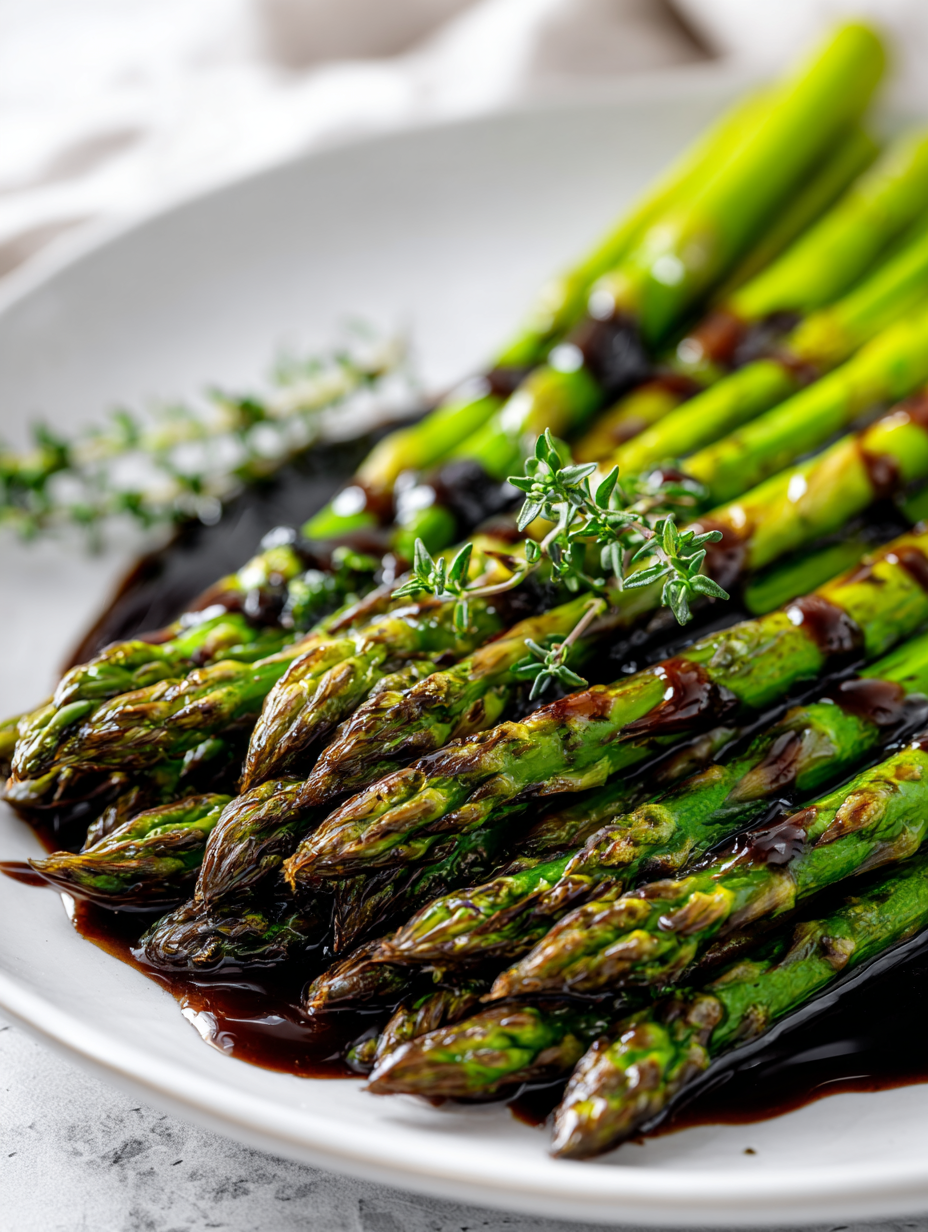
Roasted Asparagus with Balsamic Glaze
Ingredients
Equipment
Method
- Preheat the oven to 200°C (400°F) and line a baking sheet with parchment paper. This ensures even roasting and easy cleanup.
- Trim the woody ends from the asparagus, about 1-2 inches, to ensure tender, not tough, stalks.
- Arrange the prepared asparagus in a single layer on the hot baking sheet. Drizzle with olive oil, then toss gently with tongs or your hands until evenly coated. Sprinkle generously with salt and cracked black pepper.
- Place the tray in the oven and roast for 12-15 minutes, until the tips are charred and crispy, and the stalks are tender when pierced. Shake the pan halfway through to promote even browning.
- While the asparagus roasts, warm the balsamic glaze in a small saucepan if needed, or use it straight from the bottle. If making homemade, simmer balsamic vinegar with a touch of honey until thickened, about 10 minutes.
- Once the asparagus is roasted and slightly cooled, transfer it to a serving platter. Drizzle generously with balsamic glaze, allowing it to seep into the crispy tips and add a glossy finish.
- If desired, sprinkle with lemon zest for a bright, citrusy note that complements the smoky, tangy flavors.
- Serve immediately while the asparagus is warm and the glaze is still glossy, enjoying the perfect balance of smoky, tangy, and tender textures.
Pro tips for perfect roasted asparagus
- Bolded tip: Use evenly sized asparagus spears to ensure uniform roasting and consistent texture.
- Bolded tip: Toss asparagus in olive oil and salt before roasting—this develops a fragrant, crispy exterior.
- Bolded tip: Roast at a high temperature (200°C/400°F) to achieve those smoky, caramelized tips.
- Bolded tip: Drizzle balsamic glaze while asparagus is still warm—this helps it seep into the vegetable for maximum flavor.
- Bolded tip: Watch the tips closely—once charred and crispy, they’re ready. Over-roasting can lead to bitterness.
- Bolded tip: For a shiny finish, serve immediately after drizzling with balsamic—wait too long and the glaze may set too thick.
- Bolded tip: Add lemon zest or cracked black pepper just before serving to brighten the dish and add fresh notes.
Common mistakes and how to fix them
- FORGOT to preheat oven → Always preheat to ensure even roasting and proper caramelization.
- DUMPED asparagus too close → Spread evenly for uniform cooking and crispy tips.
- OVER-TORCHED tips → Reduce roasting time or check frequently to prevent burning and bitterness.
- SPOILED balsamic glaze → Store properly to prevent crystallization; rewarm slightly if too thick.
Quick fixes and pantry swaps
- When asparagus is limp, splash with a little lemon juice to revive brightness and crunch.
- If glaze is too thick, patch with a few drops of warm water—shimmer and loosen instantly.
- Splash a quick vinegar rinse if balsamic glaze is too sweet—adds a tangy spark.
- When tips burn, shield with foil for the last few minutes to prevent bitterness.
- DUMPED the asparagus in a crowded pan? Rescue with a quick shake and even spacing for crisp edges.
Prep and storage tips
- Trim the asparagus ends and store in an airtight container in the fridge for up to 24 hours—keeps them fresh and snappy.
- Prepare the balsamic glaze in advance; store in a jar at room temperature for up to a week—ready to drizzle for a quick finish.
- Roast the asparagus just before serving for peak crispness and aroma; reheat gently if needed, but best enjoyed fresh for the smoky, tender bite.
- If refrigerated leftovers are necessary, reheat in a hot skillet for 1-2 minutes—look for the reappearance of that fragrant, caramelized aroma and slight crispness.
Common Questions About Roasted Asparagus
1. How do I pick the best asparagus?
Look for firm, bright green stalks with tightly closed tips. They should feel sturdy but not woody. When roasted, they develop a smoky aroma and tender texture with crispy tips.
2. How should I prepare the asparagus before roasting?
Trim off about 1-2 inches from the woody ends before roasting. This ensures the stalks cook evenly and remain tender without toughness.
3. What’s the ideal roasting time and temperature?
Roast at 200°C (400°F) for 12-15 minutes. The tips should be slightly charred and crispy, while the stalks stay tender. Keep an eye on them to prevent burning.
4. When should I add the balsamic glaze?
Drizzle the balsamic glaze while the asparagus is still warm—this helps it seep into the tips, enhancing flavor and shine. Serve immediately for best texture.
5. Can I make this ahead? How do I store it?
Store leftovers in an airtight container in the fridge for up to 24 hours. Reheat quickly in a hot skillet to revive crispness and aroma.
6. Can I customize the glaze or flavor?
Adjust the amount of balsamic glaze to your taste. If it’s too sweet, add a splash of vinegar. For more tang, squeeze fresh lemon over before serving.
7. How important is fresh asparagus?
Use fresh, firm asparagus for the best caramelization. Avoid limp or slimy stalks—they won’t roast well and may turn bitter.
8. What if the tips burn or overcook?
If tips start to burn, shield them with foil and reduce roasting time. A quick shake halfway through helps prevent uneven charring.
9. What’s the best balsamic glaze to use?
Use a high-quality balsamic glaze for maximum depth. If making your own, simmer balsamic vinegar with honey until thick and syrupy.
10. Can I add other ingredients or flavors?
For added flavor, toss asparagus with garlic or lemon zest before roasting. Just add these in the last 2 minutes of cooking to prevent burning.
This roasted asparagus with balsamic glaze feels like a little celebration of simplicity, yet it’s so satisfying. The smoky aroma, the glossy tang, and the tender-crisp bite make it perfect for just about any meal or moment. Sometimes, it’s these straightforward dishes that remind us why good ingredients and a little patience matter most.
Whenever I make this, I think about how a simple drizzle can elevate humble vegetables into something special. It’s a dish that’s easy to pull together but feels thoughtfully refined, especially when you serve it with a good conversation or a quiet moment of appreciation.

I’m Emily Richardson, the heart and soul behind Playing with Flavors. Cooking isn’t just a hobby for me – it’s a passion that I’ve cultivated for years, and it’s become the driving force of my life.
From the kitchen of my cozy café to the pages of this blog, every dish I create is a reflection of my love for food and the joy it brings to people.


