
Green peas might seem like a humble ingredient, but when they’re at their peak—bright, sweet, and bursting with freshness—they can turn a simple risotto into a celebration of spring. I love how their natural sweetness cuts through the richness of Parmesan, creating a dish that feels both comforting and surprisingly vibrant. It’s the kind of recipe that makes you appreciate the fleeting moments of seasonal produce, right in your own kitchen.
This risotto is a bit of a cheat for me, honestly. It’s quick enough to throw together after a long day, but it feels special enough to serve for guests or a quiet weekend dinner. I’ve made it during early spring, when the peas are almost too fresh to handle, and the smell alone—sweet, grassy, with a hint of nuttiness—brings back childhood memories of garden afternoons. It’s a reminder that good ingredients don’t need fuss, just a little love and attention.
Focusing on the freshness of green peas and their bright, sweet flavor to elevate a simple, comforting risotto into a springtime celebration that feels both nostalgic and surprisingly vibrant.
The story behind this recipe
- One spring, I was knee-deep in a garden full of fresh peas, their shells bursting with promise. I remembered how my grandmother used to toss peas straight from the pod into her mouth, ignoring the fuss of cooking. That moment made me realize how simple ingredients—just peas, Parmesan, and a little patience—can create something unexpectedly bright and satisfying.
- Ever since, I’ve kept a little bowl of fresh peas for those days when I want a quiet, honest dish that feels like a tiny celebration. This risotto is my ode to those fleeting, sweet spring days—an easy reminder that sometimes, the best meals are the ones you throw together with what’s fresh and nearby.
- heading
- The story behind this recipe
Key ingredients and their secrets
- Green peas: I love how their sweet, grassy aroma fills the kitchen as they cook; if yours taste flat, swap for fresh or blanched snap peas for a bit more crunch.
- Parmesan: The sharp, nutty scent of freshly grated Parmesan is key; if you’re out, a good Pecorino Romano adds saltiness, but skip pre-grated—fresh really makes a difference.
- Arborio rice: It’s got this starchy, creamy quality I crave; if unavailable, Carnaroli works well, but avoid long-grain varieties—they won’t give you that signature risotto texture.
- Vegetable broth: I prefer a homemade or low-sodium broth for depth; if it’s too bland, a splash of white wine or a pinch of miso can brighten it up visually and flavor-wise.
- Butter: It adds a silky richness, especially at the end; if you’re dairy-free, a good olive oil can lend some body, but won’t quite mimic that luscious feel.
- Olive oil: I use a fruity, peppery extra virgin; if you don’t have it, a light neutral oil works, but skip the heavy or flavored oils—they can overpower the delicate peas.
- Lemon zest (optional): A tiny bit of zest brightens the dish; if you want even more zing, squeeze a bit of fresh lemon juice right before serving for that oozy, citrus hit.
Spotlight on key ingredients
Green peas:
- Their bright, grassy aroma intensifies as they cook, bursting with sweetness and a hint of earthiness.
- During cooking, they turn a vibrant, almost fluorescent green, becoming tender but still with a slight pop of crunch.
Parmesan:
- Its sharp, nutty scent deepens as it melts, creating a luscious, slightly granular texture that coats the rice beautifully.
- Grated fresh Parmesan melts smoothly, adding a salty, umami richness that balances the sweetness of the peas.
Notes for ingredient swaps
- Dairy-Free: Swap Parmesan for a nutty, aged nutritional yeast. It won’t melt like cheese but adds a cheesy umami kick.
- Vegan: Use olive oil instead of butter, and skip Parmesan—try a splash of miso or nutritional yeast for richness.
- Fresh Herbs: Fresh mint or basil can brighten the dish instead of lemon zest, adding herby freshness and a pop of color.
- Rice Choice: Carnaroli or Vialone Nano are great alternatives to Arborio with similar creaminess; avoid long-grain varieties that lack starch.
- Broth: Use mushroom or vegetable broth for a deeper, umami flavor; homemade broth adds richness and depth.
- Peas: Frozen peas work perfectly if fresh aren’t in season—they’ll still burst with sweetness and color after blanching.
- Oils & Fats: For a more pungent flavor, try toasted sesame oil or a splash of flavored olive oil—use sparingly to balance the sweetness.
Equipment & Tools
- Heavy-bottomed pan: Ensures even heat and prevents scorching.
- Wooden spoon: Stirs risotto gently without breaking grains.
- Measuring cups and spoons: Accurately measure ingredients for balance.
- Ladle: Gradually add broth while stirring.
- Grater: Freshly grate Parmesan and lemon zest for maximum flavor.
Step-by-step guide to green pea risotto
- Gather all equipment and ingredients. Use a medium-sized, heavy-bottomed pan for even heat distribution.
- Heat 1 tbsp olive oil over medium heat (about 160°C/320°F). Add finely chopped onion, cook until translucent, about 3-4 minutes. Stir occasionally to prevent sticking.
- Add 1 cup Arborio rice, toast lightly for 2 minutes until edges look slightly translucent and smell nutty. Stir constantly to coat evenly.
- Pour in 1/2 cup white wine (optional), stir until mostly absorbed, about 1-2 minutes. This adds depth and brightness.
- Gradually ladle in 3-4 cups warm vegetable broth, one cup at a time. Wait until most liquid is absorbed before adding more. Maintain a gentle simmer over medium-low heat (about 85°C/185°F).
- After about 15 minutes, add 1 cup of fresh green peas. Stir in and cook for 3-4 minutes until peas are bright green and tender.
- Taste the rice. It should be creamy, with a slight bite (al dente). If not, continue adding broth and cooking for another 2-3 minutes.
- Remove from heat. Stir in 2 tbsp unsalted butter and 1/2 cup freshly grated Parmesan cheese. Adjust seasoning with salt and pepper to taste.
- Let rest for 2 minutes. Finish with a sprinkle of lemon zest if desired for brightness. Serve immediately with extra Parmesan.
Let the risotto sit for 2 minutes off heat. Finish with butter, Parmesan, and optional lemon zest. Serve immediately, garnished with extra cheese or herbs if desired.
How to Know It’s Done
- Rice is tender but firm (al dente), with a creamy texture.
- Peas are vibrant green and cooked through, not mushy.
- Risotto has a rich, slightly glossy appearance, not dry or overly wet.
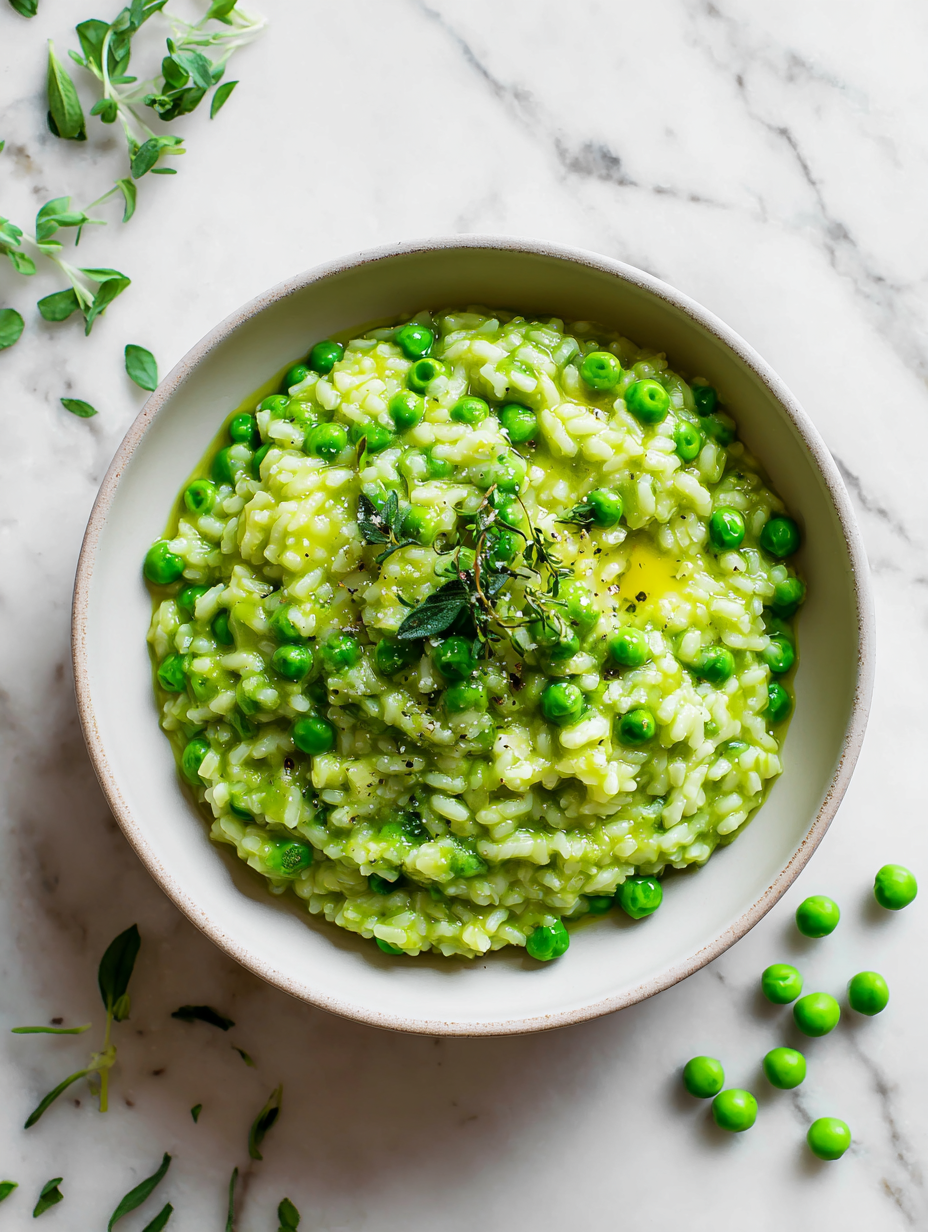
Spring Green Pea Risotto
Ingredients
Equipment
Method
- Heat the olive oil in a heavy-bottomed pan over medium heat until it shimmers and begins to smell fragrant. Add the finely chopped onion and cook, stirring occasionally, until translucent and soft, about 3-4 minutes.
- Add the Arborio rice to the pan and stir to coat each grain with oil. Toast the rice gently, stirring constantly, until the edges turn slightly translucent and it emits a nutty aroma, about 2 minutes.
- Pour in the white wine (if using) and stir until it is mostly absorbed, about 1-2 minutes. The rice will start to look glossy and plump.
- Begin adding the warm vegetable broth, one ladleful (about 1/2 cup) at a time. Stir constantly, allowing each addition to be absorbed before adding the next. Keep the heat at a gentle simmer to prevent scorching.
- Continue adding broth and stirring, tasting the rice after about 15 minutes. When the rice is just tender but still has a slight bite, and the mixture is creamy, add the green peas and stir to combine. Cook for an additional 3-4 minutes until peas are bright green and tender.
- Remove the pan from heat and stir in the butter and freshly grated Parmesan cheese until melted and silky. Add lemon zest if desired, and season with salt and freshly ground pepper to taste.
- Let the risotto rest for a minute or two, then give it a gentle stir. The final dish should be creamy, glossy, and vibrant with the green peas visible throughout. Serve immediately, garnished with extra Parmesan or herbs if you like.
Pro tips for perfect risotto
- Use a gentle simmer when adding broth to prevent rice from breaking or becoming mushy.
- Stir the rice constantly during toasting to develop an even, nutty aroma without burning the grains.
- Add peas in the last few minutes to keep their vibrant color and fresh sweetness intact.
- Finish with a quick off-heat stir of butter and Parmesan for a silky, glossy finish.
- Taste and adjust seasoning at the end—pears can vary in saltiness, and cheese adds salt too.
- Use warm broth for quicker absorption and to maintain a steady simmer, which helps develop creaminess.
- Grate Parmesan finely just before adding to maximize melt and flavor release.
Common mistakes and how to fix them
- FORGOT to watch the heat; high heat can scorch the rice quickly.
- DUMPED all broth at once; add gradually for proper creamy texture.
- OVER-TORCHED the rice; stir continuously and reduce heat if it begins to crackle.
- MISSED the final taste check; adjust salt and Parmesan for balanced flavor.
Quick fixes and pantry swaps
- When sauce shimmers, add broth gradually to prevent splattering and maintain control.
- Splash cold water on a scorched pan to loosen browned bits for quick recovery.
- Patch over a crackling risotto by lowering heat and stirring continuously to restore creaminess.
- Shield overcooked peas with a quick squeeze of lemon to brighten their flavor amidst chaos.
- When short on fresh peas, swap in frozen for quick, sweet bursts of flavor—no fuss needed.
Prep, store, and reheat tips
- Prep the broth and measure rice and peas ahead; store in separate containers for quick assembly.
- Cook and cool the risotto completely before refrigerating; it will last up to 2 days in an airtight container.
- Reheat gently over low heat, adding a splash of broth to loosen, and stir until hot and creamy, about 3-5 minutes.
- The flavors deepen slightly after resting, but texture can become a bit denser; freshen with a squeeze of lemon when reheating.
- Avoid freezing risotto, as the texture turns grainy upon thawing and reheating.
Top questions about green pea risotto
1. How do I pick the best green peas?
Green peas should be bright green, tender but still slightly firm. They add sweetness and a fresh, grassy aroma to the dish.
2. Can I use pre-grated Parmesan?
Use freshly grated Parmesan for the best flavor and melt. Pre-grated cheese tends to be dry and less flavorful.
3. How do I know when the risotto is ready?
Cook the risotto until the grains are tender but still have a slight bite, and it’s creamy and glossy.
4. When should I add the peas?
Add the peas near the end of cooking so they stay vibrant and retain some crunch, about 3-4 minutes.
5. How do I get the perfect creamy texture?
Use a gentle simmer when adding broth, stirring constantly to develop a creamy texture without burning the rice.
6. What if my risotto is too dry?
If the risotto gets too dry before the rice is tender, add a splash more warm broth and stir gently.
7. How do I make it extra rich and glossy?
Finish with a pat of butter and a handful of Parmesan off the heat for a glossy, rich finish.
8. Can I make this ahead and reheat?
Reheat risotto slowly over low heat, stirring in a little broth until hot and creamy again.
9. Can I use frozen peas?
Frozen peas are fine if fresh aren’t in season; just blanch briefly before adding.
10. How do I keep the peas from overcooking?
Avoid overcooking the peas; they should stay vibrant and slightly crisp, not mushy.
This risotto feels like a quiet victory, especially when those bright green peas pop with each bite. It’s a dish that reminds me how simple ingredients—if treated with care—can deliver pure comfort and a little burst of springtime cheer. Honestly, I keep coming back to it when I need something honest and quick, but still feels special.
Cooking this dish gives me a moment to slow down and appreciate the fleeting freshness of the season. It’s not about fuss or perfection, but about savoring the honest, vivid flavors—peas, Parmesan, and that creamy, tender rice. Sometimes, that’s enough to make any day feel a little brighter.

I’m Emily Richardson, the heart and soul behind Playing with Flavors. Cooking isn’t just a hobby for me – it’s a passion that I’ve cultivated for years, and it’s become the driving force of my life.
From the kitchen of my cozy café to the pages of this blog, every dish I create is a reflection of my love for food and the joy it brings to people.


