
There’s a certain magic in how fresh peas and tender spinach can brighten up a simple pasta, even when it’s freezing outside. I love tossing this together on a winter evening when I need a splash of green and a burst of flavor that feels like spring in my bowl. It’s honest, quick, and makes you forget about the gray skies outside for a little while.
This dish isn’t about perfection or fuss—it’s about capturing that fleeting moment when the ingredients are at their freshest, and you can taste it in every bite. I’ve learned over the years that a handful of peas and spinach can turn ordinary pasta into something lively and satisfying, almost like a little celebration of the season, no matter when you make it.
Focusing on how the freshness of peas and spinach can transform a simple pasta into a vibrant, almost spring-like dish, even in the dead of winter.
The story behind this recipe
- I first made this pasta on a whim, after a farmer’s market visit where I scored a bundle of icy peas and bright green spinach. The idea was to create something that felt like a breath of fresh air, even in the dead of winter. Every time I cook it, I remember that crisp morning walk and the thrill of finding perfect, just-harvested greens.
- It’s become a little ritual for me, a reminder that even simple ingredients can be magical if treated well. The way the peas pop with sweetness and the spinach wilts into tender, leafy ribbons—each bite feels like a small celebration of fresh, honest produce. It’s a dish I come back to when I need comfort and a burst of color in my day.
- heading
Ingredient breakdown: key components
- Fresh peas: I love that burst of sweet, juicy flavor when they hit your tongue—use frozen if fresh aren’t available, but try to avoid old, rubbery ones.
- Spinach: Tender, bright green leaves that wilt quickly—make sure they’re fresh and avoid any slimy bits, which can turn bitter when cooked.
- Pasta: I prefer a sturdy shape like rigatoni or penne that holds onto the sauce and greens—cook until just al dente, a little bite makes all the difference.
- Garlic: It’s the backbone—roasted lightly if you want a mellow sweetness, or just minced raw for that punch of aromatic sharpness in every bite.
- Olive oil: Use good quality, extra virgin—its fruity, peppery notes really lift the greens and coat the pasta beautifully, making each bite silky.
- Lemon: Brightens everything—zest and juice add a fresh, zingy contrast that cuts through the richness of the greens and pasta, don’t skip it.
- Parmesan: I like a sharp, nutty cheese—add it at the end, grated liberally, for that salty, umami kick that ties all the flavors together.
Spotlight on Key Ingredients
Peas:
- Fresh peas: I love that burst of sweet, juicy flavor when they hit your tongue—use frozen if fresh aren’t available, but try to avoid old, rubbery ones.
- Spinach: Tender, bright green leaves that wilt quickly—make sure they’re fresh and avoid any slimy bits, which can turn bitter when cooked.
- Pasta: I prefer a sturdy shape like rigatoni or penne that holds onto the sauce and greens—cook until just al dente, a little bite makes all the difference.
Spinach:
- Tender, bright green leaves that wilt quickly—make sure they’re fresh and avoid any slimy bits, which can turn bitter when cooked.
- Olive oil: Use good quality, extra virgin—its fruity, peppery notes really lift the greens and coat the pasta beautifully, making each bite silky.
- Lemon: Brightens everything—zest and juice add a fresh, zingy contrast that cuts through the richness of the greens and pasta, don’t skip it.
Notes for ingredient swaps
- Fresh peas: I love that burst of sweet, juicy flavor when they hit your tongue—use frozen if fresh aren’t available, but try to avoid old, rubbery ones.
- Spinach: Tender, bright green leaves that wilt quickly—make sure they’re fresh and avoid any slimy bits, which can turn bitter when cooked.
- Pasta: I prefer a sturdy shape like rigatoni or penne that holds onto the sauce and greens—cook until just al dente, a little bite makes all the difference.
- Garlic: It’s the backbone—roasted lightly if you want a mellow sweetness, or just minced raw for that punch of aromatic sharpness in every bite.
- Olive oil: Use good quality, extra virgin—its fruity, peppery notes really lift the greens and coat the pasta beautifully, making each bite silky.
- Lemon: Brightens everything—zest and juice add a fresh, zingy contrast that cuts through the richness of the greens and pasta, don’t skip it.
- Parmesan: I like a sharp, nutty cheese—add it at the end, grated liberally, for that salty, umami kick that ties all the flavors together.
Equipment & Tools
- Large pot: Boil pasta efficiently
- Deep skillet: Toss greens and pasta together
- Slotted spoon: Remove peas and spinach without excess water
- Colander: Drain pasta quickly
- Microplane or zester: Add fresh lemon zest
Step-by-step guide to pea and spinach pasta
- Equipment & Tools: Gather a large, deep skillet (for tossing everything together), a slotted spoon (for peas and spinach), a colander (for pasta), and a microplane or zester (for lemon zest).
- Bring a large pot of salted water (about 4 liters/quarts) to a rolling boil, aiming for 100°C/212°F. Add pasta and cook until just al dente, about 1 minute less than package instructions. Drain, reserving 1 cup of pasta water.
- While pasta cooks, heat 2 tbsp olive oil over medium heat (about 160°C/320°F) in the skillet. Add 2 cloves minced garlic; cook until fragrant, about 30 seconds. Be careful not to burn it—if garlic turns brown, reduce heat.
- Add 1 cup frozen peas directly to the skillet, stirring for 1-2 minutes until heated through and slightly tender. The peas should be bright green and just beginning to pop.
- Toss in the drained pasta, along with 1/4 cup reserved pasta water, to loosen everything up. Stir well, letting the pasta absorb the flavors for about 1 minute.
- Add 4 cups fresh spinach in batches, stirring until each batch wilts completely, about 1-2 minutes. The spinach should look vibrant and glossy. If it sticks, add a splash more pasta water.
- Finish with a squeeze of lemon juice (about 1 tbsp), lemon zest (from half a lemon), and a generous grating of Parmesan (about 1/4 cup). Toss to coat evenly.
- Taste and adjust seasoning with salt and pepper as needed. If the mixture feels dry, splash in a little more pasta water and stir.
- Remove from heat. Let rest for 1 minute to allow flavors to meld. Serve immediately, garnished with extra Parmesan or a drizzle of olive oil if desired.
Serve immediately while hot, with a sprinkle of extra Parmesan and a drizzle of olive oil, if desired. Resting is minimal—just enough to let the flavors settle.
How to Know It’s Done
- Pasta is al dente, with a slight bite in the center.
- Peas are tender but still vibrant green, not mushy.
- Spinach is wilted but retains a bright color and fresh flavor.
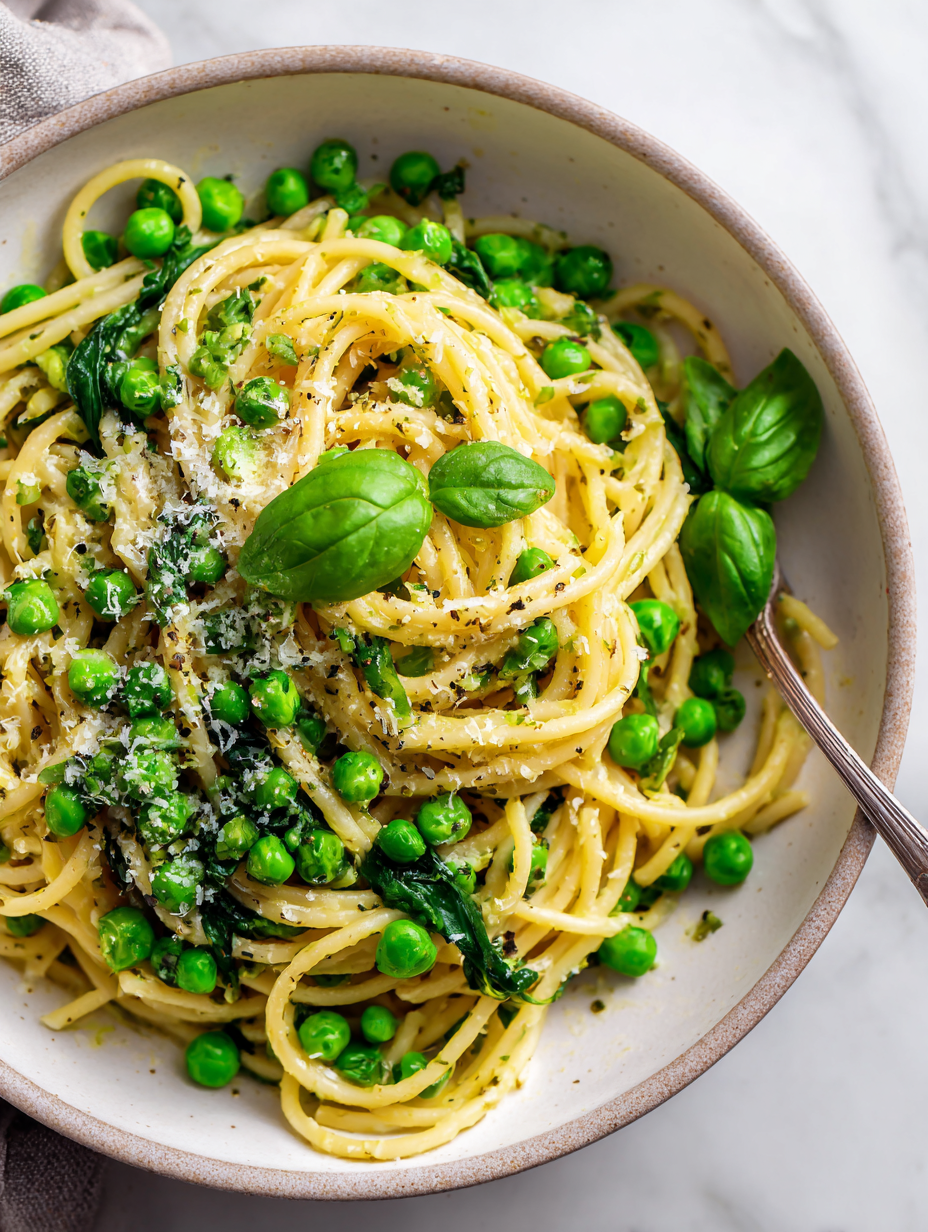
Spring-Inspired Pea and Spinach Pasta
Ingredients
Equipment
Method
- Bring a large pot of salted water to a rolling boil. Add the pasta and cook until just al dente, about 1 minute less than package instructions. Drain and set aside, reserving 1 cup of pasta water.
- While the pasta cooks, heat olive oil over medium heat in a deep skillet. Add minced garlic and sauté until fragrant, about 30 seconds, until it just begins to turn golden.
- Add frozen peas directly to the skillet, stirring for 1-2 minutes until heated through and slightly tender. You’ll notice the peas brighten in color and start to pop.
- Transfer the drained pasta into the skillet with peas. Pour in about half of the reserved pasta water and stir to loosen the mixture, letting it absorb the flavors for about 1 minute.
- Gradually add fresh spinach in batches, stirring until each batch wilts completely, about 1-2 minutes, until the greens are vibrant and glossy.
- Squeeze lemon juice over the greens, add lemon zest, and sprinkle with grated Parmesan. Toss everything gently to combine, allowing the cheese to melt and coat the greens and pasta evenly.
- Taste and season with salt and freshly ground black pepper. If the mixture feels too thick, add a splash more of the remaining pasta water to achieve a silky, cohesive sauce.
- Remove from heat and let sit for a minute to allow flavors to meld. Serve immediately, garnished with extra Parmesan if desired, and enjoy this fresh, lively pasta.
Notes
Tips for perfect pea and spinach pasta
- Fresh peas: I love that burst of sweet, juicy flavor when they hit your tongue—use frozen if fresh aren’t available, but try to avoid old, rubbery ones.
- Spinach: Tender, bright green leaves that wilt quickly—make sure they’re fresh and avoid any slimy bits, which can turn bitter when cooked.
- Pasta: I prefer a sturdy shape like rigatoni or penne that holds onto the sauce and greens—cook until just al dente, a little bite makes all the difference.
- Garlic: It’s the backbone—roasted lightly if you want a mellow sweetness, or just minced raw for that punch of aromatic sharpness in every bite.
- Olive oil: Use good quality, extra virgin—its fruity, peppery notes really lift the greens and coat the pasta beautifully, making each bite silky.
- Lemon: Brightens everything—zest and juice add a fresh, zingy contrast that cuts through the richness of the greens and pasta, don’t skip it.
- Parmesan: I like a sharp, nutty cheese—add it at the end, grated liberally, for that salty, umami kick that ties all the flavors together.
Common mistakes and how to fix them
- FORGOT to check pasta doneness → test with a bite, it should be tender yet firm.
- DUMPED peas directly into hot water → add frozen peas straight to the skillet, avoid overcooking.
- OVER-TORCHED garlic → cook over medium heat, garlic should be fragrant, not browned or bitter.
- MISSED seasoning at the end → taste and adjust with salt, pepper, or lemon to brighten flavors.
Quick fixes and pantry swaps
- WHEN sauce is too thick → splash in hot pasta water, stir until silky.
- IF peas are dull → add a pinch of sugar or a squeeze of lemon for brightness.
- SPLASH olive oil if greens seem wilted or dry before serving.
- PATCH over-seasoned → stir in a little more pasta water or lemon juice to balance flavors.
- SHIELD from overcooking → remove from heat as soon as spinach wilts and peas are tender.
Prep, store, and reheat tips
- Prep the peas and spinach by washing and chopping ahead; store in airtight containers in the fridge for up to 24 hours. Their freshness boosts the dish’s vibrant flavor.
- Cook the pasta until just al dente, drain, and toss with a little olive oil to prevent sticking. Keep in the fridge for up to 24 hours, reheating gently to preserve texture.
- You can assemble the ingredients—peas, spinach, garlic, lemon zest—up to a day in advance. Keep separated to maintain their brightness and avoid wilting.
- Reheat leftovers in a skillet over low heat, adding a splash of water or olive oil. The peas will keep their juiciness, and spinach should wilt softly, smelling fresh and green.
Top questions about pea and spinach pasta
1. Can I use frozen peas instead of fresh?
Use frozen peas if fresh aren’t available; they’re just as sweet and pop with juice. Avoid old, rubbery ones for the best flavor.
2. Can I swap spinach for another green?
Yes, you can substitute baby spinach with kale or arugula, but expect a slightly earthier or peppery flavor.
3. How do I know when the pasta is done?
Cook pasta until just al dente—about 1 minute less than package instructions. It should have a slight bite, not mushy.
4. How do I prevent the spinach from overcooking?
Add the greens in batches, stirring until wilted. Overcooking spinach makes it slimy and bitter, so keep a close eye.
5. What type of olive oil works best?
Use good quality extra virgin olive oil for a fruity, peppery flavor that coats the greens and pasta beautifully.
6. Should I add lemon in the recipe?
Brighten the dish with lemon zest and juice. It adds a fresh, zingy contrast that lifts all the flavors in the bowl.
7. Can I omit Parmesan or use a different cheese?
Finish with freshly grated Parmesan cheese for a salty, umami kick. It melts into the greens and pasta, creating a silky sauce.
8. How do I reheat this dish without losing flavor?
Reheat leftovers gently in a skillet on low heat, adding a splash of water or oil to revive the greens and avoid sogginess.
9. Can I prep this dish in advance?
You can prepare the greens and pasta ingredients a day ahead. Keep separate, and assemble just before serving for freshness.
10. What if the sauce is too thick?
If the sauce feels too thick, splash in hot pasta water and stir until silky. It helps loosen everything without diluting flavor.
This dish is a reminder that freshness can turn even the simplest ingredients into something memorable. The bright peas and tender spinach offer a burst of flavor that feels particularly uplifting now, when lighter, greener meals are so welcome. It’s a quick, honest recipe that fits into even the busiest nights.
Sharing this pasta with someone you care about can make the ordinary feel a little more special. It’s a humble dish, but one that celebrates the season’s best produce and the joy of simple cooking. Sometimes, it’s the straightforward things that end up meaning the most.

I’m Emily Richardson, the heart and soul behind Playing with Flavors. Cooking isn’t just a hobby for me – it’s a passion that I’ve cultivated for years, and it’s become the driving force of my life.
From the kitchen of my cozy café to the pages of this blog, every dish I create is a reflection of my love for food and the joy it brings to people.


