
This pea and potato curry is my go-to when I want something honest and comforting, but I don’t have hours to spend fussing in the kitchen. It’s a no-fuss dish that’s rooted in my childhood, where my grandmother’s simple ingredients transformed into something warm and satisfying with just a handful of spices. The smell alone—sweet peas, earthy potatoes, and toasted cumin—can turn a dull evening into something special.
What I love most about this recipe is how adaptable it is. It’s forgiving if you’re missing an ingredient or want to throw in a bit of spinach or a splash of coconut milk. It’s a reminder that humble ingredients like peas and potatoes can be turned into a vibrant, soulful dish with a little bit of heat and love. Plus, it’s quick enough to make on a weeknight but hearty enough to serve as a comforting weekend meal.
This recipe is inspired by my grandmother’s humble approach, where every ingredient was a story and every step was a lesson in patience. I love how simple ingredients like peas and potatoes can come alive with just the right spices and a little love, turning into something that feels like a warm hug on a busy weeknight.
The story behind this recipe
- This recipe grew out of a rainy afternoon when I was digging through my grandmother’s old recipe box. I found a scribbled note about a simple pea and potato curry, and I remembered how my mother used to make it with whatever she had on hand. That day, I realized how much comfort and nostalgia can be packed into humble ingredients, cooked with care and a pinch of patience.
- Every time I make this curry, I think of those lazy Sunday afternoons at her kitchen table, the aroma of spices filling the air, and the quiet joy of a meal made with love. It’s a dish that’s rooted in my childhood memories but still feels fresh and alive today. There’s something special about turning simple ingredients into a dish that feels like a warm, familiar hug.
- heading:
Key ingredients and tips
- Fresh green peas: I love the pop of sweetness they add—make sure they’re bright and tender. Skip frozen peas if you want a more rustic texture.
- Potatoes: I prefer starchy ones that break down slightly into the sauce, giving it body. Russets are perfect, but Yukon Golds work too if you like creamier bites.
- Cumin seeds: Toast them until they crackle and release a nutty aroma—it’s the backbone of the curry’s warmth. If you’re out, a pinch of ground cumin works, but toast first for flavor.
- Tomatoes: I use ripe, juicy ones for a slight tang. If you only have canned, go for crushed or diced—just watch for acidity and balance with a pinch of sugar if needed.
- Onion & garlic: They form the base; cook until soft and golden. If you’re in a rush, a quick blitz in the microwave can soften them before sautéing.
- Spices (turmeric, coriander): I keep these at hand for their vibrant color and earthy flavor. Toast briefly in oil to bloom their aroma—skip if you’re in a hurry, but flavor will be less deep.
- Oil: I like mustard or vegetable oil for its neutral, slightly smoky note. Use enough to coat the spices and onions well—about 2 tablespoons for richness.
Spotlight on key ingredients
Green peas:
- Fresh green peas: I love the pop of sweetness they add—make sure they’re bright and tender. Skip frozen peas if you want a more rustic texture.
- Potatoes: I prefer starchy ones that break down slightly into the sauce, giving it body. Russets are perfect, but Yukon Golds work too if you like creamier bites.
- Cumin seeds: Toast them until they crackle and release a nutty aroma—it’s the backbone of the curry’s warmth. If you’re out, a pinch of ground cumin works, but toast first for flavor.
Potatoes:
- I like starchy varieties that soften and meld into the sauce, creating a velvety texture. Russets or Yukon Golds are my go-to, especially if you want a creamier, richer curry.
- Cumin seeds: When toasted, they crackle and release a warm, nutty aroma that really deepens the flavor. They behave differently than ground cumin, so toast whole for best results.
Notes for ingredient swaps
- Fresh green peas: I love the pop of sweetness they add—make sure they’re bright and tender. Skip frozen peas if you want a more rustic texture.
- Potatoes: I prefer starchy ones that break down slightly into the sauce, giving it body. Russets are perfect, but Yukon Golds work too if you like creamier bites.
- Cumin seeds: Toast them until they crackle and release a nutty aroma—it’s the backbone of the curry’s warmth. If you’re out, a pinch of ground cumin works, but toast first for flavor.
- Tomatoes: I use ripe, juicy ones for a slight tang. If you only have canned, go for crushed or diced—just watch for acidity and balance with a pinch of sugar if needed.
- Onion & garlic: They form the base; cook until soft and golden. If you’re in a rush, a quick blitz in the microwave can soften them before sautéing.
- Spices (turmeric, coriander): I keep these at hand for their vibrant color and earthy flavor. Toast briefly in oil to bloom their aroma—skip if you’re in a hurry, but flavor will be less deep.
- Oil: I like mustard or vegetable oil for its neutral, slightly smoky note. Use enough to coat the spices and onions well—about 2 tablespoons for richness.
Equipment & Tools
- Medium-sized heavy pan: For even heat distribution and cooking the curry.
- Sharp knife: Chopping onions, garlic, ginger, and potatoes.
- Wooden spoon: Stirring and mixing ingredients without scratching the pan.
- Measuring cup: Ensuring accurate quantities of ingredients.
Step-by-step guide to pea and potato curry
- Gather your equipment: a medium-sized heavy pan, a sharp knife, a wooden spoon, and a measuring cup. The pan should be wide enough for even heat distribution.
- Heat 2 tablespoons of oil over medium heat (around 160°C/320°F). Add 1 teaspoon cumin seeds. Toast until they crackle and smell nutty, about 30 seconds.
- Add 1 chopped onion to the pan. Cook, stirring frequently, until translucent and golden around the edges, about 5-7 minutes. If it starts to burn, lower the heat.
- Stir in 3 minced garlic cloves and 1 teaspoon grated ginger. Cook for another minute until fragrant, but do not let the garlic brown.
- Add 1 teaspoon turmeric and 1 tablespoon ground coriander. Toast the spices in oil briefly, about 30 seconds, until they release their aroma and turn a little darker.
- Dice 2 medium potatoes into 1.5 cm (0.6 inch) cubes. Add them to the pan. Stir well to coat in spices. Cook for 5 minutes, stirring occasionally, until they start to soften slightly.
- Pour in 400g (14 oz) chopped ripe tomatoes or canned diced tomatoes. Stir and cook until the liquid reduces and the oil begins to separate, about 10 minutes. The mixture should look jammy and fragrant.
- Add 200g (7 oz) frozen or fresh green peas. Stir into the sauce. Cover the pan and simmer on low heat for 10 minutes, until potatoes are tender and peas are heated through.
- Check the curry’s consistency. If too thick, add a splash of water and stir. If too watery, uncover and cook a few minutes more until it thickens slightly.
- Taste and adjust salt, adding a pinch of sugar if the acidity needs balancing. If you want more heat, sprinkle with chili flakes or ground cayenne.
- Once everything is cooked and flavors melded, turn off the heat. Let the curry rest for 5 minutes—this helps the flavors settle and deepen.
- Serve hot, garnished with chopped cilantro if desired. Pair with rice or flatbread for a simple, satisfying meal.
Let the curry sit off the heat for 5 minutes before serving. Garnish with fresh cilantro if you like. Serve with hot rice or flatbread, and enjoy the aroma of spices and fresh peas.
How to Know It’s Done
- Potatoes should be tender and easily pierced with a fork.
- The sauce should be jammy, not too runny or dry.
- Peas should be bright green and heated through, with a slight pop when bitten.
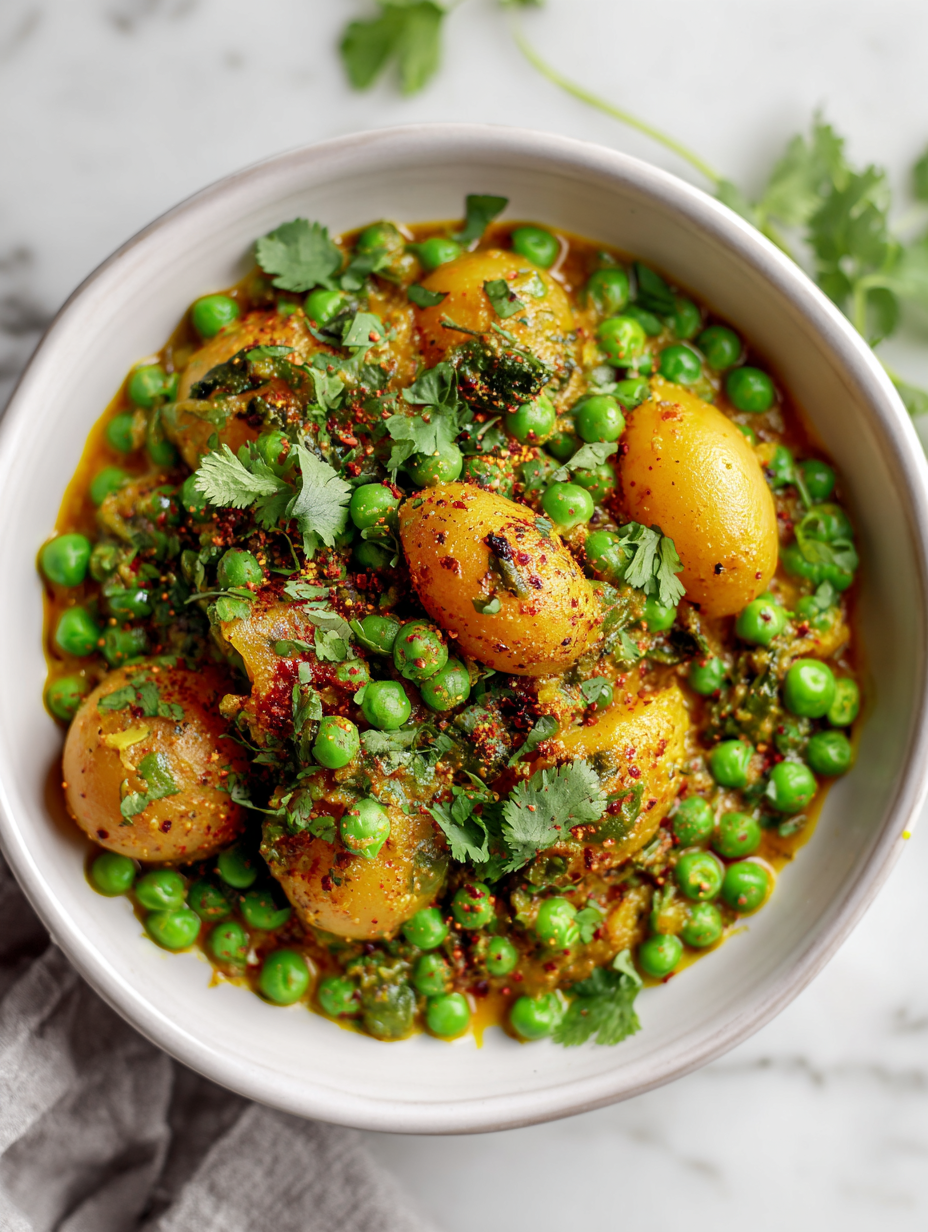
Pea and Potato Curry
Ingredients
Equipment
Method
- Heat the oil in a medium-sized heavy pan over medium heat until shimmering. Add the cumin seeds and toast until they crackle and release a nutty aroma, about 30 seconds.
- Add the chopped onion to the pan and cook, stirring frequently, until translucent and golden around the edges, about 5-7 minutes. You should hear a gentle sizzle and smell sweet caramelization.
- Stir in the minced garlic and grated ginger, cooking for about 1 minute until fragrant and slightly softened. The mixture should smell warm and spicy.
- Add the ground turmeric and coriander, stirring for 30 seconds to bloom the spices. Watch for a fragrant aroma and a slight darkening of the spices.
- Stir in the diced potatoes, coating them well with the spice mixture. Cook for 5 minutes, stirring occasionally, until they begin to soften and turn slightly golden.
- Pour in the chopped tomatoes and stir to combine. Cook, stirring frequently, until the mixture thickens and the oil starts to separate from the tomato-spice base, about 10 minutes. The sauce will look jammy and fragrant.
- Stir in the green peas, then cover the pan and lower the heat. Let everything simmer gently for 10 minutes, until the potatoes are tender and the peas are heated through, with a vibrant green color.
- Uncover and check the consistency. If the sauce is too thick, add a splash of water and stir; if too runny, simmer uncovered until it thickens slightly. Taste and add salt as needed.
- Remove from heat and let sit for a few minutes to deepen the flavors. Garnish with chopped cilantro if desired.
- Serve the warm pea and potato curry alongside rice or flatbread, enjoying the comforting aroma and vibrant flavors of this simple, soulful dish.
Pro tips for pea and potato curry
- Bolded mini-head: Toast spices until fragrant and slightly darker for a deeper flavor.
- Bolded mini-head: Use a wide pan to promote even cooking and prevent ingredients from steaming.
- Bolded mini-head: Add peas last to keep their bright color and fresh pop in the curry.
- Bolded mini-head: Stir frequently after adding tomatoes to prevent sticking and ensure even reduction.
- Bolded mini-head: Taste and adjust seasoning before serving—spices develop more as the curry rests.
- Bolded mini-head: For a richer sauce, mash some potatoes slightly before adding peas.
- Bolded mini-head: Let the curry sit off heat for 5 minutes to deepen flavors and prevent overcooking peas.
Common mistakes and how to fix them
- FORGOT to check spice levels → Taste and adjust before serving.
- DUMPED all ingredients together → Layer flavors by adding ingredients in stages.
- OVER-TORCHED spices → Toast spices until fragrant, not burnt, to avoid bitterness.
- MISSED simmering time → Let the curry simmer until potatoes are tender and sauce thickens.
Quick fixes and pantry swaps
- When sauce is too thick → Splash in a little water and stir gently.
- If peas aren’t popping bright green → Add them later, cook briefly, then serve immediately.
- Splash some lemon juice when curry tastes flat for an instant brightener.
- Patch overburnt spices by stirring in a spoonful of yogurt or coconut milk.
- Shield the curry from overcooking potatoes by removing from heat just as they soften.
Prep, store, and reheat tips
- Chop potatoes and onions ahead of time; store in an airtight container in the fridge for up to 24 hours. The aroma of fresh cuts makes prep feel less rushed.
- Cook the curry and let it cool completely before storing it in the fridge for up to 3 days. Reheat gently on the stove, watching for a gentle simmer and a fragrant aroma.
- Frozen curry can last up to 2 months; portion it out in freezer-safe containers. Thaw overnight in the fridge for best flavor and texture.
- Reheat in a saucepan over medium-low heat, stirring often. Expect the sauce to thicken slightly; add a splash of water to loosen if needed. The smell of spices will deepen as it warms.
- For best flavor, reheat the day after cooking. The peas and potatoes absorb the spices overnight, making each bite more soulful and aromatic.
Top questions about pea and potato curry
1. Can I use frozen peas instead of fresh?
Use fresh peas for a sweeter, brighter flavor, but frozen peas work just fine and are more convenient.
2. How do I know when the potatoes are cooked?
Cook the potatoes until tender when pierced with a fork, usually about 15-20 minutes after simmering.
3. My curry is too thick, what do I do?
If the curry is too thick, stir in a little water or coconut milk and simmer for a few minutes.
4. How do I season the curry properly?
Add salt and spices gradually, tasting as you go, to reach your preferred level of seasoning.
5. How long should I simmer the curry?
Simmer the curry uncovered for about 10 minutes after adding tomatoes to develop flavor and thicken the sauce.
6. What’s the best pan for this curry?
Use a wide pan to allow ingredients to cook evenly and prevent burning, especially when toasting spices.
7. Can I customize this curry with other ingredients?
You can add spinach, cilantro, or a splash of coconut milk for extra flavor and creaminess if desired.
8. How should I reheat leftovers?
Stir gently when reheating to prevent breaking the potatoes and to keep the peas whole.
9. When is the curry done?
Cook the curry just until the peas are heated through and retain their bright color—don’t overcook.
10. How do I toast spices properly?
Avoid burning the spices by toasting them until fragrant but not dark, which can turn bitter.
This pea and potato curry is more than just a quick meal; it’s a reminder of how humble ingredients can come together with patience and love. It’s perfect for those busy nights when you want comfort without fuss, and it’s endlessly adaptable based on what you have on hand.
Whenever I make it, I feel a little nostalgic for lazy weekend afternoons and the warm, spicy kitchen smells that linger long after the last bite. It’s a simple dish, but one that feels like a quiet victory in the everyday kitchen.

I’m Emily Richardson, the heart and soul behind Playing with Flavors. Cooking isn’t just a hobby for me – it’s a passion that I’ve cultivated for years, and it’s become the driving force of my life.
From the kitchen of my cozy café to the pages of this blog, every dish I create is a reflection of my love for food and the joy it brings to people.


