
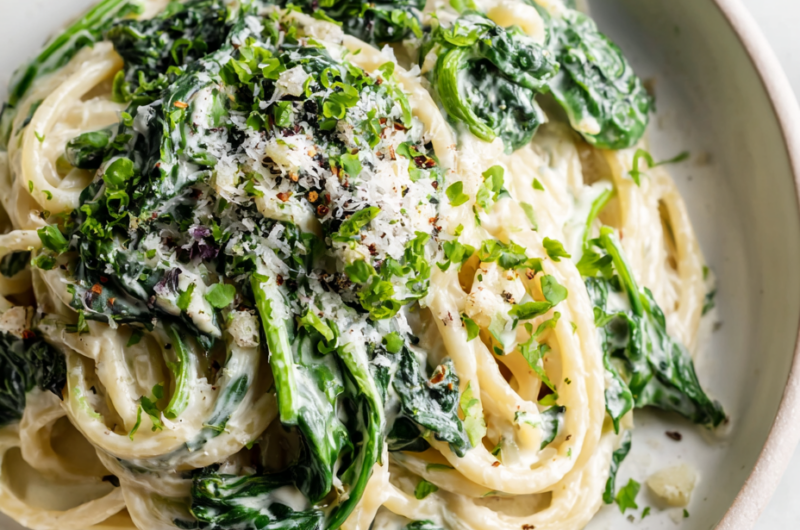
There’s something quietly magical about how spinach transforms when cooked—its bitterness mellows out, giving way to a silky, sweet undertone that you might not expect. This creamy spinach pasta is more than just comfort food; it’s a reminder that simple ingredients can take on new life through a bit of heat and patience.
I first stumbled on this recipe when I was craving something nourishing but didn’t want to fuss. Watching the spinach wilt and turn into this lush, vibrant green with a subtle sheen made me realize how much character can hide in the most humble greens. It’s become a go-to for nights when I need something quick but satisfying.
There’s a certain joy in how the texture evolves—from crispy edges in the pan to a smooth, almost velvety sauce clinging to every strand of pasta. It’s a dish that celebrates the process, not just the end result, and that’s why I keep coming back to it, especially when I want a bit of comfort without the fuss.
Focusing on how the texture of the spinach changes during cooking, transforming from fresh and slightly bitter to silky and sweet, adds a surprising depth to a simple pasta dish.
The story behind this recipe
- This recipe was born out of a lazy afternoon when I found a bag of wilted spinach lurking in the fridge. Instead of tossing it, I threw it into a pan with some garlic and cream, and watched it turn into this vibrant, silky sauce. It felt like a small victory—transforming what seemed like leftovers into something special.
- My grandmother used to make a spinach pasta that always carried a hint of nostalgia, but I wanted to give it a modern, richer twist. The way the spinach melts into the cream, releasing a subtle sweetness, always feels like a secret only a few know about. It’s simple, honest, and somehow deeply satisfying.
- heading: The story behind this recipe
Key ingredients in this dish
- Fresh spinach: I love how it wilts almost instantly and releases a vibrant, earthy aroma. Use fresh, bright leaves for the best flavor, but if you’re short on time, frozen works—just squeeze out excess water.
- Heavy cream: It’s the creamy backbone, offering richness and a velvety texture that coats every strand of pasta. For a lighter version, try half-and-half, but be prepared for a slightly thinner sauce.
- Garlic: I smash it with the side of my knife; the aroma becomes intense and nutty. If garlic is too pungent, briefly blanch it to mellow the bite without losing the flavor.
- Parmesan cheese: I prefer a sharp, aged variety that melts smoothly and adds a salty tang. Skip if dairy-free, but consider nutritional yeast for a cheesy umami boost.
- Pasta: I use spaghetti or linguine—long, thin strands that catch the sauce beautifully. Cook until just al dente; overcooking makes it mushy, and undercooking leaves it chewy.
- Olive oil: I drizzle a good-quality extra virgin over the greens before cooking; it adds a fragrant, fruity note that complements the spinach’s earthiness. Use sparingly to prevent greasiness.
- Lemon zest (optional): Brightens up the dish with a zing of citrus. I add just a teaspoon at the end for a fresh, zesty contrast to the creamy richness.
Spotlight on key ingredients
Heavy cream:
- Fresh spinach: I love how it wilts almost instantly and releases a vibrant, earthy aroma. Use fresh, bright leaves for the best flavor, but if you’re short on time, frozen works—just squeeze out excess water.
- It’s the creamy backbone, offering richness and a velvety texture that coats every strand of pasta. For a lighter version, try half-and-half, but be prepared for a slightly thinner sauce.
- Garlic: I smash it with the side of my knife; the aroma becomes intense and nutty. If garlic is too pungent, briefly blanch it to mellow the bite without losing the flavor.
Spinach:
- Fresh spinach: It wilts quickly and becomes silky, with a slight sweetness that balances the bitterness. Fresh, bright green leaves give the best flavor and texture.
- Parmesan cheese: I prefer a sharp, aged variety that melts smoothly and adds a salty tang. It enriches the sauce and brings a nutty, umami hit that defines the dish.
Notes for ingredient swaps
- Dairy-Free: Swap heavy cream for coconut cream or cashew cream. Expect a slightly sweeter, richer taste, less silky but still satisfying.
- Vegan: Use olive oil instead of butter, and nutritional yeast or vegan cheese for cheesiness. Keeps the dish plant-based but changes the flavor profile.
- Gluten-Free: Choose gluten-free pasta—brown rice, chickpea, or corn-based. They cook a bit differently, so watch the texture, but the flavor remains neutral.
- Cheese Variations: Substitute Parmesan with Pecorino or Grana Padano for a sharper, saltier punch. Adjust salt accordingly to balance the flavors.
- Spinach Alternatives: Use kale or Swiss chard for a slightly more bitter, earthy flavor. Wilt thoroughly and chop smaller for easier tossing.
- Lemon Zest: Skip or replace with a splash of white wine vinegar or a dash of lemon juice. Brightens the sauce with a different citrus note or acidity.
- Oil Choices: Use avocado oil or toasted sesame oil for a different aroma and flavor. Keep in mind, sesame oil adds a nutty, smoky touch.
Equipment & Tools
- large skillet: to sauté spinach and make the sauce
- pasta pot: to boil the pasta
- slotted spoon: to drain pasta and sautéed greens
- whisk: to blend the cream and cheese smoothly
Step-by-step guide to creamy spinach pasta
- Gather your equipment: a large skillet, a pasta pot, a slotted spoon, and a whisk. Fill the pot with water, add a generous pinch of salt, and bring to a boil at 100°C (212°F).
- Add pasta to boiling water. Cook until just al dente, about 8-10 minutes. Test a strand for firmness—should be tender yet slightly firm in the center.
- While pasta cooks, heat the skillet over medium heat (around 160°C/320°F). Drizzle in olive oil and add minced garlic. Sauté until fragrant—about 30 seconds; avoid browning to prevent bitterness.
- Add fresh spinach to the skillet in batches, stirring until wilted and reduced in volume—about 2-3 minutes. The leaves should become silky and vibrant green, with a slight sheen.
- Pour in heavy cream, stirring constantly. Bring to a gentle simmer—tiny bubbles should form around the edges, and the sauce will thicken slightly after 2-3 minutes. If it gets too thick, add a splash of pasta water.
- Drain the pasta, reserving about ½ cup of the starchy water. Add pasta directly to the skillet with the cream and spinach. Toss well to coat evenly. The sauce should cling to the noodles, glossy and smooth.
- Stir in grated Parmesan cheese, letting it melt into the sauce. Adjust consistency with reserved pasta water if needed—aim for a silky, slightly luscious texture. Taste and season with salt and pepper as desired.
- Turn off heat, add lemon zest if using, and give everything a final toss. Rest for 1 minute to let flavors meld. Plate immediately, garnishing with extra Parmesan if you like, and serve hot.
Let the pasta rest for 1 minute after plating. Serve immediately while the sauce is still warm and silky, with a sprinkle of extra Parmesan if desired.
How to Know It’s Done
- Sauce is glossy and coats pasta evenly, with no separation or clumps.
- Spinach is tender and silky, not bitter or overly wilted.
- Pasta is al dente, with a slight bite, not mushy or underdone.
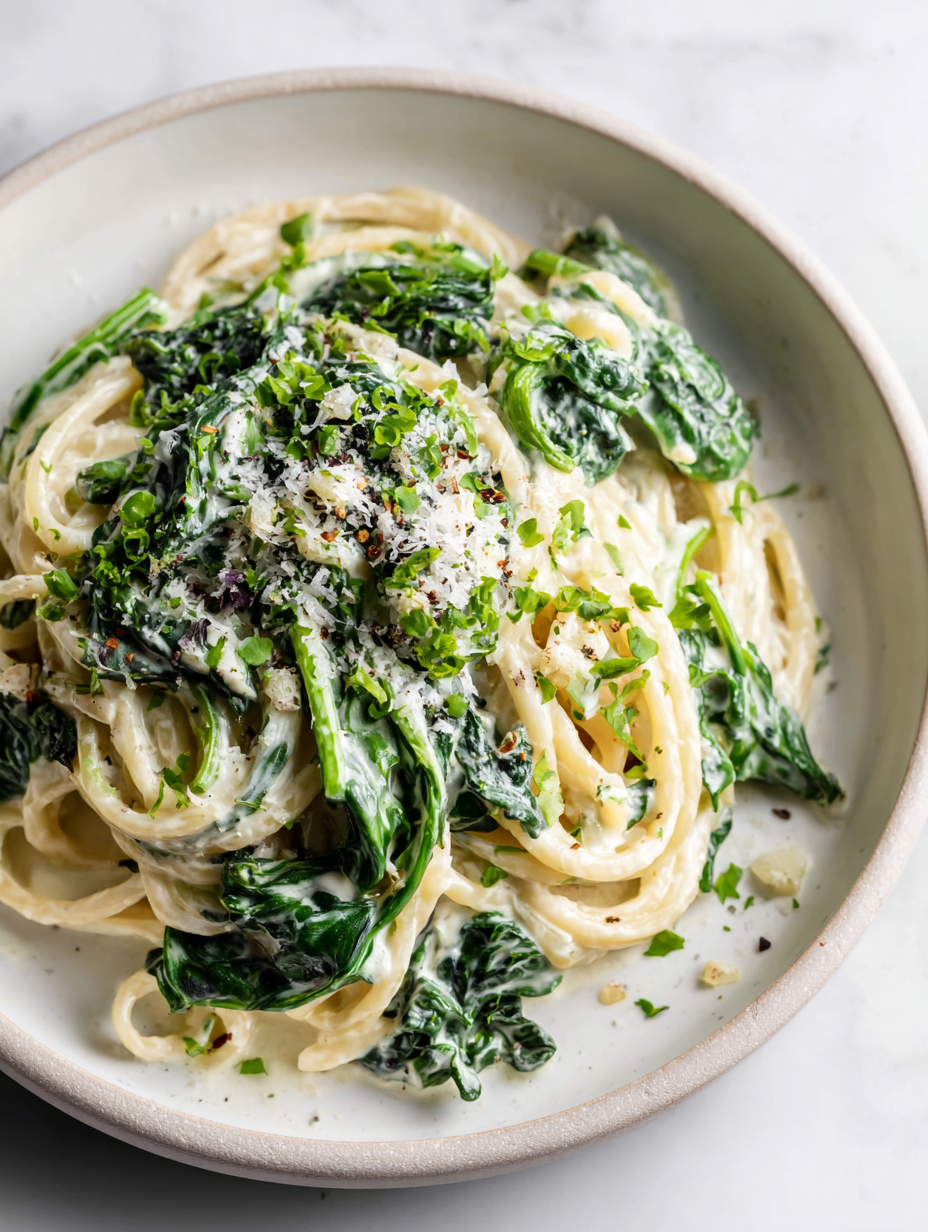
Creamy Spinach Pasta
Ingredients
Equipment
Method
- Bring a large pot of salted water to a rolling boil, then add the pasta and cook until just al dente, about 8-10 minutes. Drain, saving a cup of pasta water, and set aside.
- Meanwhile, heat olive oil in a large skillet over medium heat, until shimmering and fragrant. Add the minced garlic and sauté for about 30 seconds until it becomes aromatic but not browned.
- Add the fresh spinach to the skillet in batches, stirring constantly. Cook until wilted and vibrant green, about 2-3 minutes, until the greens release their aroma and become silky.
- Pour in the heavy cream and stir gently, bringing it to a simmer. Let it thicken slightly, about 2-3 minutes, until it becomes creamy and coats the spinach evenly.
- Stir in the grated Parmesan cheese until melted and smooth. If the sauce seems too thick, add a splash of reserved pasta water to loosen it to a silky consistency.
- Add the cooked pasta directly into the skillet, tossing gently to coat each strand with the creamy spinach sauce. Cook together for 1-2 minutes to meld flavors.
- Finish by stirring in lemon zest if using, and season with salt and pepper to taste. Give everything a final toss to distribute the seasoning evenly.
- Serve immediately, garnished with extra Parmesan if desired. Enjoy the velvety, vibrant green pasta while warm and fresh.
Tips for perfect creamy spinach pasta
- BOLD THE SPINACH: Add spinach in batches and stir until it wilts completely, creating a silky texture with vibrant color.
- CONTROL THE HEAT: Sauté garlic over medium heat just until fragrant—avoid browning to prevent bitterness.
- USE PASTA WATER: Reserve starchy pasta water to loosen the sauce if it thickens too much or needs extra cling.
- GRATE CHEESE FINE: Finely grate Parmesan directly into the sauce for smooth melting and even flavor distribution.
- TOSS AND REST: Mix pasta and sauce off heat, then let it sit for a minute—this helps flavors meld and thickens the sauce slightly.
- ZEST AT THE END: Add lemon zest after turning off the heat for a fresh, bright aroma without losing citrus oils.
- STIR CONSTANTLY: When adding cream, stir continuously to prevent it from splitting and to keep the sauce velvety.
Common mistakes and how to fix them
- FORGOT to stir spinach thoroughly → stir continuously until wilted and vibrant green.
- DUMPED too much boiling water → reserve some pasta water before draining for sauce adjust.
- OVER-TORCHED the garlic → sauté on medium heat, 30 sec until fragrant, not browned.
- USED cold spinach directly from freezer → thaw and squeeze out excess water for better sauce consistency.
Quick fixes and pantry swaps
- When sauce looks split, splash in a bit of warm water and whisk vigorously.
- If pasta sticks, immediately toss with olive oil or reserved pasta water.
- DUMPED too much salt? Rinse pasta briefly to remove excess before adding to sauce.
- Splash extra lemon juice if the sauce feels dull or flat in flavor.
- Patch overcooked spinach with a quick squeeze of lemon or a pinch of sugar to brighten.
Prep, store, and reheat tips
- You can prep the spinach and garlic up to a day ahead; store in airtight containers in the fridge, where flavors stay fresh and vibrant green, ready to wilt quickly during cooking.
- Cook the pasta ahead of time, then toss with a little olive oil to prevent sticking. Store in the fridge for up to 24 hours; reheat briefly in boiling water or microwave, watching for a slight puff and tender texture.
- Prepare the sauce mixture (spinach, cream, cheese) in advance; keep covered in the fridge for up to 2 days. The flavors meld better after resting, but the sauce might thicken—stir in a splash of warm water or cream when reheating.
- Reheat gently on the stove over low heat, stirring often. The sauce may separate slightly—rescue it by whisking in a teaspoon of hot water or broth until smooth, and watch for a velvety finish.
- For best sensory experience, reheat until steaming and the sauce is silky again, with a fresh aroma of garlic and melted cheese. The spinach should be tender, not overcooked, with a subtle sweet note from the greens.
Top questions about creamy spinach pasta
1. Can I use frozen spinach?
Use fresh spinach for the best flavor and vibrant color. Frozen spinach works if squeezed dry and chopped finely.
2. Can I substitute frozen spinach?
Yes, but drain excess water thoroughly to prevent making the sauce watery or bland.
3. What can I add to boost flavor?
Adding a squeeze of lemon or a pinch of nutmeg enhances the greens’ sweetness and depth.
4. Can I make this with lighter ingredients?
Cream can be replaced with half-and-half for a lighter touch, but the sauce will be less rich.
5. How do I fix a thick or sticky sauce?
Stir in a bit of reserved pasta water to loosen the sauce if it thickens or sticks.
6. How do I know when the pasta is done?
Cook pasta until just al dente—tender but with a slight bite—about 8-10 minutes depending on the type.
7. When should I add the garlic?
Add garlic carefully—sauté until fragrant, about 30 seconds, avoiding browning to prevent bitterness.
8. Should I use fresh or pre-grated cheese?
Use freshly grated Parmesan for the best melt and flavor; pre-grated may be less creamy.
9. How do I reheat leftovers?
Reheat gently over low heat, stirring often, and add a splash of water or cream to restore creaminess.
10. Can I add lemon to this dish?
Finish with lemon zest or a squeeze of lemon juice for a bright, fresh note right before serving.
This dish might seem simple, but its textures and flavors make it feel like a small celebration. The way the spinach softens into a silky, subtly sweet green contrasts beautifully with the rich cream and salty cheese. It’s a reminder that comfort can come with just a few honest ingredients and a little patience.
Whenever I make this, I think about how straightforward ingredients can surprise you with their depth. It’s a dish I turn to on busy nights or when I need something nourishing without fuss. Sometimes, the best recipes are the ones that let the ingredients shine, quietly and honestly.

I’m Emily Richardson, the heart and soul behind Playing with Flavors. Cooking isn’t just a hobby for me – it’s a passion that I’ve cultivated for years, and it’s become the driving force of my life.
From the kitchen of my cozy café to the pages of this blog, every dish I create is a reflection of my love for food and the joy it brings to people.