
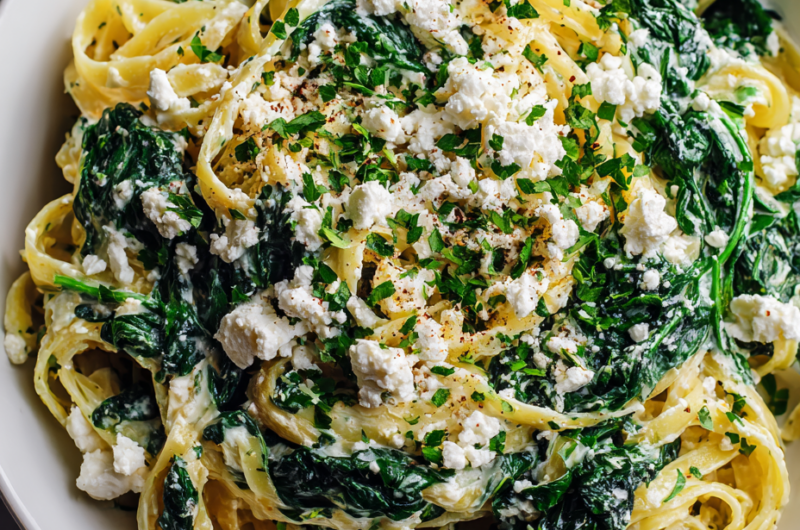
This spinach and feta pasta has become my go-to when the day’s been long and I need something quick but satisfying. It’s like a little burst of salty, creamy comfort that lifts me up without fussing over complicated ingredients. The best part? It’s all thrown together in one pot, so cleanup’s a breeze.
I first started making this when I was juggling work deadlines and a mountain of laundry. The fresh spinach wilted perfectly into the pasta, soaking up all the salty feta and garlic aroma. It’s become my secret weapon for turning chaos into something cozy, even on the busiest nights.
There’s a certain joy in tossing these simple ingredients together and watching everything come alive with vibrant flavor. It’s honest, straightforward, and honest-to-goodness tasty—a dish that reminds me that sometimes, the simplest meals are the best.
Focusing on how this dish became a comfort food during long, hectic days, blending simplicity with a burst of fresh, salty flavor that lifts spirits when time is tight.
The story behind this recipe
- This dish came together one hectic evening when I needed a quick dinner that felt a little special. I remembered how my grandmother used to toss spinach and feta into pasta, and suddenly, I was craving that salty, tangy bite that always reminds me of cozy family dinners. It’s funny how simple ingredients can evoke such warmth, even on the busiest nights.
- I’ve made this recipe countless times, each batch a little different, depending on what’s in the fridge. Sometimes I add a squeeze of lemon for brightness, other times a handful of pine nuts for crunch. It’s one of those dishes that feels like a warm hug—familiar, honest, and just the right amount of indulgent.
- heading
- story_type
Key Ingredients Breakdown
- Fresh spinach: I love how it wilts quickly and adds a vibrant, earthy green to the dish. Use baby spinach for tenderness or mature leaves for more texture.
- Feta cheese: Its salty, tangy creaminess is the backbone here. Crumble it finely so it melts into every bite, but don’t skip the salty brine—it’s what makes it special.
- Garlic: I prefer minced garlic for even flavor distribution. Sauté until fragrant and just starting to turn golden—overcooked garlic turns bitter fast.
- Pasta: I usually go for a short, sturdy shape like penne or fusilli. It holds the feta and spinach well—look for a good al dente bite to prevent mushiness.
- Olive oil: Use good-quality extra virgin oil—it gives the base richness and helps sauté the garlic gently. Splash a little more at the end if it feels dry.
- Lemon (optional): A squeeze at the end brightens everything up. If you’re skipping it, maybe add a pinch of vinegar for that zing, but don’t skip the feta’s saltiness.
- Salt & pepper: Season generously but taste as you go. The feta is salty, so taste before adding more salt to avoid overshooting.
Spotlight on key ingredients
Spinach & Feta:
- Fresh spinach: I love how it wilts quickly and adds a vibrant, earthy green to the dish. Use baby spinach for tenderness or mature leaves for more texture.
- Feta cheese: Its salty, tangy creaminess is the backbone here. Crumble it finely so it melts into every bite, but don’t skip the salty brine—it’s what makes it special.
- Garlic: I prefer minced garlic for even flavor distribution. Sauté until fragrant and just starting to turn golden—overcooked garlic turns bitter fast.
Notes for ingredient swaps
- Dairy-Free: Use coconut or almond feta alternatives. They won’t be as salty or tangy but add a creamy touch.
- Vegan: Swap feta for a seasoned tofu crumble or nutritional yeast for cheesy flavor without dairy.
- Gluten-Free: Choose gluten-free pasta—brown rice or chickpea varieties work well and keep the dish hearty.
- Spinach Substitute: Kale or Swiss chard can stand in—just give them a little longer to wilt and soften.
- Olive Oil: Avocado oil or a light sesame oil can add different flavor notes but keep an eye on their smoke points.
- Lemon: Skip or replace with a splash of white wine vinegar or apple cider vinegar for brightness.
- Garlic: Use roasted garlic for mellowness or garlic powder in a pinch—just cut back on added salt.
Equipment & Tools
- Large pot: Boiling pasta evenly and quickly
- Skillet: Sautéing garlic and wilting spinach
- Colander: Draining pasta without excess water
- Wooden spoon: Stirring ingredients gently
Step-by-step guide to pasta
- Equipment & Tools: Boil-proof pot for pasta, large skillet for sautéing, wooden spoon for stirring, and a colander to drain the pasta.
- Bring a large pot of salted water (about 4 liters, 8.5 pints) to a rolling boil at 100°C/212°F. Add pasta and cook until just al dente, about 8 minutes. Taste for firmness—should be tender but still firm to bite.
- While pasta cooks, heat a generous splash of olive oil (about 2 tablespoons) in the skillet over medium heat (around 160°C/320°F). Add 3-4 minced garlic cloves. Sauté until fragrant, about 30 seconds to 1 minute, until golden but not burnt.
- Drain pasta, saving a cup of starchy water. Add pasta directly to the skillet with garlic, tossing quickly to coat. If the skillet is dry, splash in a bit of the reserved pasta water.
- Add 4 cups of fresh spinach (roughly a handful per person). Stir until wilted, about 1-2 minutes. The spinach should turn a vibrant green and soften but still retain some texture.
- Crumble about 1 cup of feta cheese over the pasta and spinach. Toss gently—wait until the cheese starts melting into the mixture, about 1-2 minutes. If needed, add a splash more pasta water to create a creamy sauce.
- Finish with a squeeze of lemon juice (about 1 tablespoon) and season with black pepper. Taste and adjust salt—remember, feta is salty. If it feels dry, add a little more pasta water or olive oil.
- Rest & Plate: Let sit for 2 minutes off heat to meld flavors. Serve hot, garnished with extra feta or a drizzle of olive oil if desired.
Let the pasta sit off heat for 2 minutes to settle and meld flavors. Serve immediately with optional toppings like extra feta or a drizzle of good olive oil for added richness.
How to Know It’s Done
- Pasta is tender but still firm (al dente).
- Spinach is wilted but vibrant green.
- Feta melts into the sauce, creating a creamy texture.
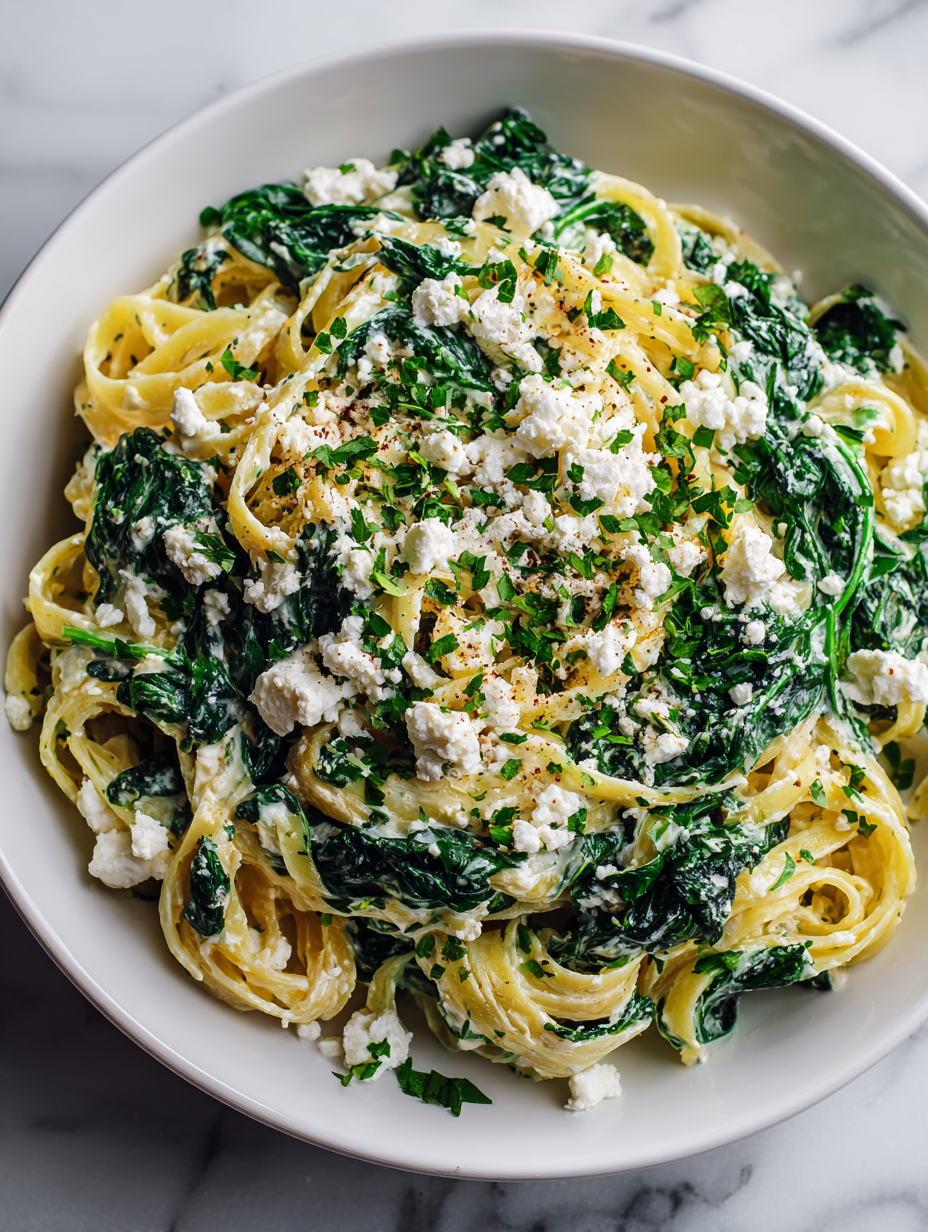
Spinach and Feta Pasta
Ingredients
Equipment
Method
- Bring a large pot of salted water to a rolling boil. Add the pasta and cook according to package instructions until al dente, about 8 minutes. Drain and set aside, reserving a cup of starchy pasta water.
- While the pasta cooks, heat the olive oil in a large skillet over medium heat until it shimmers and begins to gently ripple, about 1 minute. Add the minced garlic and sauté until fragrant, just starting to turn golden around the edges, about 30 seconds to 1 minute.
- Add the drained pasta to the skillet with garlic, tossing quickly to coat the noodles evenly with the fragrant oil and garlic. If the skillet seems dry, splash in a little of the reserved pasta water to loosen the mixture.
- Gradually add the fresh spinach in batches, stirring constantly until each batch wilts down and turns a vibrant green, about 1-2 minutes. Keep stirring until all the spinach is wilted and evenly distributed throughout the pasta.
- Crumble the feta cheese over the pasta and spinach, then gently toss to distribute. Continue tossing until the feta begins to melt into the mixture, creating a creamy, slightly saucy texture. If needed, add a splash more of the reserved pasta water to loosen the sauce further.
- Finish the dish with a squeeze of lemon juice for brightness, then season generously with salt and freshly ground black pepper. Taste and adjust seasoning as needed, keeping in mind the feta’s saltiness.
- Remove from heat and let sit for 1-2 minutes to allow flavors to meld. Serve hot, garnished with extra feta or a drizzle of olive oil if desired.
Notes
Pro tips for perfect spinach and feta pasta
- Bold garlic: Sauté on medium heat until fragrant, then remove to prevent bitterness.
- Stir spinach: Add gradually and keep stirring for even wilting and vibrant color.
- Save pasta water: Use the starchy water to loosen the sauce and add creaminess.
- Crumb feta: Squeeze feta between fingers before adding—helps it melt smoothly into the sauce.
- Taste before seasoning: Feta is salty; adjust salt and pepper after adding cheese and spinach.
- Watch garlic: Overcooking turns it bitter; aim for just golden and fragrant.
- Rest briefly: Let the pasta sit off heat for a minute to meld flavors and settle.
Common mistakes and how to fix them
- FORGOT to check salt levels, resulting in bland dishes. Always taste before serving.
- DUMPED the feta directly into hot pasta; crumbling first prevents clumping and melt issues.
- OVER-TORCHED the garlic; sauté on medium heat and remove once fragrant to avoid bitterness.
- MISSED stirring spinach early; add it gradually and stir constantly for even wilt.
Quick fixes and pantry swaps
- If dishes are bland, splash in a little lemon juice to brighten flavors.
- When feta clumps, crumble it finely or add a splash of warm pasta water for smooth melting.
- Splash olive oil when garlic turns bitter—quickly cools and neutralizes the burnt aroma.
- Patch wilted spinach by tossing it in hot pasta for 30 seconds—it revives color and texture.
- Shield over-torched garlic by removing from heat immediately—use a spoon to scrape and start fresh.
Prep, store, and reheat tips
- Prep the pasta and wash the spinach ahead—store separately in airtight containers in the fridge for up to 24 hours. The smell of fresh greens is a lively start to your prep.
- Crumble the feta the night before; keep it covered in the fridge. It’s ready to melt into the warm pasta, releasing that salty, tangy aroma.
- Refrigerate any leftovers in an airtight container for up to 2 days. The feta may firm up slightly, but reheating will soften it again.
- Reheat gently in a skillet over low heat or in the microwave at medium power. Expect the flavors to meld further, with the feta softening and the spinach releasing a faint wilted scent.
Top questions about spinach and feta pasta
1. Can I use frozen spinach?
Use fresh spinach that’s still bright green and slightly crisp. Wilt it quickly in the pan to keep that vibrant flavor.
2. How much feta should I add?
Feta is quite salty, so taste and adjust salt before serving. You want a balance between salty and creamy without overpowering.
3. What pasta shape works best?
Cook the pasta until just al dente, around 8 minutes, to prevent mushiness after mixing with other ingredients.
4. Can I skip the olive oil?
Use good-quality olive oil for sautéing garlic—it adds a richness that can’t be replaced by cheaper oils.
5. Should I add lemon?
Add a squeeze of lemon or a dash of vinegar at the end to brighten the dish’s flavor profile.
6. Why save pasta water?
Always reserve some pasta water before draining. It’s starchy and helps create a silky sauce.
7. How do I keep the spinach from overcooking?
Stir the spinach gradually and keep it moving in the pan to ensure even wilting and vibrant color.
8. My feta isn’t melting well, what can I do?
If feta clumps when melting, crumble it finely or add a splash of warm pasta water to help it melt smoothly.
9. How should I reheat this dish?
Reheat leftovers gently on the stove over low heat, stirring often until warmed through and flavors meld.
10. Can I make this vegan?
For a dairy-free version, try seasoned tofu crumbles or nutritional yeast for that salty, cheesy flavor.
This pasta feels like a little reminder that simple ingredients can come together to create something comforting and satisfying. It’s perfect when time’s tight but you still want that warm, salty bite in every forkful. Honestly, it’s become a staple in my weeknight rotation, especially when I crave something quick and honest.
No matter how chaotic the day, a plate of this pasta always delivers a moment of calm—rich, creamy, and bright with just enough salt. It’s a reminder that sometimes, the best comfort food is the simplest—ready in minutes and gone just as fast, leaving you with that lingering smell of garlic and feta.

I’m Emily Richardson, the heart and soul behind Playing with Flavors. Cooking isn’t just a hobby for me – it’s a passion that I’ve cultivated for years, and it’s become the driving force of my life.
From the kitchen of my cozy café to the pages of this blog, every dish I create is a reflection of my love for food and the joy it brings to people.


