
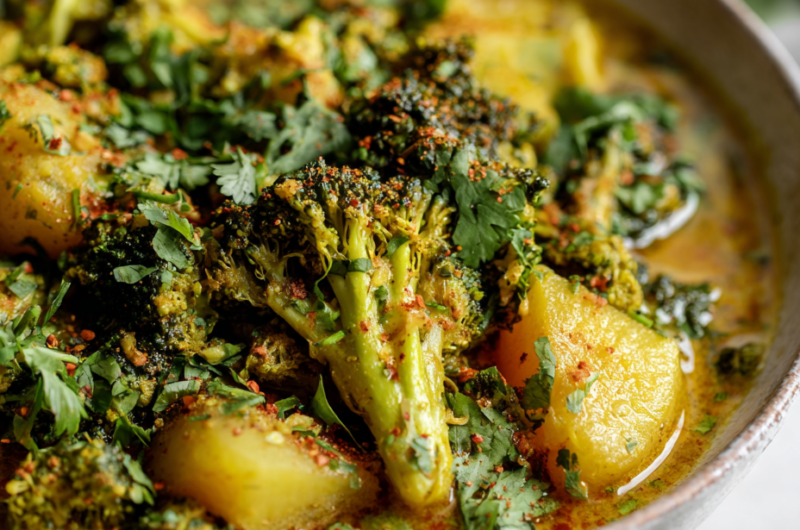
This broccoli potato curry started as a way to use up what I had in the fridge—simple, honest ingredients that come together in a surprising way. I love how the earthy potatoes soak up the spicy, fragrant sauce, while the broccoli adds a fresh, slightly bitter crunch that balances it all out. It’s a recipe that feels like a warm hug on a busy weeknight, but with enough flavor to make you pause and smile.
There’s something about turning humble vegetables into a dish that feels both nourishing and a little bit special. I’ve made this curry when I needed comfort, when I was low on ingredients, or just craving something spicy and satisfying. It’s never failed to remind me that you don’t need fancy ingredients to get a meal that makes you feel cared for and a little bit proud.
Turning humble broccoli and potatoes into a comforting, spicy curry that surprises with its depth and simplicity.
The story behind this recipe
- This curry came about one rainy afternoon when I rummaged through my fridge and found a lonely head of broccoli and a few potatoes. I wanted something warm and filling, but also quick enough to toss together after work. The idea of blending these humble ingredients into a spicy, fragrant dish felt so satisfying—like turning everyday leftovers into a little celebration.
- Over the years, this recipe has become my go-to for comfort and practicality. It reminds me that good food doesn’t need to be complicated, just honest and full of flavor. Every time I make it, I think of lazy weekends, busy weeknights, and the simple joy of creating something nourishing from what’s on hand.
- heading: The story behind this recipe
Ingredient breakdown: key components
- Broccoli: I like my broccoli with a bit of bite, so I avoid overcooking it—aim for a bright green and slightly tender crunch. Skip if you prefer softer veg.
- Potatoes: Starchy potatoes absorb the curry spices beautifully, turning fluffy and rich. Waxy potatoes will hold shape better but less absorbent—choose based on texture preference.
- Coconut Milk: I go for full-fat coconut milk for creaminess and depth, but light version works if you want a lighter dish—just expect a slightly thinner sauce.
- Spices: I rely on a mix of cumin, coriander, and turmeric—these create a fragrant base. Feel free to add a pinch of chili powder for extra heat or a squeeze of lemon for brightness.
- Garlic & Ginger: Fresh garlic and ginger make all the difference—pound them well to release their pungent aroma. Dried powders won’t give the same lively punch.
- Onions: They should be golden and sweet, not burnt—take your time caramelizing them for the best flavor foundation. If they brown too fast, lower the heat.
- Oil: I prefer a neutral oil with a high smoke point like canola or sunflower—helps the spices toast without burning, and the aroma is just right when the oil shimmers.
Spotlight on key ingredients
Broccoli:
- I love how it holds a slight crunch even after simmering, with a vibrant green hue and a fresh, slightly bitter aroma. It brightens the dish visually and adds a crisp contrast to the tender potatoes.
- Potatoes: I prefer starchy varieties because they absorb spices beautifully, becoming fluffy and rich. They tend to break down slightly in the heat, creating a cozy, velvety sauce, but can also keep some shape if you use waxy types.
Potatoes:
- Their earthy sweetness and creamy texture make or break the curry. When cooked just right, they melt in your mouth, soaking up every spice and hint of coconut. Overcooked, they turn to mush—so keep an eye on timing.
- ingredient
Notes for ingredient swaps
- Dairy-Free: Swap coconut milk for almond or cashew milk. Expect a lighter, less creamy sauce, but still flavorful.
- Low-Sodium: Use less salt and opt for low-sodium broth and canned goods to keep the dish mindful of salt intake.
- Vegan: Ensure your curry powder and broth are free from animal-derived ingredients. Most store-bought options work fine.
- Gluten-Free: Confirm spices and broth are gluten-free if you’re sensitive. Rice vinegar can replace soy sauce for tang.
- Extra Hearty: Add lentils or chickpeas to boost protein and fiber, making the curry more filling and satisfying.
- Spice Level: Adjust chili powder or fresh chilies according to your heat preference—start small and build up.
- Fresh Herbs: Garnish with cilantro or parsley for brightness. Dried herbs can be used, but fresh adds a lively aroma.
Equipment & Tools
- Large heavy-bottomed pan or Dutch oven: Ensure even heat for simmering and preventing sticking.
- Sharp knife: Chop ingredients precisely and safely.
- Wooden spoon: Stir without damaging cookware surface.
- Measuring spoons and cups: Accurate spice and liquid measurements.
- Bowl for prepping ingredients: Organize chopped vegetables and spices.
Step-by-step guide to Broccoli Potato Curry
- Equipment & Tools: Gather a large, heavy-bottomed pan or Dutch oven for even heat distribution; a sharp knife for chopping; a wooden spoon for stirring; measuring spoons for spices; and a bowl for prepping ingredients.
- Heat 2 tablespoons of oil over medium heat (around 160°C / 320°F). Add chopped onions and cook, stirring occasionally, until golden and fragrant, about 8-10 minutes. Adjust heat if they start to burn.
- Meanwhile, peel and dice 2 large potatoes into 1-inch cubes. Set aside. Mince 3 cloves garlic and 1-inch piece of ginger finely.
- Add garlic and ginger to the onions; cook for 1-2 minutes until fragrant and slightly golden. If spices are ready, they’ll release a warm aroma, not burn.
- Stir in 1 teaspoon cumin, 1 teaspoon coriander, ½ teaspoon turmeric, and a pinch of chili powder if you like spice. Toast spices for 30 seconds, until they shimmer and smell aromatic. If spices darken too much, lower heat.
- Add the diced potatoes and cook for 5 minutes, stirring occasionally. They should start to turn translucent around edges, coating with spices.
- Pour in 1 can (400ml) coconut milk and 1 cup vegetable broth. Bring to a gentle simmer, then reduce heat to low (about 80°C / 175°F). Cover and cook for 15 minutes, or until potatoes are tender but not falling apart.
- Meanwhile, cut a head of broccoli into small florets. After 15 minutes, add broccoli to the curry. Stir, cover, and cook for another 5-7 minutes until bright green and just tender. The broccoli should still have a slight bite.
- Uncover and simmer for 2-3 minutes to thicken the sauce slightly. Check for seasoning—add salt or a squeeze of lemon if needed. The sauce should be fragrant, with a velvety texture that coats the vegetables.
- Turn off heat. Let the curry rest for 5 minutes to deepen flavors. Serve hot, garnished with fresh herbs if desired. A side of rice or naan pairs beautifully.
Once cooked, turn off heat and let sit for 5 minutes. Serve with a sprinkle of fresh herbs or a squeeze of lemon for brightness. Pair with rice or warm flatbread.
How to Know It’s Done
- Potatoes are tender but not mushy when pierced with a fork.
- Broccoli is vibrant green, slightly crisp, not overcooked or dull.
- Sauce is creamy and slightly thickened, coats all ingredients evenly.
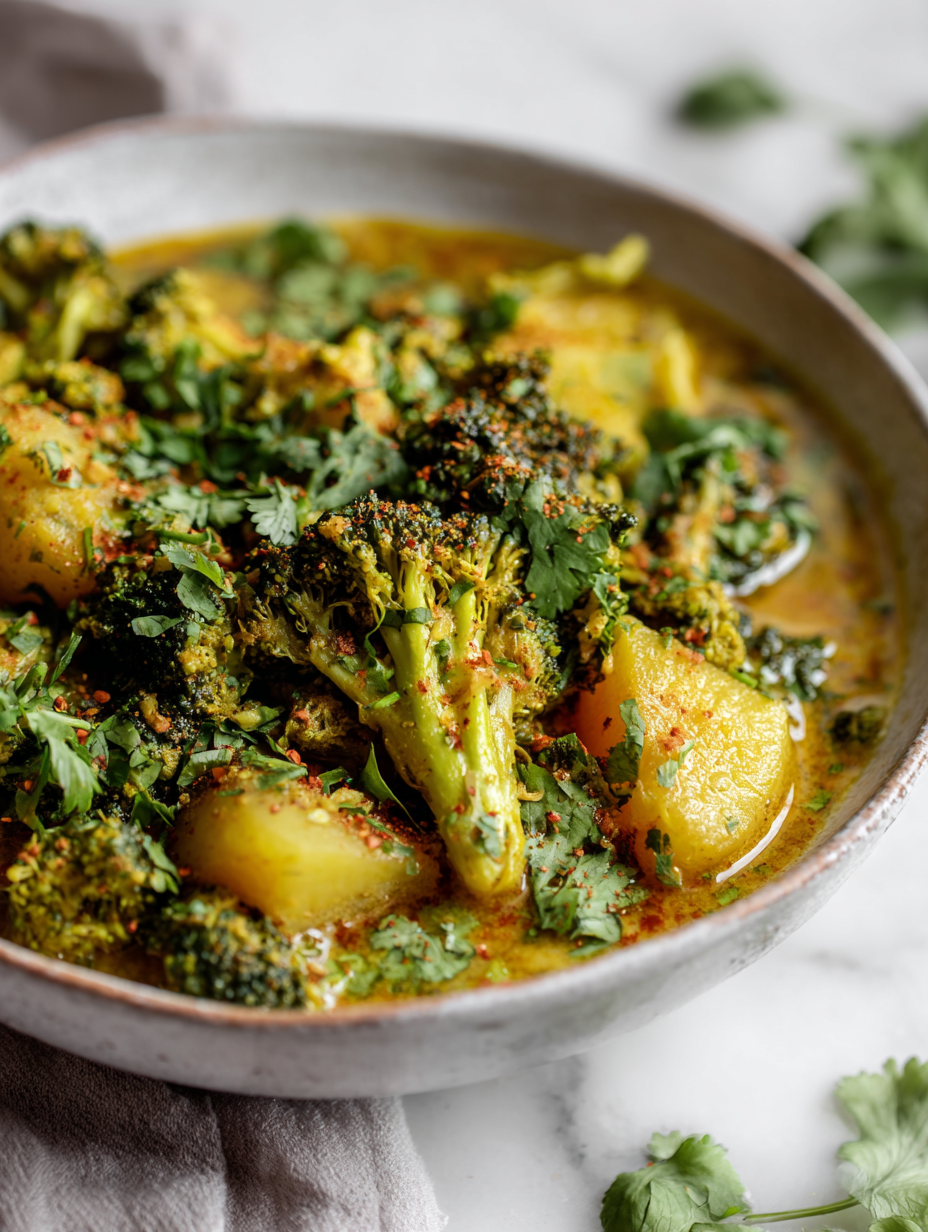
Broccoli Potato Curry
Ingredients
Equipment
Method
- Heat 2 tablespoons of oil in a large, heavy-bottomed pan over medium heat until shimmering and fragrant. Add the chopped onion and cook, stirring occasionally, until golden and soft, about 8-10 minutes, smelling sweet and caramelized.
- While the onions cook, peel and dice the potatoes into 1-inch cubes. Mince the garlic cloves and ginger finely to release their pungent aroma.
- Add the minced garlic and ginger to the caramelized onions, stirring for 1-2 minutes until fragrant and slightly golden. This will fill your kitchen with a warm, spicy aroma.
- Stir in the cumin, coriander, turmeric, and chili powder, toasting the spices for about 30 seconds until they shimmer and release their fragrant oils. Be careful not to burn them—lower the heat if necessary.
- Add the diced potatoes to the pan, stirring to coat them evenly with the spiced onion mixture. Cook for 5 minutes, allowing the potatoes to start turning translucent around the edges.
- Pour in the coconut milk and vegetable broth, stirring well to combine. Bring the mixture to a gentle simmer, then reduce the heat to low. Cover the pan and cook for about 15 minutes, or until the potatoes are tender when pierced with a fork.
- While the curry simmers, cut the broccoli into small florets. After the potatoes are tender, add the broccoli to the curry and stir. Cover again and cook for another 5-7 minutes, until the broccoli is bright green and just tender, but still crisp.
- Remove the lid and simmer uncovered for 2-3 minutes to thicken the sauce slightly. Taste and adjust the seasoning with salt and a squeeze of lemon juice if desired, for brightness. The sauce should be creamy and coat all the vegetables evenly.
- Turn off the heat and let the curry rest for 5 minutes; this allows flavors to meld and the sauce to thicken further. Serve hot, garnished with fresh herbs if you like, alongside rice or flatbread for a complete meal.
Pro tips for perfect curry
- Bolded mini-head: Toast spices until fragrant—this releases essential oils and deepens flavor.
- Bolded mini-head: Use a sharp knife to chop broccoli into uniform pieces—ensures even cooking and bright color.
- Bolded mini-head: Sauté onions on medium-low heat—caramelize slowly for sweetness without burning.
- Bolded mini-head: Add broccoli late in cooking—retains vibrant color and crisp-tender texture.
- Bolded mini-head: Adjust heat to prevent spices from burning—keep the aroma warm, not smoky.
- Bolded mini-head: Let the curry rest for 5 minutes off heat—allows flavors to meld and thickens slightly.
- Bolded mini-head: Taste and adjust seasoning at the end—balance salt, acidity, and spice for optimal flavor.
Common mistakes and how to fix them
- FORGOT to stir spices early → Toast spices for full flavor release.
- DUMPED potatoes too early → Cook until just tender, not mushy.
- OVER-TORCHED broccoli → Add broccoli later to prevent overcooking.
- MISSED seasoning at end → Adjust salt and acidity before serving.
Quick fixes and pantry swaps
- When sauce is too thin → Splash in a little coconut milk to thicken quickly.
- If broccoli turns dull → Patch with a squeeze of lemon for brightness.
- Overcooked potatoes → Shield with a quick stir-fry of fresh herbs to refresh flavor.
- Forgot to add salt → DUMP a pinch of salt at the end for balance and depth.
- When curry smells burnt → Rescue with a splash of water and fresh herbs to reset aroma.
Prep, store, and reheat tips
- Prep the vegetables: chop broccoli and potatoes a day ahead, store in airtight containers in the fridge—veg stays crisp and fresh for up to 24 hours.
- Make the curry sauce: fully cook and cool the curry, then refrigerate for up to 2 days—flavors deepen overnight, mellowing slightly.
- Reheating: warm gently on the stove over low heat, stirring occasionally—look for a silky, fragrant sauce with brightened flavors.
- Shelf life: best enjoyed within 2 days of cooking—beyond that, the broccoli may lose its vibrant color and slight crunch.
- Sensory note during reheating: watch for steam and aroma—if it smells off or the sauce separates, reheat carefully or discard.
Common Questions About Broccoli Potato Curry
1. Can I use frozen broccoli?
Use fresh broccoli for the best crunch and vibrant color. Frozen works in a pinch, just thaw and drain well.
2. Can I substitute different potatoes?
Yes, regular potatoes like Russet or Yukon Gold work well. Waxy potatoes will hold shape but absorb less spice.
3. How do I make it spicier?
Adjust the spice level by adding more chili powder or fresh chilies. Start small—you can always add more.
4. How long does it take to cook?
Cook the curry on low simmer until potatoes are tender and the sauce thickens, about 20 minutes total.
5. Can I use a different type of milk?
Use full-fat coconut milk for creaminess. Light coconut milk or evaporated milk will make it less rich but still tasty.
6. Can I add meat or other proteins?
Yes, add chickpeas, lentils, or tofu for extra protein. It keeps the dish hearty and filling.
7. How do I add acidity?
Stir in fresh lemon juice or a splash of vinegar at the end to brighten flavors and balance richness.
8. Can I prepare this in advance?
Make ahead by prepping vegetables and making the curry sauce. Reheat gently on the stove, stirring until hot.
9. When should I add the broccoli?
Overcooking broccoli makes it dull and mushy. Add it late in cooking for a bright, crisp-tender bite.
10. How do I fix a watery curry?
If the sauce is too thin, simmer uncovered for a few minutes to thicken. If it’s too thick, add a splash of water or broth.
This humble curry is a reminder that simple ingredients can come together to create something unexpectedly comforting. It’s perfect for those busy nights when you want flavor without fuss, and the aroma alone can make the kitchen feel warmer.
Sharing a bowl of this dish always feels like a small celebration — a bit of spice, a splash of coconut, and a veggie combo that surprises. It’s not just food; it’s a little moment of everyday joy.

I’m Emily Richardson, the heart and soul behind Playing with Flavors. Cooking isn’t just a hobby for me – it’s a passion that I’ve cultivated for years, and it’s become the driving force of my life.
From the kitchen of my cozy café to the pages of this blog, every dish I create is a reflection of my love for food and the joy it brings to people.


