
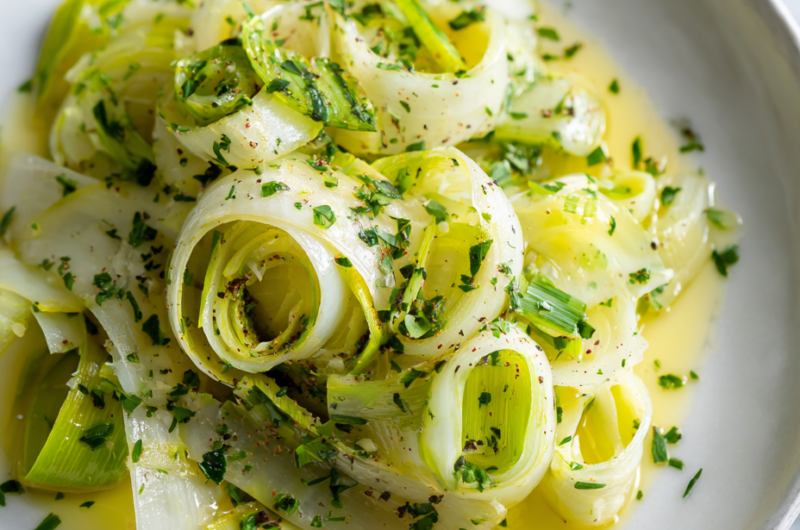
Sautéing leeks with butter might sound straightforward, but it’s a ritual that turns humble ingredients into something warm and nostalgic. There’s a quiet pleasure in watching those pale, slender leeks soften and release their sweet, onion-like aroma while gently bathing in butter. It’s a dish rooted in slow Sundays and family dinners, where simple becomes comforting in the best way.
This recipe isn’t about fancy techniques or rare ingredients. It’s about capturing that moment when leeks become tender and slightly caramelized, releasing a smoky sweetness that lingers on the tongue. I find myself returning to it during busy weekdays when I crave that familiar, homey flavor, or on lazy weekends when I want to pause and appreciate the little things.
There’s something honest in the act of sautéing leeks—an reminder that some of the best meals are born from patience and simplicity. It’s a dish that connects me to memories of my childhood, of my mom’s gentle hands and the smell of butter filling the kitchen. It’s humble, yes, but also a quiet celebration of what good ingredients can do when treated with care.
Focusing on how the simple act of sautéing leeks with butter can transform humble ingredients into a comforting, nostalgic dish that connects me to family dinners and slow Sundays.
The story behind this recipe
- This dish came about one lazy Sunday afternoon, when I was fussing around the kitchen, trying to use up the last of my leeks. I remembered my grandma’s way of just melting butter over leeks until they were tender and sweet, no fuss, no fuss. It’s a simple pleasure that feels like a small act of rebellion against the rush of modern life.
- I love how a humble leek, once sliced and sautéed gently, transforms into something velvety and fragrant, with that faint smoky sweetness that lingers. It’s a reminder that sometimes, the simplest things—just butter and patience—make the best comfort food. No need for complicated sauces or fancy tricks, just honest cooking that creates a moment of calm.
- heading:
Key ingredients and tips
- Leeks: I love how their gentle sweetness develops when sautéed slowly; make sure to clean them thoroughly to avoid grit, which can ruin the silky texture you’re after.
- Butter: It’s the foundation—rich, creamy, and fragrant. Use good-quality butter for depth, but if you’re dairy-free, a splash of good olive oil adds a subtle fruitiness.
- Salt: I always add a pinch early on to help draw out moisture and flavor. You can adjust later, but don’t skip the seasoning—it’s what makes the sweetness pop.
- Pepper: Freshly cracked black pepper adds a subtle kick that balances the sweetness. A little goes a long way, so sprinkle thoughtfully as you cook.
- Optional herbs (like thyme): A sprig or two can deepen the aroma, but if you prefer a minimal approach, just butter and leeks are enough to shine. Use fresh herbs for brightness or dried if you want a more concentrated flavor.
- Oil (if needed): Sometimes I add a tiny splash of neutral oil to prevent sticking, especially if the butter starts to brown too quickly—look for a crackling sound and amber hue.
- Lemon juice (optional): A squeeze brightens the dish just before serving, cutting through the richness with a fresh, citrusy zing—keep it subtle, just a hint.
Spotlight on key ingredients
Leeks:
- I love how their gentle sweetness develops when sautéed slowly; make sure to clean them thoroughly to avoid grit, which can ruin the silky texture you’re after.
- Butter: It’s the foundation—rich, creamy, and fragrant. Use good-quality butter for depth, but if you’re dairy-free, a splash of good olive oil adds a subtle fruitiness.
- Salt: I always add a pinch early on to help draw out moisture and flavor. You can adjust later, but don’t skip the seasoning—it’s what makes the sweetness pop.
Butter:
- It’s the foundation—rich, creamy, and fragrant. Use good-quality butter for depth, but if you’re dairy-free, a splash of good olive oil adds a subtle fruitiness.
- Salt: I always add a pinch early on to help draw out moisture and flavor. You can adjust later, but don’t skip the seasoning—it’s what makes the sweetness pop.
Notes for ingredient swaps
- Dairy-Free: Swap butter for olive oil or coconut oil. Expect a slightly different richness and a more prominent fruitiness.
- Vegan: Use plant-based butter or margarine. The flavor will be milder, but still satisfyingly creamy.
- Salt: Kosher salt or sea salt can be used interchangeably, but adjust the amount to taste—finer grains disperse more evenly.
- Pepper: White pepper offers a milder heat and less visual contrast; black pepper adds a sharper bite.
- Herbs: Fresh thyme or chives can replace optional herbs, adding a bright, herbal note that complements the leeks’ sweetness.
- Oil: Neutral oils like canola or grapeseed work well if butter isn’t available, but will lack the rich aroma of butter.
- Lemon: A splash of vinegar (like apple cider vinegar) can brighten the dish similarly, especially if lemon isn’t on hand.
Equipment & Tools
- Wide skillet: Ensure even heat distribution for gentle sautéing.
- Sharp knife: Slice leeks precisely and safely.
- Wooden spoon: Stir gently without damaging the leeks.
- Measuring spoons: Add butter and seasonings accurately.
Step-by-step guide to sautéed leeks
- Equipment & Tools: Gather a wide skillet (20cm/8-inch) for even cooking, a sharp knife for slicing, and a wooden spoon for stirring.
- Prepare the leeks: Trim off the dark green tops and root ends. Slice leeks lengthwise, then chop into thin half-moons about 1 cm wide. Rinse thoroughly in cold water to remove grit, especially between the layers.
- Heat the pan: Place your skillet over medium-low heat (about 150°C/300°F). Add 2 tablespoons of butter, letting it melt gently but not brown—aim for a shimmering, silky appearance.
- Sauté the leeks: Add the prepared leeks to the pan. Spread them out evenly, then cook slowly, stirring occasionally. Let them soften and turn a pale, translucent yellow, about 10-12 minutes. You should smell sweet butter and slightly caramelized notes.
- Adjust heat and season: If leeks start to brown too quickly or stick, lower the heat further. Season with a pinch of salt and freshly cracked black pepper. Continue cooking until leeks are tender and slightly smoky, about 5 more minutes.
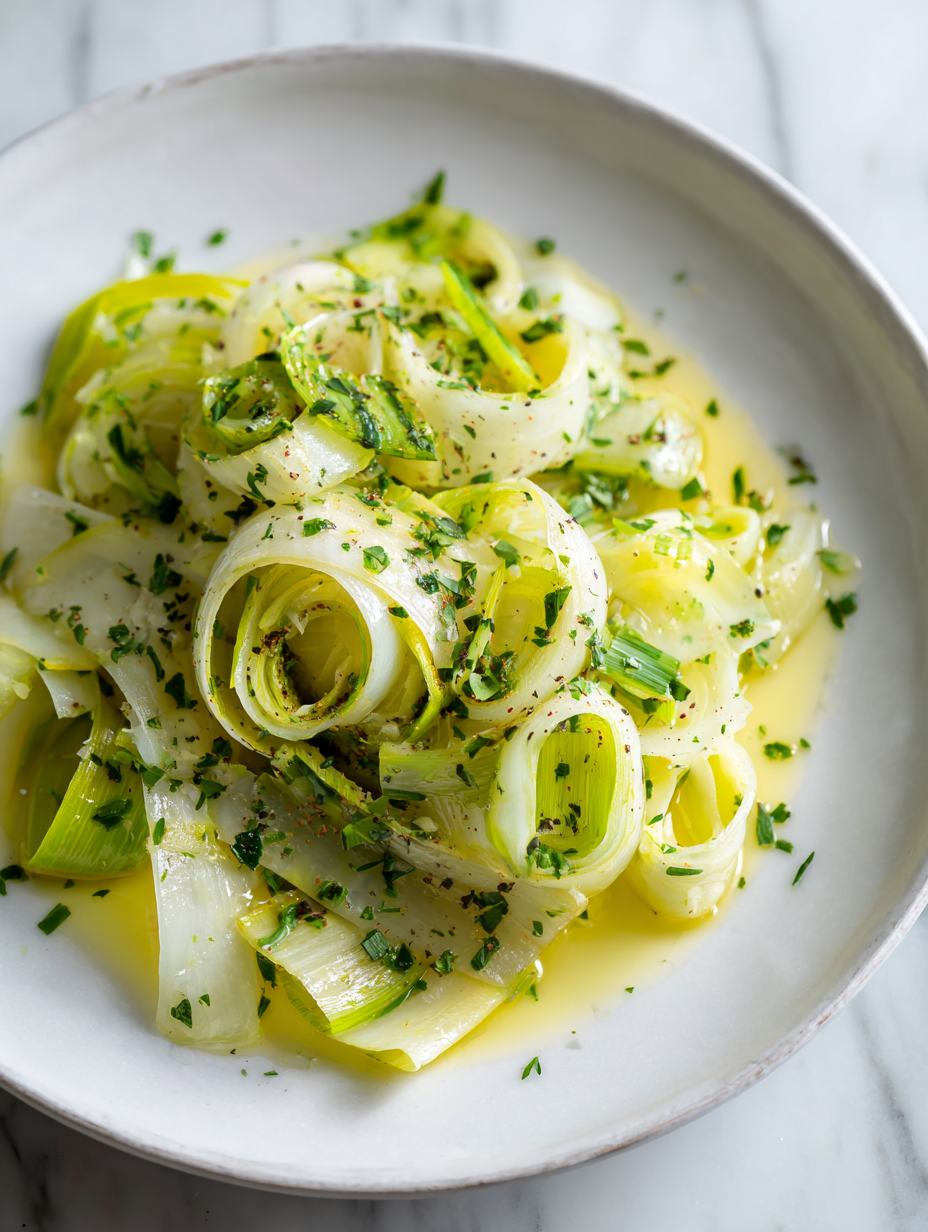
- Check for doneness: The leeks should be silky, with a gentle caramel hue, and fragrant with buttery sweetness. If they jiggle but hold their shape, they’re ready. If they appear shriveled or dark, reduce heat and add a splash of water to deglaze.
- Finish and plate: Remove from heat. For extra brightness, squeeze a tiny bit of lemon juice over. Rest for a minute to let flavors settle, then transfer to a serving dish. Serve warm as a side or atop toasted bread.
Rest the sautéed leeks for a minute off heat to let flavors meld. Add a squeeze of lemon if desired. Serve immediately, or gently reheat if needed, keeping an eye on texture.
How to Know It’s Done
- Leeks are tender and silky with a slight caramel color.
- Butter has melted evenly, releasing a fragrant, sweet aroma.
- Leeks jiggle gently but hold shape, with no raw or overly browned bits.
Sautéed Leeks with Butter
Ingredients
Equipment
Method
- Trim the dark green tops and root ends from the leeks. Slice them lengthwise, then chop into thin half-moons about 1 cm wide. Rinse thoroughly in cold water, fanning out the layers to remove any grit.
- Place a wide skillet over medium-low heat and add the butter. Let it melt gently until it just begins to shimmer and smell nutty, about 1-2 minutes.
- Add the sliced leeks to the skillet, spreading them out evenly. Cook slowly, stirring gently every few minutes, until they become translucent and soft, about 10-12 minutes. You’ll notice a gentle sizzle and sweet aroma filling the kitchen.
- As the leeks soften, they will begin to turn a light golden color at the edges. Keep the heat low to prevent burning, and continue stirring occasionally to encourage even caramelization and silky texture.
- Season the leeks with a pinch of salt and freshly cracked black pepper. Stir to distribute the seasonings evenly, and cook for another 5 minutes until the leeks are tender and fragrant with a slightly smoky sweetness.
- If desired, squeeze a teaspoon of lemon juice over the leeks for a bright, fresh contrast. Give everything a gentle stir to combine.
- Remove the skillet from heat and transfer the sautéed leeks to a serving dish. Serve warm as a comforting side or atop toasted bread for a simple, elegant appetizer.
Notes
Pro tips for sautéed leeks
- Use medium-low heat to slowly coax out sweetness, avoid rushing to prevent burning.
- Stir gently and infrequently to allow leeks to caramelize without breaking apart.
- Keep an eye on butter; when it starts to shimmer and smell nutty, you’re at the perfect stage.
- If leeks begin to stick or brown too quickly, add a splash of water or reduce heat to cool down.
- For an extra smoky flavor, toss in a pinch of smoked paprika or a drop of liquid smoke near the end.
- Finish with a tiny squeeze of lemon to brighten and balance the buttery richness.
Common mistakes and how to fix them
- FORGOT to dry leeks thoroughly → Make sure to rinse well, excess water can cause splattering.
- DUMPED all butter at once → Add butter gradually for even melting and better control.
- OVER-TORCHED the leeks → Keep heat on medium-low; browned bits mean flavor, not burnt taste.
- SKIPPED seasoning step → Taste and adjust salt and pepper as you cook for balanced flavor.
Quick Fixes and Pantry Swaps
- When leeks stick and burn, splash in a little water to cool and loosen.
- If butter starts to brown too quickly, lower the heat immediately to prevent bitterness.
- Splash a tiny bit of lemon juice if the leeks seem dull or flat in flavor.
- Patch over a burnt butter pan with a paper towel and start fresh with new butter.
- Shield the pan with a lid if the leeks threaten to over-brown while you salvage the dish.
Prep, store, and reheat tips
- Prepare and slice leeks the day before; store in an airtight container in the fridge for up to 24 hours. The cleaner they are, the less grit you’ll deal with during cooking.
- Cook the leeks until just tender, then cool completely before refrigerating. They’ll keep for 2-3 days and can be gently reheated in a skillet, watching for a slight shimmer of butter and aroma of sweet, buttery leeks.
- Reheat slowly over low heat, stirring occasionally. The leeks should regain their silky texture and release a fragrant, buttery aroma—avoid overheating to prevent mushiness.
- For longer storage, freeze cooked leeks in a sealed container for up to 1 month. Expect some loss of texture, but the flavor remains rich and sweet when reheated.
- The flavor may deepen and become slightly more concentrated after refrigeration or freezing, so taste and adjust seasoning if reheating. The texture might be softer, so handle gently when reheating to preserve some bite.
Top questions about sautéed leeks
1. How do I pick the freshest leeks?
Look for leeks that feel firm and heavy for their size, with fresh, bright green tops. Avoid any that are slimy or have yellowing leaves, as they may be past their prime.
2. How should I prepare the leeks before cooking?
Slice the leeks lengthwise, then chop into half-moons. Rinse thoroughly under cold water, fanning out the layers to remove dirt and grit.
3. What’s the best way to sauté leeks with butter?
Use a wide skillet over medium-low heat. Slowly melt butter until it’s just shimmering and fragrant, then add the leeks to cook gently.
4. How long should I cook the leeks?
Cook the leeks for about 10-12 minutes, stirring occasionally, until they turn translucent and start to caramelize at the edges.
5. How do I know when the leeks are done?
Leeks should be tender, slightly caramelized, and fragrant with a sweet, buttery aroma. They should jiggle gently but hold their shape.
6. Can I make this recipe dairy-free?
Yes, you can substitute olive oil for butter if you want a dairy-free version. Expect a slightly lighter, fruitier flavor with less richness.
7. Should I add anything at the end of cooking?
Adding a squeeze of lemon juice right before serving brightens the dish, balancing the richness and enhancing the sweetness.
8. How do I store and reheat leftovers?
Store cooked leeks in an airtight container for up to 3 days in the fridge. Reheat gently over low heat, watching for a silky texture and fragrant aroma.
9. What should I do if the butter browns too fast?
If the butter starts to burn or brown too quickly, lower the heat immediately and add a splash of water to cool the pan.
10. How do I fix burnt or sticking leeks?
If your leeks stick or burn, splash in a little water or broth to loosen bits and cool down the pan. Keep stirring gently to prevent further sticking.
In the quiet moments after sautéing leeks in butter, I often find myself reflecting on how such simple ingredients can evoke memories of family gatherings or lazy Sunday mornings. The warm aroma of butter melting into tender leeks feels like a small, grounding ritual that reconnects me to those slow, unhurried times.
This dish isn’t just about making a side—it’s about pausing to appreciate the humble beauty of good ingredients treated with care. Whether served alongside a roast or spooned over crusty bread, it’s a reminder that sometimes, the simplest things carry the most comfort.

I’m Emily Richardson, the heart and soul behind Playing with Flavors. Cooking isn’t just a hobby for me – it’s a passion that I’ve cultivated for years, and it’s become the driving force of my life.
From the kitchen of my cozy café to the pages of this blog, every dish I create is a reflection of my love for food and the joy it brings to people.