
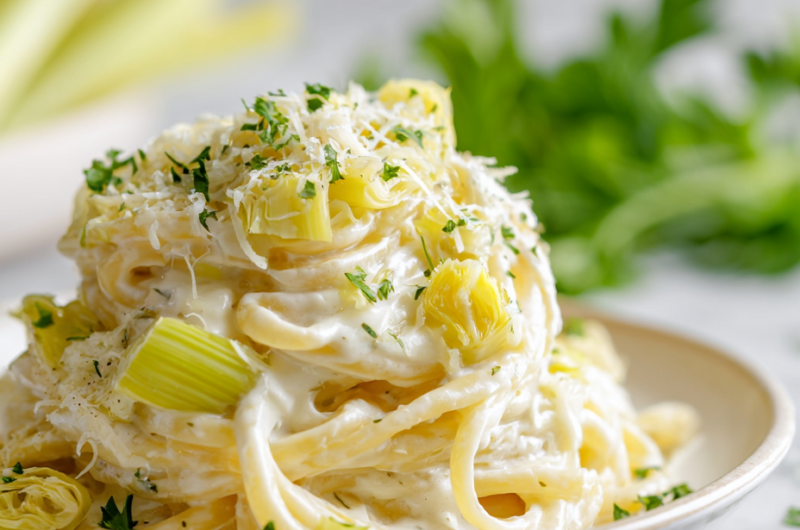
Leeks often get a bad rap for being bland or overly muddy, but when cooked right, they turn into something truly special. This recipe is my little ode to their subtle sweetness and silky texture, which can elevate even a humble pasta dish. It’s sort of like giving leeks the spotlight they deserve, in a creamy, comforting way.
I’ve always loved how leeks can surprise you—kind of shy at first, then bursting with flavor when you pay attention. This dish was born from that moment of realization, when I realized how much they can do if you treat them gently. It’s simple, honest, and a reminder to look a little closer at everyday ingredients.
Focusing on the overlooked complexity of leeks, this recipe elevates their gentle sweetness and silky texture, transforming a simple pasta dish into a celebration of humble, seasonal ingredients.
Inspiration Behind the Dish
- This dish came together one rainy afternoon when I was digging through the fridge, looking for something cozy but different. I remembered how my grandma used to fry leeks until they were deeply caramelized, filling the kitchen with a sweet, smoky aroma that made everything feel a little warmer. That moment of scent-memory got me thinking—why not translate that into a pasta? A simple way to honor the humble leek and turn it into something unexpectedly rich and silky.
- It’s kind of funny how a small, overlooked vegetable like the leek can hold so much potential. I’ve always loved their gentle sweetness and how they soften into a mellow, fragrant base—perfect for a creamy sauce. This recipe is my way of celebrating that quiet power, turning an everyday ingredient into a bowl of comfort with just a few honest steps.
- Every time I make this, I think about how food can surprise us—how a simple leek can transform a dish, how the smell of garlic and butter can lift the spirits, and how a splash of lemon can brighten the whole thing up. It’s a reminder to keep things simple, to listen to what ingredients want to be—no fuss, no pretenses, just honest cooking.
- Most of all, I love that it’s a dish I can throw together quickly after a long day, but still feel like I’ve created something special. It’s my little ode to the beauty of seasonal, humble ingredients—something to savor, no matter how chaotic the world feels outside.
Ingredient Breakdown: Key Components
- Leeks: I love how their gentle sweetness becomes more pronounced when slowly caramelized, developing a deep, smoky flavor. Skip the patience—don’t rush the softening process.
- Heavy cream: I prefer a rich, velvety sauce, but a splash of plant-based cream works too—just note it might be slightly less luscious. Keep an eye out for a thick, glossy finish.
- Pasta: I always use a sturdy shape—penne or orecchiette—to catch the sauce. Softer shapes tend to slip away, so choose something that holds its own.
- Garlic: I crush it with the side of my knife first—releases more aroma. For a milder flavor, add it later or use less; for a more pungent punch, sauté until golden.
- Lemon: I find a quick squeeze brightens the dish instantly, cutting through the richness. Don’t skip it—trust me, that zesty splash makes all the difference.
- Butter: I love how it adds a silky richness, especially if I finish the dish with a pat. For a lighter touch, use a bit less or substitute with olive oil—still good, just different.
- Salt & pepper: I season gradually, tasting as I go. The right balance heightens all the other flavors—don’t be shy to adjust until it sings.
Spotlight on key ingredients
Leeks:
- I love how their gentle sweetness becomes more pronounced when slowly caramelized, developing a deep, smoky flavor. Skip the patience—don’t rush the softening process.
- Heavy cream: I prefer a rich, velvety sauce, but a splash of plant-based cream works too—just note it might be slightly less luscious. Keep an eye out for a thick, glossy finish.
Lemon:
- Garlic: I crush it with the side of my knife first—releases more aroma. For a milder flavor, add it later or use less; for a more pungent punch, sauté until golden.
- I find a quick squeeze brightens the dish instantly, cutting through the richness. Don’t skip it—trust me, that zesty splash makes all the difference.
Notes for ingredient swaps
- Dairy-Free: Substitute heavy cream with coconut cream or cashew cream for a rich, plant-based alternative that still offers a creamy texture.
- Pasta Type: Use gluten-free or whole wheat pasta if preferred; sturdier shapes like penne or rigatoni hold sauce better and add texture.
- Leeks: Shallots or sweet onions can work in a pinch, but they lack that gentle, sweet leek flavor and softer texture.
- Butter: Swap with olive oil or vegan butter for a lighter or dairy-free finish; the flavor will be less rich but still satisfying.
- Lemon: Lime juice or a splash of vinegar can brighten the dish if lemon isn’t available, though the flavor will be slightly different.
- Herbs: Fresh thyme or parsley can replace chives or tarragon, adding herby notes that complement the creamy sauce.
- Salt & Pepper: Sea salt or flaky salt enhances flavor differently; adjust seasoning to taste, especially if using salted substitutes.
Equipment & Tools
- Large skillet: To cook the leeks and sauce in one pan, saving time and dishes.
- Sharp knife: For slicing leeks and prepping garlic efficiently.
- Wooden spoon: To stir gently and prevent scratching non-stick surfaces.
- Measuring cup: To measure pasta water and liquids accurately.
Step-by-step guide to creamy leek pasta
- Equipment & Tools: Gather a large skillet (preferably non-stick) to hold all ingredients, a sharp knife for slicing leeks, a wooden spoon for stirring, and a measuring cup for liquids.
- Prepare the leeks: Trim off the root end and dark green tops; slice the white and light green parts into thin half-moons. Rinse thoroughly in cold water to remove grit, then drain.
- Cook the pasta: Bring a large pot of salted water (about 1 tbsp salt per 4 liters) to a rolling boil at 100°C/212°F. Add pasta and cook until just al dente (about 1 minute less than package suggests). Drain, reserving about ½ cup of pasta water.
- Caramelize the leeks: While pasta cooks, heat a generous tablespoon of butter in the skillet over medium-low heat (around 150°C/300°F). Add leeks and a pinch of salt. Cook slowly, stirring occasionally, until they soften and turn a light golden (about 15 minutes). They should smell sweet and smoky, not burnt.
- Make the creamy sauce: Add minced garlic (about 2 cloves) to the leeks and cook for 30 seconds until fragrant. Pour in 1 cup of heavy cream, stirring to combine. Increase heat slightly to medium (around 180°C/355°F). Let simmer gently until the sauce thickens slightly (about 3-4 minutes).
- Combine pasta and sauce: Add cooked pasta directly into the skillet with the leek sauce. Toss well to coat, adding reserved pasta water a splash at a time until the sauce becomes silky and clings to the noodles. Taste and adjust salt and pepper.
- Final touches: Squeeze in the juice of half a lemon for brightness. Stir in a small pat of butter (optional) for extra sheen and richness. Check seasoning again.
- Resting & Finishing: Serve immediately on warm plates, garnished with a sprinkle of freshly cracked black pepper. No need to rest—just enjoy the immediate warmth and creaminess.
Serve immediately, garnished with cracked black pepper. No resting needed—just enjoy the creamy, aromatic dish while warm.
How to Know It’s Done
- Leeks should be deeply golden and sweet-smelling, not burnt or bitter.
- Pasta should be al dente—firm yet tender, with a slight bite.
- Sauce should be glossy, thick enough to coat the back of a spoon, with no raw cream smell.
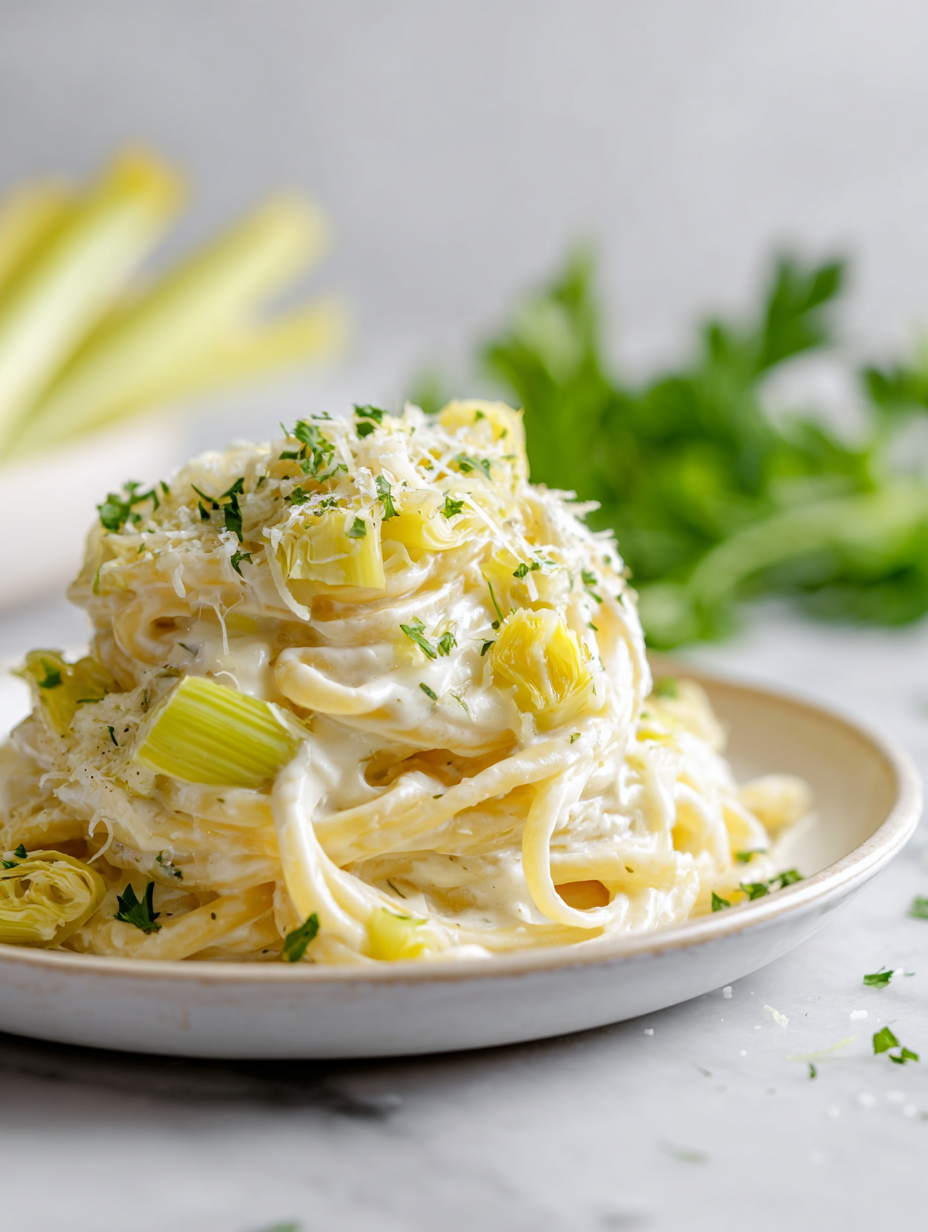
Creamy Leek Pasta
Ingredients
Equipment
Method
- Trim off the dark green tops and root end of the leeks, then slice the white and light green parts into thin half-moons. Rinse thoroughly in cold water to remove any grit, then drain well.
- Bring a large pot of salted water to a rolling boil, then add the pasta and cook until just al dente, about 1 minute less than package instructions. Drain, reserving about half a cup of pasta water, and set aside.
- Heat a large skillet over medium-low heat and add the butter. Once melted, add the sliced leeks with a pinch of salt, stirring gently. Cook slowly, stirring occasionally, until they soften and turn a light golden brown, about 15 minutes. They should smell sweet and smoky, not burnt.
- Add the crushed garlic to the skillet with the leeks and cook for about 30 seconds until fragrant, stirring constantly to prevent burning.
- Pour in the heavy cream, stirring to combine. Raise the heat slightly to medium and let the mixture simmer gently, stirring occasionally, until the sauce thickens slightly and becomes glossy, about 3-4 minutes.
- Return the cooked pasta to the skillet, tossing to coat it thoroughly with the leek and cream sauce. If the sauce feels too thick, add a splash of the reserved pasta water to loosen it and achieve a silky texture.
- Squeeze the juice of half a lemon over the pasta, then toss gently to combine. Taste and season with salt and pepper as needed.
- Serve immediately while warm, garnished with a little extra black pepper if desired. The sauce should be glossy, and the leeks tender and caramelized.
Pro Tips for Perfect Creamy Leek Pasta
- Bolded Mini-Head: Caramelize slowly → Develops deep, smoky sweetness without burning.
- Bolded Mini-Head: Use reserved pasta water → Achieves a silkier, more cohesive sauce.
- Bolded Mini-Head: Add garlic late → Prevents bitterness and preserves aroma.
- Bolded Mini-Head: Squeeze lemon at the end → Brightens flavors and balances richness.
- Bolded Mini-Head: Stir gently when combining → Keeps the sauce creamy and prevents breakage.
- Bolded Mini-Head: Keep an eye on heat → Avoid burning leeks or garlic by cooking on medium-low.
- Bolded Mini-Head: Taste and adjust seasoning → Ensures balanced saltiness and acidity.
Common mistakes and how to fix them
- FORGOT to watch heat: Burnt leeks if cooked on high—reduce to medium-low and stir often.
- DUMPED pasta water: Use reserved water for silky sauce—don’t skip saving some before draining.
- OVER-TORCHED garlic: Burnt garlic turns bitter—add it later or cook on lower heat for aroma.
- MISSED seasoning check: Taste sauce before serving—adjust salt and lemon for balanced flavor.
Quick fixes and pantry swaps
- When sauce separates, splash in a bit of cold water and whisk vigorously.
- If pasta sticks, toss with a teaspoon of olive oil before serving.
- Splash lemon juice if sauce lacks brightness—shimmer and uplift flavors instantly.
- Patch burnt leeks quickly by removing charred bits and adding a splash of broth.
- Shield delicate leeks from overcooking by reducing heat once they turn golden—smell for sweetness.
Prep, store, and reheat tips
- You can caramelize the leeks a day ahead; store in an airtight container in the fridge for up to 24 hours. Reheat gently in a skillet, adding a splash of water to revive their softness and sweetness.
- Cook the pasta ahead of time—al dente, then drain and toss with a little oil to prevent sticking. Store in a sealed container in the fridge for up to 1 day. Reheat in boiling water or microwave, adding a splash of water for moisture.
- Prepare the sauce up to the point of adding pasta—refrigerate in a jar or container for up to 2 days. Warm gently over low heat, stirring often, until it thickens and the aroma rekindles. Add a squeeze of lemon and adjust seasoning before serving.
- Leeks develop a sweeter flavor as they sit, so their aroma might mellow overnight. Reheating may intensify their smoky-sweet notes, so taste and adjust seasoning accordingly.
- For best flavor, assemble and serve the dish fresh. But if needed, leftovers stay good for about 24 hours, with sauce becoming slightly creamier and leeks more mellow. Reheat until steaming and fragrant.
Top questions about creamy leek pasta
1. How do I clean leeks properly?
Leeks can be muddy if not cleaned well. Slice them, then rinse thoroughly in cold water to remove grit.
2. Why save pasta water?
Use a starchy pasta water to loosen the sauce and make it cling better to the noodles. Save about half a cup before draining.
3. How do I caramelize leeks without burning?
Slowly caramelize the leeks over medium-low heat until they turn golden and sweet-smelling, about 15 minutes.
4. When should I add lemon juice?
Add lemon juice at the end to brighten the creamy sauce and balance the richness with a zesty pop.
5. What if my sauce separates?
If the sauce looks greasy or separates, whisk in a little reserved pasta water to bring it back together.
6. How do I prevent the sauce from breaking?
Use a non-stick skillet and stir gently to prevent breaking the leeks and to keep the sauce smooth.
7. How do I reheat creamy leek pasta?
Reheat leftovers gently over low heat, stirring often, and add a splash of water or lemon to refresh the flavor.
8. Can I make this dairy-free?
You can substitute coconut cream or cashew cream for dairy, which still gives a rich, velvety texture.
9. Can I substitute leeks with onions?
Shallots or sweet onions can replace leeks, but they won’t have that delicate, sweet flavor leeks develop.
10. Can I use different pasta types?
Whole wheat or gluten-free pasta work well, but they may hold sauce differently—choose shapes like penne or orecchiette.
This dish feels like a little discovery each time I make it, the way the gentle sweetness of leeks transforms into something silky and rich. It’s simple, honest, and perfect for when I want something comforting without fuss. Honestly, it’s become a go-to for cozy nights or when I need a reminder to slow down and savor the everyday ingredients.
And really, that’s what I love about cooking these days—finding new layers in familiar ingredients and making them feel special. It’s not about perfection, but about the small, honest moments in the kitchen. That bowl of creamy leek pasta can be a quiet celebration or a simple pause in a busy day.

I’m Emily Richardson, the heart and soul behind Playing with Flavors. Cooking isn’t just a hobby for me – it’s a passion that I’ve cultivated for years, and it’s become the driving force of my life.
From the kitchen of my cozy café to the pages of this blog, every dish I create is a reflection of my love for food and the joy it brings to people.