
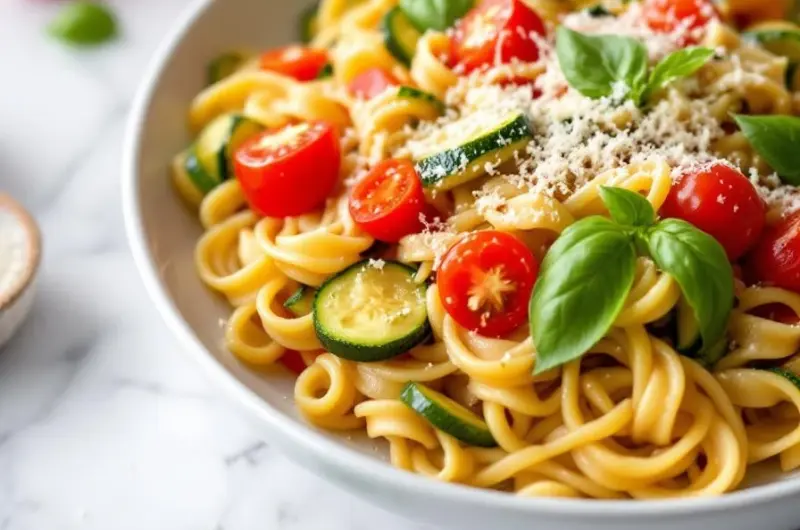
Making Pasta Primavera starts with boiling water and salty, starchy pasta that needs to be drained quickly to keep from sticking. The vegetables—bell peppers, zucchini, cherry tomatoes—are chopped in a jumble, not precisely, just enough to fit in the pan without a mess.
As you chop and prep, the vegetables hit the hot oil with a satisfying sizzle, releasing steam and aromas that fill the kitchen. The key is working fast enough to keep everything crisp and bright, not soggy or overcooked, so keeping an eye on that pan is essential.
The gentle sizzle of vegetables hitting hot oil, each one releasing a burst of steam and aroma, as I toss them in the pan—it’s that quiet, rhythmic sound of a busy cook in motion.
What goes into this dish
- Bell peppers: I like a mix of colors—red, yellow, green—each adds a slight sweetness and crunch. Skip if you prefer just one shade, but the visual pop makes a difference.
- Zucchini: Thinly sliced zucchini is my go-to because it cooks quickly and stays tender yet firm. If you’re out, yellow squash works just as well, softer but still good.
- Cherry tomatoes: Bright, juicy, and smoky when blistered in the pan. Roast some for a deeper flavor, or skip if they’re out of season—just add a splash of lemon instead.
- Garlic: Fresh minced garlic brings that pungent, aromatic punch. If you’re short on time, garlic powder works but won’t have the same fragrant impact.
- Olive oil: Use a good extra virgin for that fruity, peppery kick. Skip it if you’re avoiding oil—just add a squeeze of lemon for brightness.
- Pasta: Rigatoni or penne hold up well, but spaghetti works too—just keep an eye on the cooking time to avoid mush. Whole wheat adds a nutty flavor if that’s your thing.
- Parmesan: Freshly grated gives that salty, umami finish. Skip if dairy-free, but try a splash of nutritional yeast for a cheesy vibe.
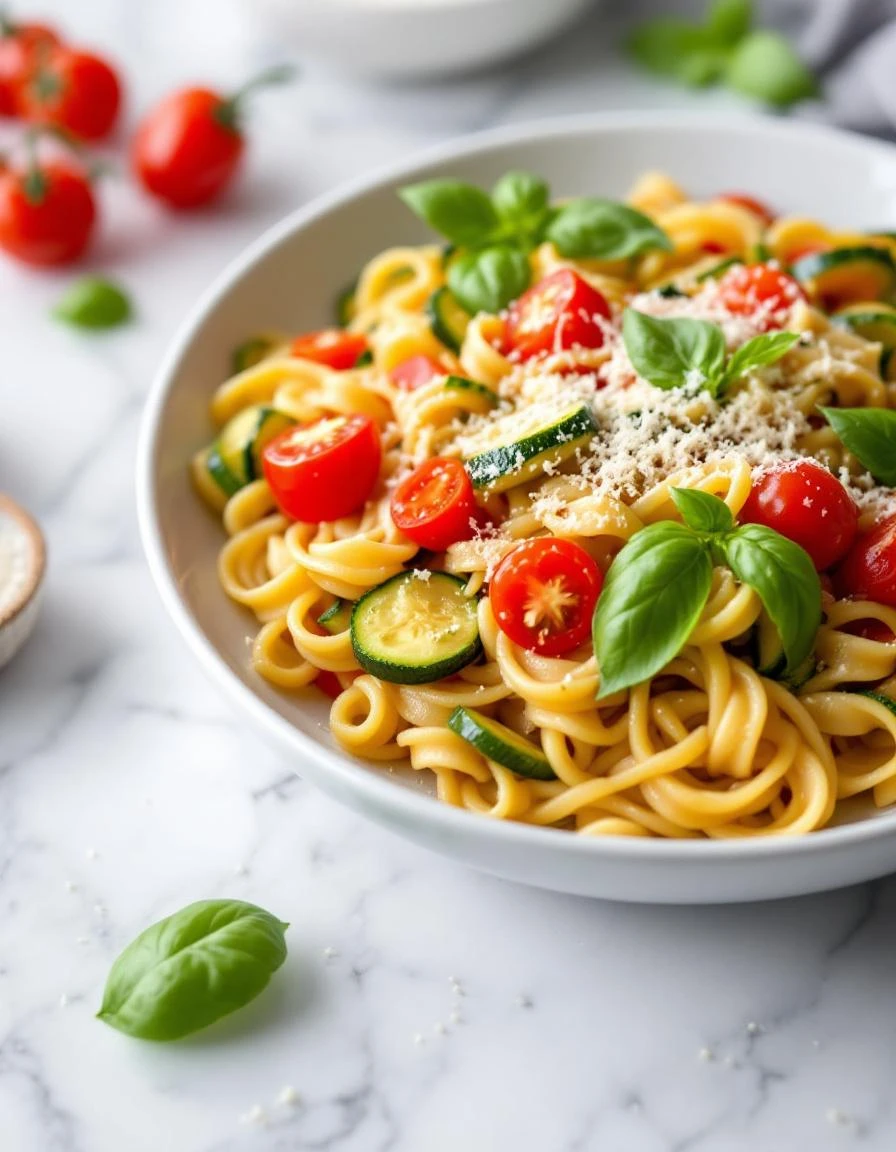
Pasta Primavera
Ingredients
Equipment
Method
- Bring a large pot of salted water to a boil and cook the pasta until al dente, following package instructions. Drain quickly in a colander, reserving a bit of pasta water.
- While the pasta cooks, heat olive oil in a large skillet over medium-high heat. Add the chopped bell peppers and sauté, stirring frequently, until they start to soften and become slightly charred around the edges, about 3-4 minutes. Then, add the thinly sliced zucchini and cook for another 2 minutes until tender but still crisp.
- Add the minced garlic to the vegetables and cook for about 30 seconds until fragrant and just beginning to brown, being careful not to burn it.
- Stir in the cherry tomatoes and cook for another 1-2 minutes until they blister and release their juices, filling the pan with aroma and color.
- Add the drained pasta to the skillet with the vegetables. Toss everything together, allowing the flavors to meld. If the mixture seems dry, add a splash of reserved pasta water to loosen it up.
- Remove from heat and sprinkle generously with freshly grated Parmesan cheese. Toss gently to coat the pasta evenly and melt the cheese slightly.
- Serve immediately, garnished with extra Parmesan or fresh herbs if desired. Enjoy the vibrant, crisp-tender vegetables nestled with tender pasta in a light, aromatic sauce.
Common mistakes and how to fix them
- FORGOT to taste and adjust salt, resulting in bland pasta—remedy with a sprinkle of sea salt.
- DUMPED all vegetables in at once—stagger their addition for even cooking and better texture.
- OVER-TORCHED the garlic—remove the pan from heat earlier or it will turn bitter.
- MISSED the timing for draining pasta—do it quickly to prevent sogginess and starchy clumping.
Make-Ahead and Storage Tips
- Chop vegetables and garlic the day before; store in airtight containers in the fridge for up to 24 hours to keep them crisp and fresh.
- Cook and drain pasta ahead of time, then toss with a tiny bit of oil to prevent sticking; store in the fridge for up to 24 hours, reheating just before serving.
- Blister cherry tomatoes in the pan first, then cool and refrigerate—flavor intensifies but may soften slightly after a day.
- The flavors meld better if you let the assembled dish sit for 30 minutes in the fridge; reheat gently, tasting for seasoning and adjusting as needed.
- Reheat in a skillet over medium heat, stirring often, until hot and vibrant—but watch for overcooking the vegetables, which can lose their crunch.
FAQs
1. How do I know when the pasta is done?
The pasta should be al dente, firm to the bite with a slight resistance, and the vegetables should be crisp but tender, not mushy, with a bright aroma from the garlic and herbs.
2. When are the vegetables cooked enough?
Taste a piece—if it’s tender but still has a bite, and the veggies are vibrant and slightly crisp, you’re good. The sauce should cling lightly without being greasy or watery.
3. How do I prevent soggy veggies?
Keep your eye on the pan—vegetables should sizzle and soften just enough to release aroma but not turn to mash. They’ll get dull if overcooked, losing their bright flavor and crunch.
4. Any tips for reheating leftovers?
Reheat gently in a skillet over medium, stirring often, until steaming and fragrant. The veggies might soften a bit, but they should still hold some bite and vibrancy.
5. How do I keep it bright after cooking?
Use fresh lemon juice or grated zest to brighten the dish right before serving. It adds a zing that cuts through the richness and highlights the freshness of the veggies.

I’m Emily Richardson, the heart and soul behind Playing with Flavors. Cooking isn’t just a hobby for me – it’s a passion that I’ve cultivated for years, and it’s become the driving force of my life.
From the kitchen of my cozy café to the pages of this blog, every dish I create is a reflection of my love for food and the joy it brings to people.


