
This asparagus and pea pasta is my go-to when I want something fresh and effortless, especially in spring. There’s something about those bright green bursts from peas and tender asparagus that lifts the whole plate. It feels like a tiny celebration of the season, but without any fuss or complicated steps.
I love how this dish balances simplicity and flavor. The garlic, a little lemon zest, and good-quality pasta turn fresh veggies into something satisfying but still light. It’s perfect for those evenings when you want to feel nourished without spending ages in the kitchen.
Plus, it’s versatile—add some parmesan if you like, or toss in a handful of herbs. It’s a reminder that some of the best meals come from just a few bright ingredients, quickly cooked and enjoyed.
Focusing on the overlooked beauty of simple spring vegetables, this recipe transforms what might seem like everyday ingredients into a celebration of fresh, fleeting flavors. It’s about appreciating the tiny, bright bursts of sweetness from peas and the tender, grassy crunch of asparagus, all coated in a lightly garlicky pasta that sings of seasonality.
The story behind this recipe
- This dish was born out of a spring kitchen scramble, when I had a handful of fresh peas and a bunch of asparagus that needed using. I wanted something quick, bright, and satisfying, not weighed down by heavy sauces or cheeses. It’s a reminder that simple ingredients, treated well, can surprise you.
- One lazy Saturday, I threw together this pasta after a run through the market. The smell of garlic and the vibrant green of the veggies instantly made me think of childhood garden days, carefree and full of flavor. It’s become a go-to for those times when I want fresh, honest food without fuss.
- heading
- story_type
Ingredient breakdown
- Asparagus: I love how the tips turn slightly charred and smoky when just grilled for a minute or two, adding depth. You might prefer to blanch them for a softer bite, but I recommend a quick sauté for that bright, grassy flavor.
- Peas: Fresh peas are sweet and tender, bursting with juice when bitten—make sure to add them late so they stay bright. Frozen peas work well too, just thaw and toss in the last minute to keep their color and freshness.
- Garlic: I use plenty of garlic for that fragrant, almost nutty aroma that fills the kitchen. If you’re sensitive, reduce it, but don’t skip the sauté until it’s lightly golden—more flavor that way.
- Lemon zest: I find a generous sprinkle of lemon zest adds a zing that lifts everything. Skip it if you prefer a more mellow dish, but trust me, that citrus brightness makes all the difference.
- Pasta: I like a good-quality spaghetti or linguine—al dente, with a slight bite. If you’re short on time, use whatever long pasta you have, just ensure it’s cooked to the recommended time for that perfect bite.
- Olive oil: A splash of good extra virgin olive oil at the end makes the dish feel richer. If you’re out, a light drizzle of neutral oil works, but the oil really amplifies the freshness of the veggies.
- Parmesan: Optional, but I love finishing with grated Parmesan. It adds saltiness and umami—skip if vegan or dairy-free, but a handful of toasted nuts can be a good substitute.
Spotlight on key ingredients
Asparagus:
- I love how the tips turn slightly charred and smoky when just grilled for a minute or two, adding depth. You might prefer to blanch them for a softer bite, but I recommend a quick sauté for that bright, grassy flavor.
- Peas: Fresh peas are sweet and tender, bursting with juice when bitten—make sure to add them late so they stay bright. Frozen peas work well too, just thaw and toss in the last minute to keep their color and freshness.
Peas:
- Their little bursts of sweetness make this dish sing. I love how they pop with freshness, especially when freshly shelled or carefully thawed frozen ones.
- They behave tender but firm, and if overcooked, they turn mushy fast. Add near the end for that perfect crisp-tender bite and vibrant color.
Notes for ingredient swaps
- Dairy-Free: Swap Parmesan for nutritional yeast or a squeeze of lemon. Keeps the dish bright but loses that cheesy umami.
- Vegan: Use toasted nuts or seeds instead of cheese. Adds texture and flavor, but won’t melt or give that cheesy richness.
- Gluten-Free: Choose a gluten-free pasta like rice or chickpea. Will affect texture slightly, but still holds onto the vibrant flavors.
- Frozen Veggies: Use frozen peas and asparagus if fresh aren’t available. Just thaw and drain well to avoid excess water.
- Lemon Zest: If out, a splash of vinegar or a squeeze of lime can add brightness. Skip the citrus if you prefer a milder taste.
- Olive Oil: If missing, any neutral oil like canola or avocado works. The flavor will be less pronounced, but still effective.
- Herbs: Fresh basil or parsley brighten the dish. Dried herbs can be used but add earlier for better flavor infusion.
Equipment & Tools
- Large pot: Boil pasta efficiently
- Skillet: Sauté vegetables and combine with pasta
- Tongs or slotted spoon: Lift and toss pasta and veggies
- Grater: Zest lemon for brightness
Step-by-step guide to asparagus and pea pasta
- Gather your equipment: a large pot for boiling, a skillet for sautéing, tongs or a slotted spoon, and a grater for zesting. Fill the pot with water, add salt, and bring to a rolling boil (about 100°C / 212°F).
- While water heats, prep your veggies: snap off the woody ends of the asparagus, cut into 4-5cm pieces, and set aside. Shell fresh peas or thaw frozen peas, keeping them ready.
- Add pasta to boiling water. Cook according to package instructions until just al dente, about 8-10 minutes. Stir occasionally to prevent sticking. Taste a strand for firm bite.
- In the meantime, heat your skillet over medium heat (about 160°C / 320°F). Add a splash of olive oil, then minced garlic. Cook until fragrant and just golden, about 1-2 minutes. Watch for a nutty aroma.
- Toss in asparagus pieces. Sauté for 2-3 minutes until they start to soften and turn slightly charred at the edges, releasing a smoky scent. Add peas and cook another 1-2 minutes until veggies are bright green and tender-crisp.
- Drain pasta, reserving about ½ cup of cooking water. Add pasta to the skillet with veggies. Toss well to coat, adding a splash of reserved water if it seems dry. The sauce should cling lightly to the noodles.
- Finish with lemon zest, a drizzle of olive oil, and freshly ground black pepper. Toss again and taste; adjust seasoning if needed. For extra richness, sprinkle grated Parmesan or a handful of toasted nuts.
- Plate immediately. Garnish with additional lemon zest or herbs if desired. Serve hot, with a slight drizzle of olive oil for shine and flavor.
Serve immediately, garnished with extra lemon zest or herbs. Drizzle with a splash of olive oil for shine. No resting needed—best enjoyed hot for full flavor and texture.
How to Know It’s Done
- Veggies are tender but still bright green and slightly charred.
- Pasta is al dente, with a slight bite and no stickiness.
- Sauce clings lightly to noodles, with fragrant garlic and lemon aroma.
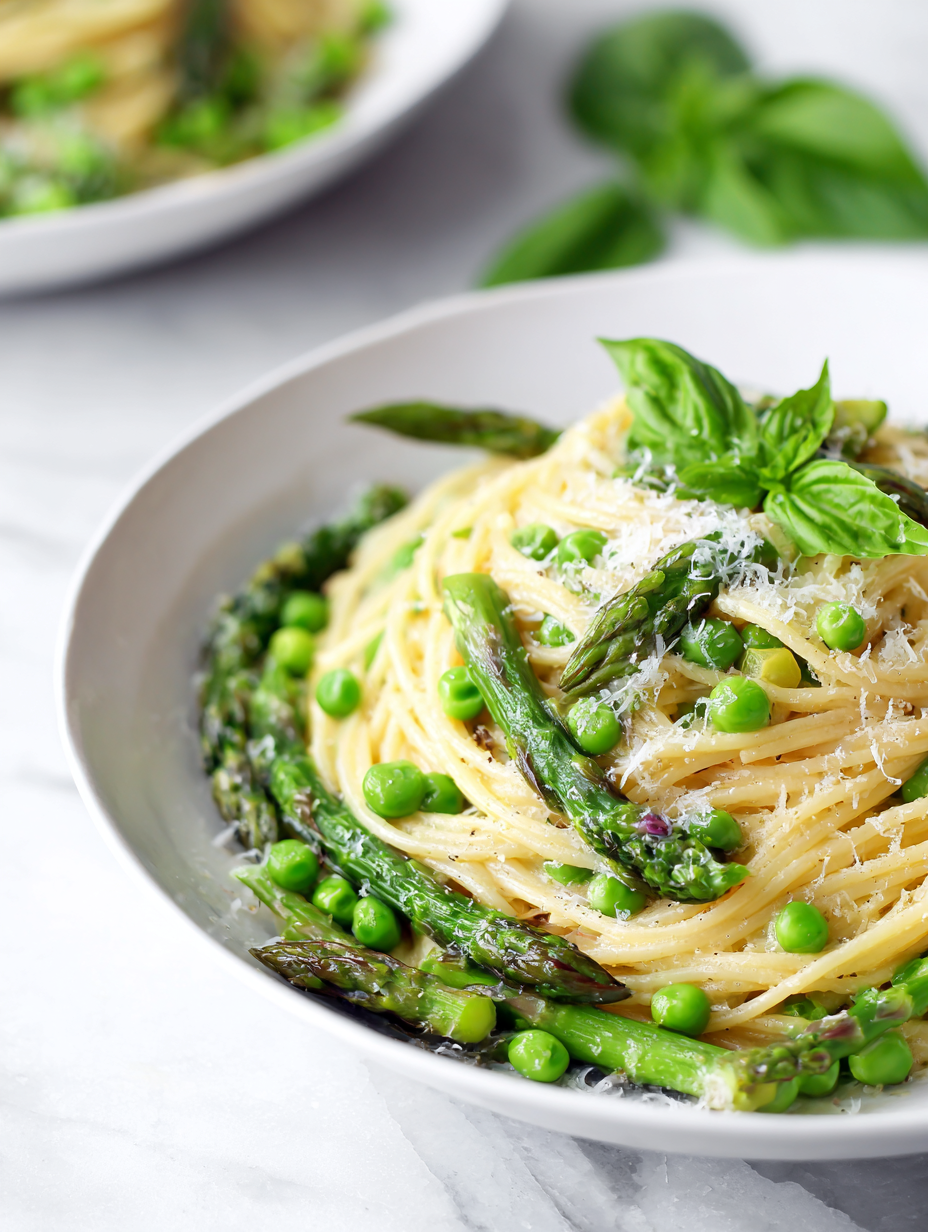
Asparagus and Pea Pasta
Ingredients
Equipment
Method
- Fill a large pot with water, add a generous pinch of salt, and bring it to a rolling boil. Once bubbling, add the pasta and cook until just al dente, about 8-10 minutes, stirring occasionally.
- While the pasta cooks, trim the woody ends off the asparagus and cut into 4-5cm pieces. Shell the peas if fresh or thaw frozen peas, keeping them ready.
- Drain the pasta, reserving about half a cup of the starchy cooking water. Set the pasta aside.
- In a large skillet over medium heat, add 1 tablespoon of olive oil and minced garlic. Sauté until fragrant and just golden, about 1-2 minutes, releasing a warm, nutty aroma.12 ounces good-quality spaghetti or linguine
- Add the asparagus pieces to the skillet. Sauté for 2-3 minutes until they start to soften and develop slight charred edges, adding smoky depth and a grassy aroma.12 ounces good-quality spaghetti or linguine
- Add the peas to the skillet and cook for another 1-2 minutes until they are bright green and tender-crisp, releasing a fresh sweetness.12 ounces good-quality spaghetti or linguine
- Return the drained pasta to the skillet. Toss everything together over medium heat, adding a splash of the reserved cooking water if needed to loosen the mixture and help the sauce cling to the noodles.12 ounces good-quality spaghetti or linguine
- Stir in lemon zest, half of the remaining olive oil, and season with salt and black pepper to taste. Toss again to evenly distribute the flavors and finish with a glossy sheen.12 ounces good-quality spaghetti or linguine
- If desired, sprinkle with freshly grated Parmesan and a drizzle of olive oil for extra richness. Serve immediately while hot and fragrant.12 ounces good-quality spaghetti or linguine
Pro tips for asparagus and pea pasta
- Bolded mini-head: Use high heat for quick sautéing to develop smoky edges on the asparagus.
- Bolded mini-head: Salt the pasta water generously; it flavors the noodles from the inside out.
- Bolded mini-head: Reserve pasta water; it’s starchy and can help loosen the sauce if it thickens.
- Bolded mini-head: Add peas at the last minute to keep their bright green color and tender bite.
- Bolded mini-head: Toast garlic until fragrant and just golden—avoid browning to prevent bitterness.
- Bolded mini-head: Finish with a drizzle of good olive oil for extra shine and fresh aroma.
- Bolded mini-head: Toss the pasta and veggies vigorously to ensure even coating and flavor distribution.
Common mistakes and how to fix them
- FORGOT to check veggie doneness → Test asparagus for tender crunch before removing.
- DUMPED pasta water too early → Save some for adjusting sauce consistency if needed.
- OVER-TORCHED garlic → Cook until fragrant and lightly golden, not brown or bitter.
- SKIPPED tasting during cooking → Taste sauce and veggies as you go for perfect flavor balance.
Quick fixes and pantry swaps
- When veggies are limp, splash with hot water to revive their bright color and crunch.
- If pasta sticks, toss with a drizzle of olive oil and stir quickly over low heat.
- Splash some lemon juice if greens turn dull; it brightens without overpowering.
- Patch over undercooked garlic by adding a quick squeeze of lemon or a pinch of salt.
- Shield over-torched garlic with a spoonful of butter or a splash of broth to mellow bitterness.
Prep, store, and reheat tips
- Prep the veggies: Trim and snap asparagus, shell or thaw peas; store separately in airtight containers. Brightness stays intact for up to 2 days in the fridge.
- Cook the pasta ahead: Boil until al dente, drain, toss with a little olive oil to prevent sticking, and refrigerate in a sealed container for up to 1 day. Reheat in boiling water briefly if needed, or enjoy cold in leftovers.
- Assembly and reheating: Combine cooled pasta and veggies, toss with a splash of warm water or olive oil. Reheat gently in a skillet over low heat, just until warmed through, to maintain texture and bright flavor.
- Flavor change: The freshness of the peas and asparagus mellows slightly after storage, so consider adding a squeeze of lemon or fresh herbs when serving leftovers to brighten the dish again.
- Sensory notes: When reheating, the aroma of garlic and lemon should rekindle, and veggies should remain tender but not mushy. Adjust seasoning with a touch more olive oil or salt if needed.
FAQs about asparagus and pea pasta
1. Can I use frozen peas instead of fresh?
Fresh peas add a sweet, juicy burst that frozen peas can’t quite replicate, but frozen work in a pinch. Look for bright green, plump peas for the best flavor.
2. How do I know when asparagus is cooked just right?
Asparagus should be tender yet still crisp. When cooked properly, it will have a slight snap when bitten, and the tips will be lightly charred and smoky.
3. What kind of pasta works best for this dish?
Use a good quality, starchy pasta like spaghetti or linguine. Cook until al dente, with a slight bite, to hold up well with the sauce.
4. How can I tell when the garlic is done?
The garlic should be golden and fragrant, about 1-2 minutes over medium heat. If it turns brown or burnt, start over to avoid bitterness.
5. Can I skip the lemon zest?
Add lemon zest at the end to keep its bright, citrusy aroma. If out of lemon, a splash of vinegar or lime juice can substitute, but the zest really lifts the dish.
6. Why add olive oil at the end?
Finishing with good-quality olive oil adds shine and enhances the fresh flavors. Use a light drizzle just before serving for best results.
7. How do I fix sticky or dry pasta?
If the pasta seems dry or sticky after cooking, toss in a bit of reserved pasta water or a little olive oil to loosen it up.
8. What is the best way to cook the veggies?
Overcooking the veggies makes them mushy and dull in color. Sauté quickly until just tender and still vibrant green.
9. When should I add the peas?
To avoid mushy peas, add them during the last minute of cooking. For fresh peas, shell just before use for maximum sweetness.
10. How long can I keep leftovers and how do I reheat?
Leftovers can be stored in an airtight container in the fridge for up to 2 days. Reheat gently, adding a splash of water or oil to revive the texture.
This simple pasta is more than just a quick meal; it’s a reminder to slow down and savor the fleeting beauty of spring vegetables. The tender asparagus and sweet peas bring a fresh, almost grassy note that feels like a breath of fresh air in the middle of busy days.
Sometimes, it’s the most unpolished dishes that turn out to be the most satisfying. This recipe isn’t about perfection—it’s about honest flavors, quick assembly, and a moment to enjoy something truly seasonal and bright.