

Making gazpacho means standing over a cutting board, chopping cucumbers, peppers, and tomatoes that spill juice onto the counter with every cut. The sound of vegetables hitting the bowl and the smell of fresh herbs fill the kitchen as you blend them into a chunky, textured puree.
Pouring the cold soup into a pitcher or bowl, you feel the weight of the chilled mixture, ready for a quick rest in the fridge. The act of tasting it after a few hours reveals how the flavors meld—sharp, bright, with a hint of garlic and vinegar.
The rough scrape of ripe tomatoes against the grater, releasing their seedy, oozy flesh into a messy, fragrant pile.
Key ingredients and swaps
- Tomatoes: Ripe, juicy tomatoes are the base—red, fragrant, and slightly sweet. If out of season, canned crushed tomatoes work, but fresh is brighter and more vibrant. The squish of their flesh is satisfying.
- Cucumbers: Cool, crisp, and refreshing—peel or not depending on your texture preference. They add a watery crunch, especially when you hit a seed pocket. Use what you have, even if slightly soft, for a milder flavor.
- Bell Peppers: I like red or yellow for sweetness, but green adds a grassy note. Seeded and chopped, they bring a gentle crunch and depth. Roasting them slightly can add a smoky layer, if you’re into that.
- Garlic: Just a small clove or two—fresh, pungent, and sharp. Smash and mince for maximum flavor. Skip if you’re sensitive or want a milder soup, but it’s the backbone of that punch.
- Vinegar: Sherry or red wine vinegar brightens everything up, giving that tangy kick. If you only have lemon juice, use that—just a splash—but vinegar adds depth and a more complex acidity.
- Olive Oil: Extra virgin, cold-pressed—drizzle in at the end to add a fruity, grassy richness. Skip if you’re watching calories, but it mellows the sharpness and ties the flavors together.
- Salt & Pepper: Season generously—salt enhances sweetness, pepper adds a gentle heat. Taste as you go—this is what brings the whole messy, fresh flavor to life.
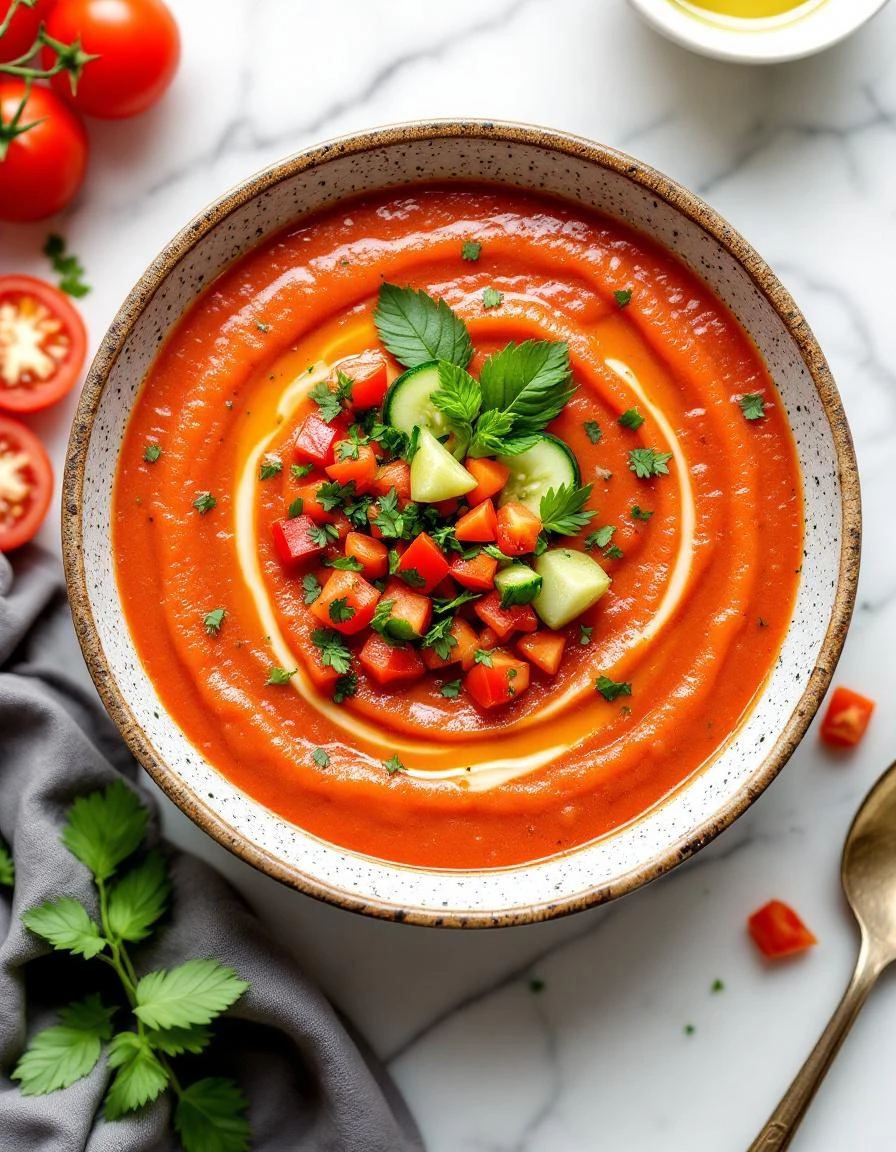
Fresh Gazpacho
Ingredients
Equipment
Method
- Start by chopping the tomatoes into quarters and placing them in a large bowl.
- Peel the cucumber if you prefer a less watery texture, then chop it into small pieces and add to the bowl.
- Seed and chop the red bell pepper, then toss it into the bowl with the other vegetables.
- Mince the garlic cloves finely and add them to the mixture, giving it a fragrant, pungent aroma.
- Use a blender or food processor to pulse the chopped vegetables until they are coarsely blended, leaving some texture.
- Pour the blended mixture into a large bowl or pitcher, then stir in the red wine vinegar and olive oil for brightness and richness.
- Season generously with salt and pepper, then taste and adjust the seasoning until it’s bright and balanced.
- Cover and refrigerate the gazpacho for at least 2 hours, allowing flavors to meld and chill thoroughly.
- Give the gazpacho a quick stir, taste again, and adjust seasoning if necessary before serving cold.
- Serve in bowls or glasses, garnished with fresh herbs if desired, and enjoy this refreshing, vibrant soup.
Common mistakes and how to fix them
- FORGOT the salt? Salt early and taste—don’t wait until the end to adjust the seasoning.
- DUMPED all the vinegar? Use a measured splash—too much can make it sour and overshadow flavors.
- OVER-TORCHED the tomatoes? Keep an eye and remove from heat once skin bursts—bitterness can develop.
- MISSED blending? Puree until smooth—lumps ruin the silky texture that makes gazpacho special.
Make-Ahead and Storage Tips
- Chop all vegetables a day ahead—keeps everything fresh and speeds up assembly.
- Store blended gazpacho in an airtight container in the fridge for up to 24 hours; flavors intensify and mellow over time.
- Freeze portions for up to 2 months—thaw in the fridge overnight and give it a good stir before serving.
- Refrigerated gazpacho tastes sharper at first, so give it a quick stir and taste before serving—adjust with a splash of vinegar or olive oil if needed.
- For reheating, serve cold or at room temperature—avoid warming, as it can dull the bright, crisp flavors.
FAQs
1. Should gazpacho be served cold?
Chill it thoroughly in the fridge for at least 2 hours; cold, crisp, and refreshing on the tongue.
2. How do I pick good tomatoes for gazpacho?
Use ripe, fragrant tomatoes—when bitten, they should burst with a sweet, juicy tang that hits your senses.
3. Should gazpacho be smooth or chunky?
Blend until smooth for a silky texture, or leave it slightly chunky if you like more bite in every spoonful.
4. How do I season gazpacho properly?
Add a splash of vinegar and olive oil, then taste—adjust until it hits a bright, balanced tang on your palate.
5. How long can I keep gazpacho in the fridge?
Store in an airtight container in the fridge for up to 24 hours; flavors deepen and mellow as it sits.

I’m Emily Richardson, the heart and soul behind Playing with Flavors. Cooking isn’t just a hobby for me – it’s a passion that I’ve cultivated for years, and it’s become the driving force of my life.
From the kitchen of my cozy café to the pages of this blog, every dish I create is a reflection of my love for food and the joy it brings to people.


