
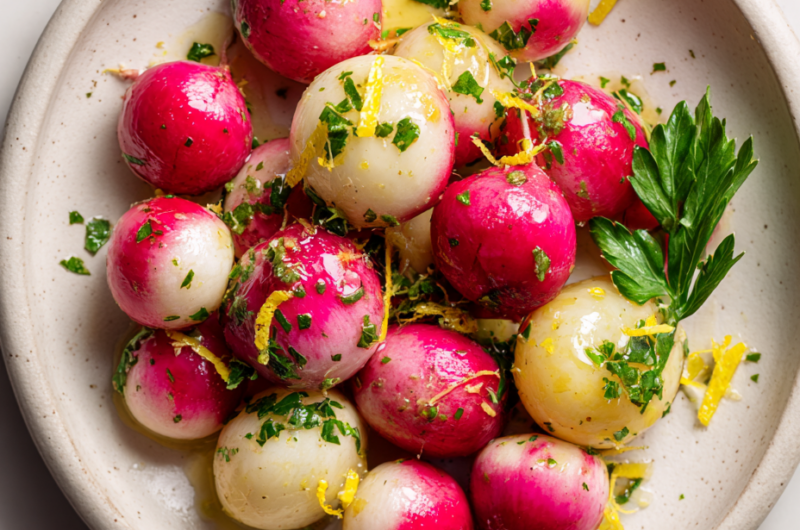
Radishes often get a bad rap for being solely crunchy, raw snacks. But when you sauté them in butter, they soften beautifully, revealing a sweet, almost nutty side you might not expect. It’s a simple trick that turns their sharp bite into something richer and more comforting.
This dish is a little act of kitchen magic—transforming the humble radish into a side that feels indulgent without any fuss. The key is patience and a good splash of butter, letting the natural sugars caramelize just enough to boost their flavor. It’s a reminder that even the most unassuming ingredients can surprise you.
I stumbled on this recipe during a busy week when I needed quick, satisfying sides. No fancy ingredients, just radishes, butter, and a bit of patience. Now, it’s become a go-to for when I want something fresh but cozy, a little twist on the usual roasted or raw radish.
This recipe explores transforming the humble radish from a crunchy, peppery snack into a rich, buttery side that highlights its natural sweetness and delicate texture, challenging the assumption that radishes are only for salads or raw eating.
The story behind this recipe
I first made these sautéed radishes on a whim, after a long day when I wanted something quick and satisfying. The idea was to tame their peppery bite and bring out their natural sweetness with just butter. It’s funny how such a simple dish can evoke a childhood nostalgia of my grandmother’s farm-fresh vegetables, but with a modern twist. Every time I cook this, I remember that sometimes, the simplest ingredients, treated kindly, make the most memorable meals.
Ingredient breakdown: key components
- Radishes: I love how their peppery crunch transforms when sautéed; you might prefer smaller ones for more tenderness.
- Butter: It’s the richness that makes this dish sing. Use good quality butter for a nutty aroma and better flavor.
- Salt: Just a pinch enhances their sweetness. Don’t skip it, even if you’re tempted to go lighter.
- Lemon juice: A squeeze brightens everything up—look for a fresh lemon, not the duller ones, to keep it lively.
- Black pepper: Freshly cracked adds a subtle heat—don’t grind too much at once, keep it just a hint of spice.
- Optional herbs: Chopped parsley or dill add a fresh, herby note. Add at the end to keep their vibrancy.
- Cooking oil: If you want a slightly crispy edge, a splash of neutral oil like canola can help, but butter alone works beautifully.
Spotlight on key ingredients
Radishes:
- I love how their peppery crunch transforms when sautéed; you might prefer smaller ones for more tenderness.
- Butter: It’s the richness that makes this dish sing. Use good quality butter for a nutty aroma and better flavor.
- Salt: Just a pinch enhances their sweetness. Don’t skip it, even if you’re tempted to go lighter.
Butter:
- It’s the richness that makes this dish sing. Use good quality butter for a nutty aroma and better flavor.
- Salt: Just a pinch enhances their sweetness. Don’t skip it, even if you’re tempted to go lighter.
- Lemon juice: A squeeze brightens everything up—look for a fresh lemon, not the duller ones, to keep it lively.
Notes for ingredient swaps
- Dairy-Free: Swap butter for olive oil or coconut oil. Expect a slightly different richness and a more vegetal aroma.
- Vegan: Use a plant-based butter or oil. The flavor remains buttery but with a different, sometimes nuttier, note.
- Salt Alternatives: Try sea salt or Himalayan pink salt for a more mineral-rich flavor profile. Use sparingly to avoid overpowering.
- Lemon Substitute: Lime juice offers a similar bright acidity with a slightly different citrus note, perfect for a tangy twist.
- Herbs: Fresh thyme or chives can replace parsley or dill, adding their unique herbal aroma and subtle flavor shifts.
- Oil Choice: Neutral oils like canola or grapeseed can replace butter for a cleaner, less rich finish, especially if frying at higher heat.
- Pepper: White pepper provides a milder, more floral heat, ideal if you want less visual contrast but still some spice.
Equipment & Tools
- Skillet: To cook the radishes evenly and develop flavor
- Spatula: To stir and turn the radishes safely
- Knife: To slice radishes uniformly for even cooking
Step-by-step guide to sautéed radishes
- Gather your equipment: a medium-sized skillet (preferably cast iron), a spatula, and a sharp knife for slicing. The skillet needs to be wide enough for even cooking.
- Wash the radishes thoroughly to remove any dirt. Trim off the green tops and root ends, then slice them into halves or quarters depending on size—aim for uniform thickness, about 1/4 inch.
- Heat the skillet over medium heat until it’s hot but not smoking—about 160°C / 320°F. Add a generous knob of butter, about 2 tablespoons, and let it melt, foaming gently.
- Add the sliced radishes to the skillet in a single layer. They should sizzle on contact. Cook for about 3-4 minutes, stirring occasionally, until they start to turn golden and soften around the edges.
- Reduce heat slightly to medium-low. Continue sautéing, stirring every 2 minutes, for another 5-7 minutes. They should be tender but still hold some bite, and the butter will turn a nutty brown if you’re patient.
- If the butter begins to brown too quickly or the radishes start to burn, lower the heat and add a splash of water or a drizzle of oil. Keep stirring and watching for that caramelized glow.
- Finish with a squeeze of lemon juice and a grind of black pepper. Adjust salt to taste. Toss gently to coat everything evenly.
- Remove from heat. Let the radishes rest for a minute to settle their flavors. Plate while warm, garnished with chopped herbs if desired.
Serve immediately while warm. Optionally sprinkle with fresh herbs for brightness. Rest for a minute to allow flavors to meld before plating.
How to Know It’s Done
- Radishes are tender but still have some bite, with a slight caramelization around the edges.
- Butter has turned a light brown, releasing a nutty aroma.
- The dish has a bright, buttery sheen, and radishes are evenly coated with a glossy glaze.
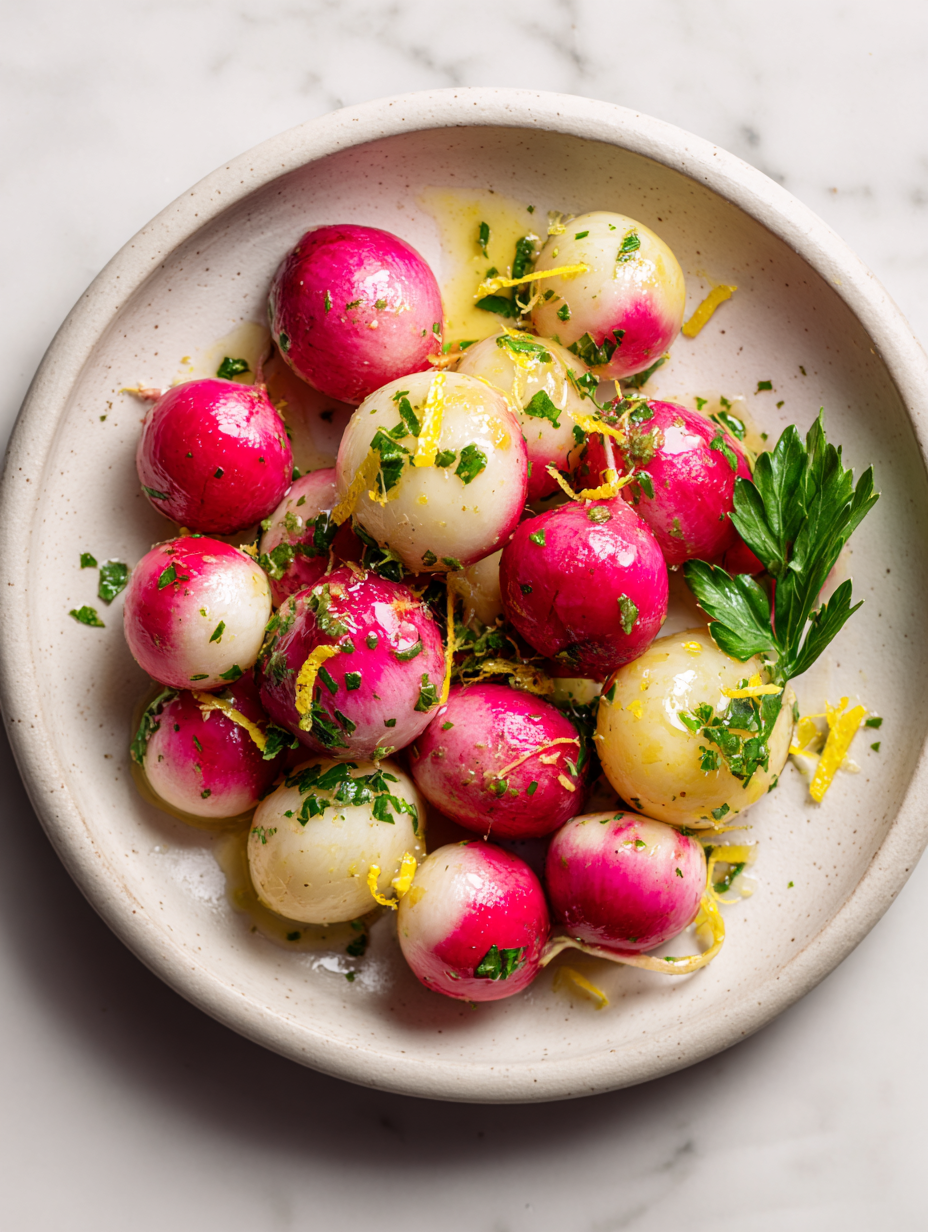
Sautéed Radishes with Butter and Lemon
Ingredients
Equipment
Method
- Start by washing the radishes thoroughly, then trim off the green tops and root ends. Slice them into halves or quarters, aiming for uniform thickness around 1/4 inch for even cooking.
- Heat your skillet over medium and add the butter, allowing it to melt and foam gently, releasing a nutty aroma. Swirl the pan to coat the surface evenly.
- Carefully add the sliced radishes to the skillet in a single layer. Hear them sizzle as they hit the butter. Cook for about 3-4 minutes, stirring occasionally, until they start to turn golden around the edges and soften slightly.
- Reduce the heat slightly to medium-low and continue sautéing, stirring every couple of minutes. Cook for another 5-7 minutes, until the radishes are tender, caramelized, and glossy with a nutty brown butter coating.
- Once the radishes are tender and beautifully browned, squeeze fresh lemon juice over them and sprinkle with cracked black pepper and a pinch of salt. Toss gently to combine, ensuring each piece is coated with the bright, flavorful dressing.
- Remove the skillet from heat, sprinkle with chopped herbs, and give everything a final gentle toss. Serve immediately while warm, garnished with extra herbs if desired, for a vibrant and savory side dish.
Tips & Tricks for Perfect Sautéed Radishes
- Bolded Mini-Head: Start with high heat → Searing radishes quickly creates a beautiful caramelized exterior.
- Bolded Mini-Head: Use fresh butter → It melts smoothly, releasing a nutty aroma that deepens the flavor.
- Bolded Mini-Head: Don’t overcrowd the pan → Ensure even cooking and browning, or they’ll steam instead of sauté.
- Bolded Mini-Head: Add lemon at the end → Brightens the dish and counteracts any lingering peppery sharpness.
- Bolded Mini-Head: Stir regularly → Prevent sticking and promote uniform caramelization for consistent texture.
- Bolded Mini-Head: Adjust heat as needed → If butter starts to brown too quickly, lower the heat to avoid burning.
- Bolded Mini-Head: Finish with herbs → Fresh parsley or dill added last preserve vibrancy and herbal aroma.
Common mistakes and how to fix them
- FORGOT to adjust heat → Radishes may burn; lower heat and add water if needed.
- DUMPED all butter at once → Add butter gradually for even melting and better flavor development.
- OVER-TORCHED radishes → Reduce heat and stir constantly; monitor color and smell for doneness.
- MISSED stirring during sauté → Stir regularly to prevent sticking and ensure even cooking.
Quick fixes and pantry swaps
- When radishes look shriveled, splash a bit of water and cover for 5 seconds to revive their plumpness.
- If butter shimmers too much, reduce heat immediately to prevent burning and bitter flavors.
- DUMPED too much salt? Rinse radishes briefly and dry before sautéing again for balance.
- Overcooked radishes become mushy—rescue with a quick splash of lemon juice and a minute in the pan.
- When radishes lack color, open a pantry swap with a pinch of smoked paprika for depth and shimmer.
Prep, store, and reheat tips
- Prep the radishes: Wash, trim, and slice them a day ahead. Keep in an airtight container in the fridge—they’ll stay crisp and fresh for up to 24 hours.
- Store cooked radishes: If you make them in advance, let them cool completely, then refrigerate in a sealed container for up to 2 days. Expect slight loss of crunch, but flavor remains bright and buttery.
- Reheat gently: Warm them in a skillet over low heat, stirring occasionally, until just heated through. The aroma of butter and a hint of caramel should revive the dish, about 3-4 minutes.
- Flavor change: Reheated radishes may soften slightly, but the buttery, sweet notes stay intact. They might lose a bit of their initial crunch but will still be tasty and tender.
Top questions about sautéed radishes
1. How do I pick the best radishes for sautéing?
Look for small, firm radishes with bright skin. They’ll soften nicely and have a sweet, mild flavor.
2. Can I substitute butter with oil?
Use a good quality butter for richness. Olive oil can work but will change the flavor and texture slightly.
3. How long should I cook radishes in the pan?
Sauté radishes until they’re golden and tender, about 8-10 minutes. They should be soft but still slightly firm.
4. When should I add lemon juice?
Add lemon juice at the end for brightness. It cuts through the richness and enhances their natural sweetness.
5. What if my radishes are burning or sticking?
If radishes start to burn, lower the heat and add a splash of water or oil to cool the pan.
6. What’s the best pan for sautéing radishes?
Using a wide skillet helps them cook evenly and caramelize. A non-stick pan can work too.
7. Can I omit black pepper?
Fresh cracked black pepper adds a nice spicy note, but you can skip it if you prefer milder flavor.
8. Can I make this dish in advance?
Yes, you can prepare the radishes a day ahead. Keep sliced radishes in an airtight container in the fridge.
9. How do I reheat sautéed radishes?
Reheat gently in a skillet over low heat, stirring occasionally, until warmed through. Expect a softer texture.
10. Will reheated radishes still taste good?
Radishes can lose some crunch when stored, but their sweet, buttery flavor remains lively and satisfying.
Sautéed radishes with butter might seem like a small, simple thing, but it’s a reminder that good flavor often comes from humble ingredients treated with care. The buttery gloss and sweet, slightly nutty radishes make a quick side that feels unexpectedly indulgent.
Whenever I cook this, I think about how a few minutes and a handful of radishes can turn into something comforting and bright. It’s a dish that’s perfect for a quiet night or when you need a little kitchen therapy, no fuss involved.

I’m Emily Richardson, the heart and soul behind Playing with Flavors. Cooking isn’t just a hobby for me – it’s a passion that I’ve cultivated for years, and it’s become the driving force of my life.
From the kitchen of my cozy café to the pages of this blog, every dish I create is a reflection of my love for food and the joy it brings to people.


