
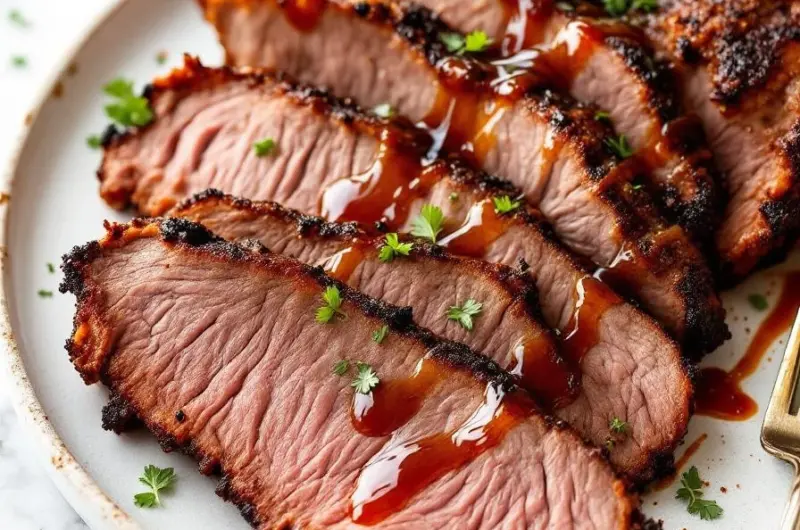
Getting this brisket into the smoker is a messy affair, with salt and spices sticking to your hands and dripping down your arms. You’re rubbing in a thick, crackly bark that needs patience and a gentle touch, not just tossing everything together.
Once it’s in the smoker, the real waiting begins—there’s a hum of the fire, the smell of smoke drifting around, and the occasional peek to check the bark’s development and the meat’s temperature.
The crack of the bark as you slice through the brisket, revealing a juicy, smoke-ringed interior that’s been patiently transformed overnight.
What goes into this dish
- Beef brisket: I like a well-trimmed, fat-cap side—gives flavor and keeps the meat moist during hours of smoking. Skip the fat if you prefer leaner, but you’ll lose some richness and juiciness.
- Salt and spice rub: I use coarse salt, black pepper, smoked paprika—rub it in thoroughly to build that bark. Feel free to tweak spices; cumin or chili powder add a smoky warmth, but don’t overdo it.
- Wood for smoking: Hickory or oak give a deep, smoky aroma—my go-to. If you’re after something milder, apple or cherry wood work, but the smoke flavor will be lighter.
- Beer or broth (for spritzing): I keep a spray bottle filled with apple cider or beer—spritz every hour to keep the bark moist and add a slight tang. Skip it if you prefer a drier bark, but it helps develop a glossy crust.
- Aluminum foil (for wrapping): I wrap the brisket in foil once it hits the stall—locks in moisture, tenderizes, and speeds up cooking. Use butcher paper if you want a crisper bark, but foil’s foolproof.
- Cooking thermometer: Essential for tracking internal temp—target 195-203°F. Without it, you’re guessing, and the texture might come out tough or overdone.
- Optional glaze or finishing sauce: I like a quick mop of barbecue sauce or a sprinkle of finishing salt at the end—adds a bright, sticky finish. Skip if you want pure smoky meat, but it adds contrast.
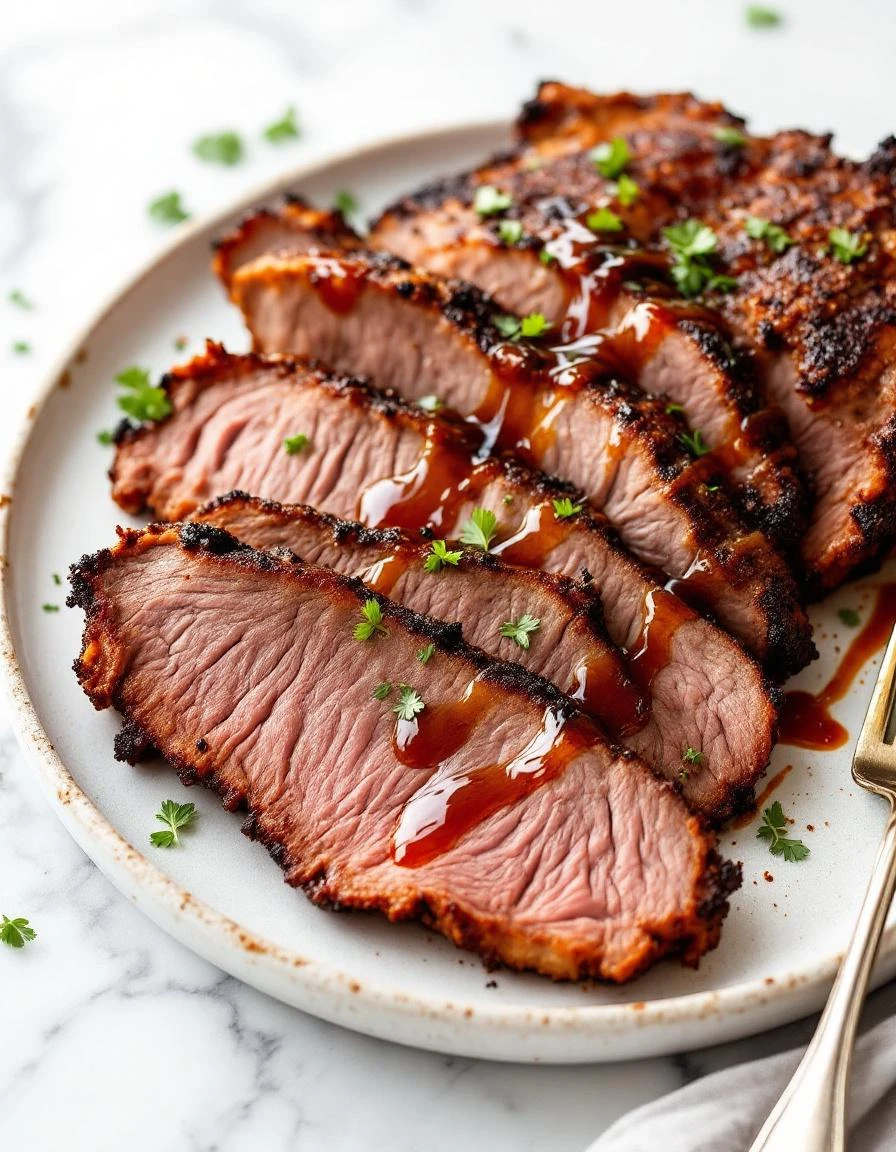
Smoked Beef Brisket
Ingredients
Equipment
Method
- Combine salt, black pepper, and smoked paprika to create a flavorful rub, then thoroughly massage it into all sides of the brisket, pressing it into the meat to form an even crust.
- Place the seasoned brisket in the refrigerator uncovered for at least 1 hour or overnight; this helps the rub set and enhances flavor penetration.
- Preheat your smoker to 225°F, adding wood chunks of hickory or oak to create a steady smoke, and make sure the smoke is thin and blue, not thick and billowing.
- Place the brisket fat-side up on the smoker grates, and insert a meat thermometer probe into the thickest part of the meat to monitor internal temperature.
- Spritz the brisket with apple cider or beer every hour using a spray bottle to keep the bark moist and enhance flavor development.
- Smoke the brisket for about 6-7 hours, watching for the bark to develop a deep, crackly crust and the internal temperature to reach around 165°F, indicating the stall.
- Once the brisket hits 165°F, wrap it tightly in aluminum foil to retain moisture and speed up cooking, then return it to the smoker.
- Continue smoking until the internal temperature reaches 195-203°F, and the meat feels tender and pulls apart easily when tested with a probe or fork.
- Remove the brisket from the smoker, keep it wrapped, and let it rest for at least 30 minutes to allow juices to redistribute and the flavor to deepen.
- Unwrap the brisket, slice against the grain, and serve with optional barbecue sauce or a sprinkle of finishing salt for added flavor and shine.
Common Mistakes and How to Fix Them
- FORGOT to monitor temperature; fix by using a reliable probe thermometer.
- DUMPED the marinade or rub; fix by applying it evenly and pressing it into the meat.
- OVER-TORCHED the bark; fix by controlling heat and wrapping earlier if needed.
- UNDER-SALTED the brisket; fix by salting generously and letting it sit before smoking.
Make-Ahead and Storage Tips
- You can prep the brisket the day before—rub it, wrap it in plastic, and refrigerate for up to 24 hours. It lets the spices penetrate deeper and saves time on the day.
- Store cooked brisket in an airtight container in the fridge for up to 4 days. For longer, slice and freeze for up to 3 months—just reheat slowly.
- Refrigerated brisket tends to intensify in smoky flavor overnight. Reheat in a covered dish at low heat; check for tenderness and ensure it’s steaming hot before serving.
- Thaw frozen brisket in the fridge overnight. Reheat in the oven covered at 250°F. Look for moist, tender meat with a slight smoky aroma—no dry bites.
- The flavor mellows a bit after sitting, so consider adding a splash of broth or a quick glaze before serving to brighten it up. Watch for steam and aroma as signals of readiness.
FAQs
1. How do I know when it’s done?
The brisket should feel tender but still hold its shape when you poke it. The meat releases a deep, smoky aroma, and the crust should crackle softly with each bite.
2. What’s the perfect internal temperature?
Look for an internal temp around 195-203°F. The meat will be juicy, with a smoky smell and a tug-tender texture that resists but gives easily.
3. Should I rest the brisket?
Let it rest wrapped in foil for at least 30 minutes. The juices redistribute, and you’ll notice a richer, more cohesive smoky aroma as it settles.
4. How do I reheat without drying it out?
Reheat slices gently in a covered dish in the oven at 250°F. The meat should steam slightly, releasing a warm, smoky scent and staying moist to the touch.
5. How long can I store smoked brisket?
Store leftovers in an airtight container in the fridge for up to 4 days or freeze for 3 months. Reheat slowly to revive the smoky aroma and juicy texture.

I’m Emily Richardson, the heart and soul behind Playing with Flavors. Cooking isn’t just a hobby for me – it’s a passion that I’ve cultivated for years, and it’s become the driving force of my life.
From the kitchen of my cozy café to the pages of this blog, every dish I create is a reflection of my love for food and the joy it brings to people.


